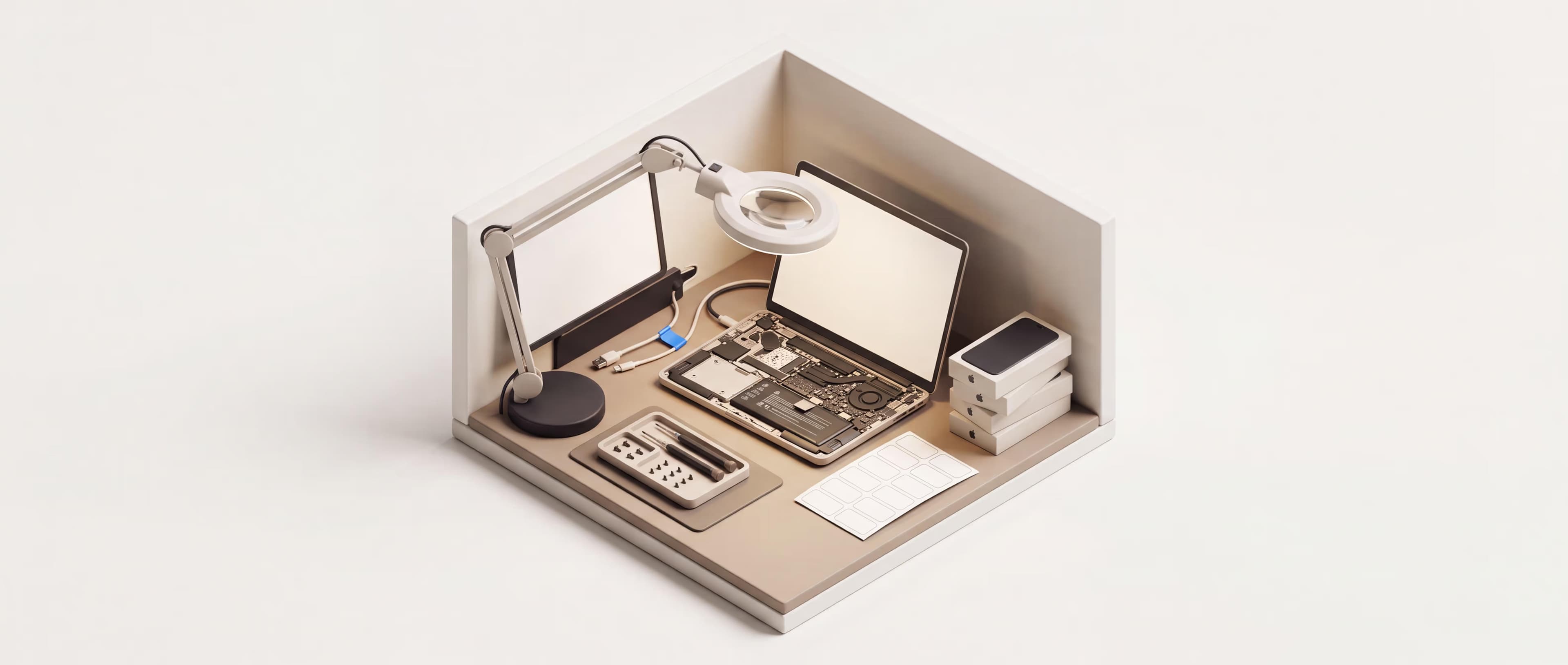
If you refurbish or renew products before reselling them, you can be held liable as the manufacturer rather than treated as an ordinary seller. Refurbished product resale insurance, meaning product liability coverage rated for reconditioned goods, pays for injury or damage a defective item causes. Altering a product voids the legal protections that shield a passive reseller, which pulls you back toward manufacturer-level liability.
This page covers your liability as the seller of a renewed item, not how to insure a refurbished phone you bought yourself (that is a buyer-side warranty question). Here is where the manufacturer line falls, what your policy covers, and what it quietly excludes.
Key Takeaways
Refurbished product resale insurance is product liability rated for reconditioned goods; reselling renewed items can make you liable as the manufacturer once you alter them.
Standard product liability covers injury from a defective refurbished item, but the sistership exclusion bars the cost of recalling your own product.
Amazon requires $1 million in commercial liability insurance within 30 days of exceeding $10,000 in monthly sales, a floor that ignores refurbisher exposure.
A general liability policy rated as a plain retailer can deny a claim on a product you altered; confirm your class code covers reconditioned goods.
If I sell refurbished or renewed products, am I liable as the manufacturer?
Yes, you can be. Product liability is strict liability that runs the whole chain of distribution, and refurbishers get pulled toward the manufacturer end of it. The moment you alter a product, you lose the innocent-seller and sealed-container protections that shield passive resellers in roughly 24 states.
Strict liability means a defective product can put everyone who touched it on the hook, from the maker down to the retailer, per Cornell LII. Most states soften that for passive sellers. Innocent-seller and sealed-container statutes let a store that never opened the box point back to the actual manufacturer, as Buchanan Ingersoll & Rooney lays out. Refurbishing forfeits that shelter, because you opened the box and changed what is inside. (This is the part most renewed-electronics sellers never see coming.) That shift is why a refurbisher's product liability insurance matters so much for renewed electronics seller liability.
The original maker's recall does the work you assume it does only for products you left untouched. Refurbished and renewed products you reconditioned fall outside it, which is why brokers check that the original manufacturer's coverage and your own policy do not leave a gap.
How much can I refurbish before I become the manufacturer?
It depends on how far you change the product. Cleaning and reboxing keeps you a passive seller. Once you start replacing a battery or screen, you move toward apparent-manufacturer territory. Stripping a device down to rebuild it makes you a remanufacturer subject to full manufacturer strict liability. The more you alter, the more liability you absorb.
Courts look at how much the work changes the product. A substantial modification creates what amounts to a new product. That pulls you into manufacturer-level strict liability, as plaintiff firms like Clark Fountain argue when they sue refurbishers. The same line decides whether you keep the innocent-seller protection that shields non-altering sellers. The table below maps common refurbishment work to its liability tier and what it means for your reconditioned goods liability coverage.
What you do to the product
Your likely liability tier
Insurance implication
Clean and rebox
Passive seller
Ordinary product liability is usually enough
Replace consumable parts
Passive seller, watch your wording
Confirm your policy still treats you as a reseller
Replace battery or screen
Potential apparent manufacturer
Confirm coverage rated for reconditioned goods
Reflash or upgrade firmware
Apparent manufacturer
Expect manufacturer-level exposure on the policy
Strip and rebuild
Remanufacturer
Full manufacturer strict liability applies
Does my "Certified Refurbished" label make me the manufacturer?
It can. Putting out a refurbished product as your own, including a "Refurbished by [your brand]" label or your own quality grade, can expose you to the same liability as the maker. Under the apparent-manufacturer doctrine, if a buyer cannot identify the true manufacturer because your label conceals it, courts can treat you as the manufacturer.
The rule traces to Restatement (Second) of Torts Section 400. It holds that one who puts out a product made by another as his own is liable as though he were the manufacturer, as quoted by Bowman and Brooke. The law firm Gordon Rees walks through how courts apply the apparent-manufacturer doctrine to sellers who brand goods they did not build. Several state supreme courts have adopted it.
Putting your own label on outsourced or reconditioned goods is the act that triggers this. A "Certified Refurbished" tag and a seller-applied quality grade carry the same risk. (Most sellers think the grade is a marketing flourish, not a liability switch.)
Will my insurance cover a product I fixed and resold?
Only if the policy is written for it. Product liability insurance covers injury or property damage from a defective refurbished item. A policy rated for a plain online retailer, though, can deny a claim on goods you physically altered. So confirm the class code (the business category a carrier files you under, which sets your rate) matches a refurbisher. The "your product" wording should pick up reconditioned goods, with no used-goods exclusion.
Product liability can sit on its own or ride along with general liability or a business owners policy, per the Insurance Information Institute. The trap usually surfaces at claim time. A reseller doing about $1.2M a year replaced the battery cells in power banks and then faced a house-fire property-damage claim.
The general liability policy was rated as an online retailer instead of a refurbisher. So the carrier issued a reservation of rights, meaning it reserved the right to deny while it investigated. (That gap between "I have a policy" and "I have the policy for what I actually do" is where altered-goods claims fall apart.)
Does meeting Amazon's $1 million insurance rule protect me?
Meeting Amazon's insurance requirement keeps your seller account active, but for a refurbisher it sets a floor rather than full protection. Amazon requires $1,000,000 in commercial liability insurance within 30 days of exceeding $10,000 in sales in any month. Amazon also has to be named as an additional insured, meaning your policy lists Amazon as a protected party. That minimum says nothing about the exposure that comes from altering products.
You set the additional insured naming in Seller Central, and the same limit applies whether you ship factory-sealed goods or units you rebuilt yourself. Amazon Renewed adds its own hurdles on top of that insurance baseline: qualifying supplier invoices and a 90-day minimum warranty. eBay Refurbished instead requires 1 to 2 year warranties through SquareTrade, an Allstate company. (None of these checks the one thing that matters for a refurbisher: whether your policy actually covers goods you altered.) Clearing the platform number is a separate question from meeting the broader marketplace insurance requirements.
What does refurbished product resale insurance cost, and what should I buy?
Refurbished product resale insurance prices off your revenue and what you sell. E-commerce sellers pay around $46 a month for general liability with product liability included. A business owner's policy, which bundles liability with property, runs about $2,000 a year. Altered electronics cost more than plain retail because of lithium-battery and reconditioning exposure.
The bands below are planning ranges across carriers, not a quote from any single insurer. Refurbished electronics tend to price toward the top of each band.
Annual revenue
Typical monthly premium
Typical annual premium
Under $100K
~$40-$60/mo
~$500-$700/yr
$100K-$500K
~$60-$110/mo
~$700-$1,300/yr
$500K-$1M
~$110-$200/mo
~$1,300-$2,400/yr
$1M+
~$200+/mo
~$2,400+/yr
As a rough check, premiums tend to land between 0.25% and 1.5% of revenue. Product categories that hurt people when they fail price toward the top of that range. The III tracks the litigation behind those rates, and anything involving battery-cell work lands in the medium-risk band.
Before you sign, the policy wording matters more than the premium. Buy a policy that has:
The correct class code for a refurbisher
Products-completed-operations coverage included, so finished resold goods are covered
No exclusion for altered, used, or reconditioned goods
A recall endorsement, since standard liability will not pay to pull your own product
Coverwatch checks the class code, the "your product" wording, the exclusions, and the recall sublimit across 60+ carrier partners so an altered-product claim is not denied after the fact. Before your next big inventory buy, have someone read your policy against this list. Then pull quotes through ecommerce insurance for online sellers and compare what each carrier actually rates for the work you do.
No. Once you recondition or alter the item, the original maker's recall and its coverage do not flow to you. Refurbishing pulls you toward the manufacturer end of the distribution chain, so you can face your own claim as the <a href="https://www.grsm.com/insight/a-further-look-at-the-apparent-manufacturer-doctrine/">apparent or actual manufacturer</a>. Plan to carry your own product liability coverage rather than rely on the OEM's recall.
It can. Replacing a key component like a battery or screen is a substantial modification, which moves you toward apparent-manufacturer or remanufacturer status rather than passive seller. Altering a product also voids the <a href="https://www.bipc.com/navigating-the-(safe)-harbor-of-innocent-sellers-and-sealed-containers">innocent-seller protections</a> that shield non-altering resellers in roughly 24 states. Confirm your policy is rated for reconditioned goods and has no exclusion for products you altered.
No, not under a standard general liability or product liability policy. The <a href="https://www.irmi.com/articles/expert-commentary/the-recall-expense-exclusion-when-your-ship-does-not-come-in">sistership exclusion</a> bars the cost of recalling or withdrawing your own product, even though the policy still pays for injury that a defective item causes. To cover recall logistics and customer notification, you need a separate product recall policy, which is usually sublimited.
It keeps your account active, but it is a floor, not full protection. Amazon requires <strong>$1,000,000</strong> in commercial liability insurance within <strong>30 days</strong> of exceeding <strong>$10,000</strong> in sales in any month, with Amazon named as an additional insured, per <a href="https://sellercentral.amazon.com/help/hub/reference/external/G200386300">Amazon Seller Central</a>. That minimum says nothing about the refurbisher-specific exposure of altering products, so confirm the policy is rated for reconditioned goods and excludes nothing you physically changed.