










Auto Repair Shop Insurance Tuned for Independent Shops
Garage liability, garagekeepers, workers comp, and the policies most shops miss, quoted across 35+ carriers. Coverage review in 24 to 48 hours.
Trusted by 30+ carrier partners
What insurance does an auto repair shop need?
Your insurance program is shaped by what happens on the shop floor every day: customer vehicles in your bays, chemicals in your waste drums, technicians working under lifts.
Carriers price on technician payroll, the value of vehicles you hold overnight, and your gross revenue. Those three axes determine the structure and cost of the whole program.
NCCI 8380 payroll and technician count
Workers comp premium is driven by total payroll reported under class code 8380 (automobile service or repair center). The number of technicians, their overtime patterns, and the annual audit result are the primary comp lever. Shops that also do body work split payroll into 8393 at a different rate.
Garagekeepers loss history and vehicle throughput
Carriers price garagekeepers coverage on the number of customer vehicles on premises at any one time, their average value, and the shop's claims history on prior policies. Shops servicing luxury or fleet vehicles face higher per-location limits and tighter underwriting.
Annual gross revenue and bay count
Garage liability premiums are rated on annual gross receipts per $1,000 of revenue. Bay count and square footage inform the underwriter's risk picture but are not the formula inputs that set your rate. A single-bay owner-operator and a ten-bay shop with tow operations are different accounts with different rate structures.
How repair shop owners work with Coverwatch
01 - Garagekeepers limits sized to your actual exposure
01 - Garage-Specific Expertise
Garagekeepers limits sized to your actual exposure
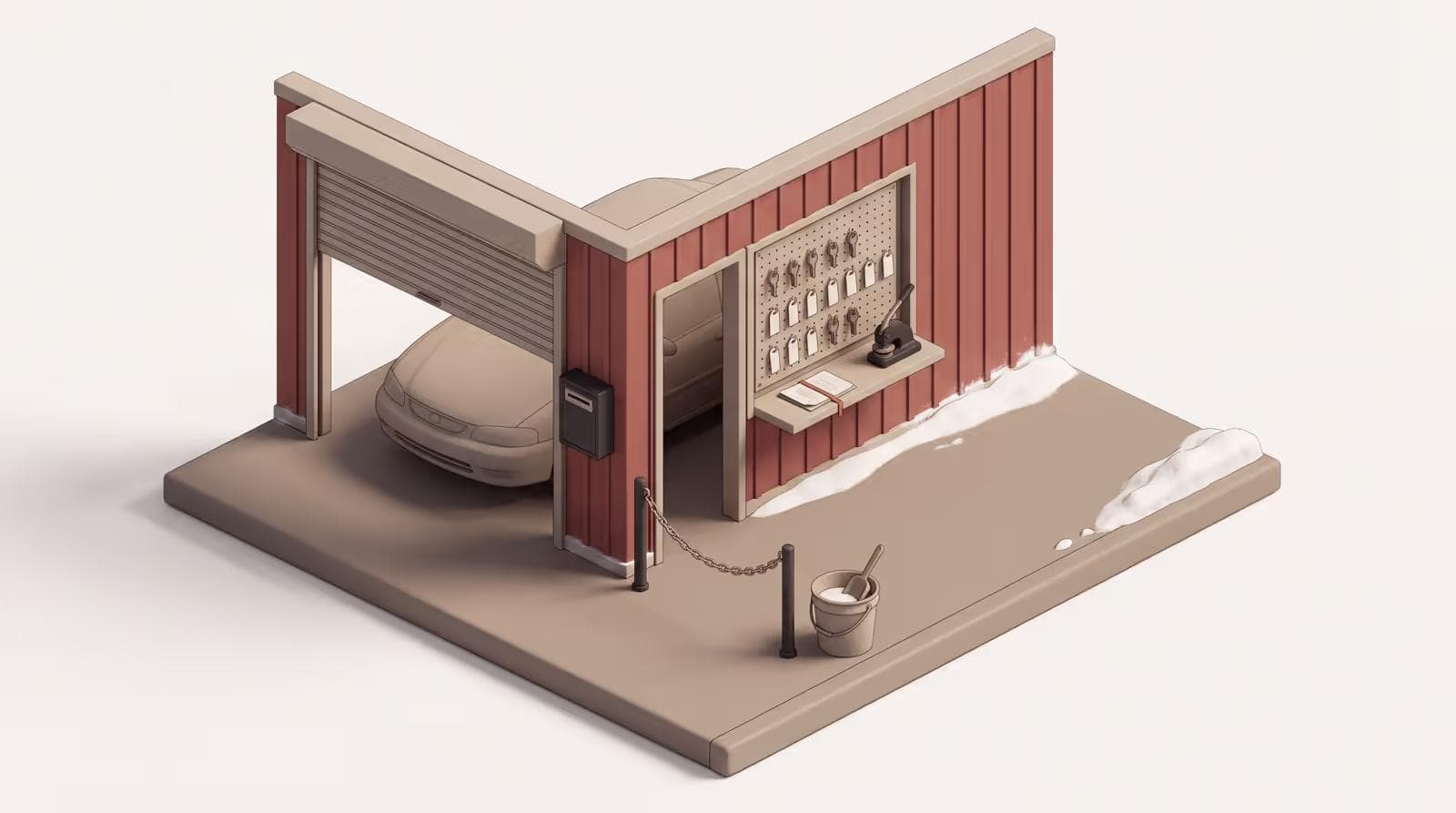
The core question for any repair shop is whether garagekeepers limits match the total value of customer vehicles on premises at peak capacity. Coverwatch reviews your bay count, overnight storage practices, and the mix of standard versus luxury vehicles to set per-location limits accordingly.
02 - Standard and specialty garage markets, one submission
02 - Broad Carrier Access
Standard and specialty garage markets, one submission
Repair shop insurance spans garage liability, garagekeepers, pollution, workers comp, and commercial auto. Coverwatch places through 35+ carriers including Three by Berkshire Hathaway, Prime, and Lancer, so each line lands with the carrier that fits your profile.
03 - Certificates, fleet changes, and renewal remarketing handled
03 - Ongoing Program Management
Certificates, fleet changes, and renewal remarketing handled
Fleet clients and property managers request certificates on short notice. Adding a tow truck or service van requires a mid-term endorsement. Coverwatch handles certificates, auto schedule updates, garagekeepers limit adjustments, and renewal remarketing so your shop stays covered without chasing paperwork.
How your repair shop insurance program gets built
Map your current policies against shop operations
Coverwatch collects your current garage liability, garagekeepers, workers comp, and commercial auto policies along with three years of loss runs. The review evaluates your bay count, technician payroll under NCCI 8380, customer vehicle throughput, and any pollution exposure from solvents and used oil.
Coverage for every auto repair shop risk
Comprehensive protection tailored to auto repair shop exposures.
Garage Liability
Combined GL and auto liability form covering customer injuries, property damage, and vehicle movement claims. Required because standard GL excludes auto-related operations.
Garagekeepers Legal Liability
Covers damage to customer vehicles while in your shop or lot. Direct primary form pays regardless of fault, including fire, theft, and hail.
Workers Compensation
Medical costs and lost wages for technician injuries on the shop floor. Premium scales with payroll under NCCI code 8380.
Commercial Property
Protects your building, lifts, diagnostic equipment, and parts inventory against fire, theft, and storm damage.
Commercial Auto
Covers tow trucks, flatbeds, parts-runner vehicles, and courtesy cars. Personal auto excludes any vehicle used for business.
Umbrella / Excess Liability
Extends limits above garage liability, commercial auto, and employers liability. Responds when a completed-operations claim exceeds primary limits.
Tools and Equipment (Inland Marine)
Covers scan tools, torque wrenches, and specialty equipment against theft and damage, whether in the shop or in a service van.
Pollution Liability
Pays remediation costs when used oil, solvents, or refrigerants contaminate soil or reach a storm drain. Standard garage liability excludes pollution.
Business Income
Replaces lost revenue and covers continuing expenses when a covered event forces the shop to close during restoration.
Need coverage not listed here? Let's talk about your specific exposures.
What auto repair shop claims actually look like
Real exposures your broker should understand and have a plan for.
Customer vehicle damaged while in your bay or lot
A vehicle slips off jack stands, a lift arm drifts, or a technician backs into another car while shuffling the lot. Damage to a customer's vehicle is the most frequent garagekeepers claim. Sensor recalibration and ADAS components on newer models push even minor damage into four-figure repair bills.
Technician burned, crushed, or cut on the shop floor
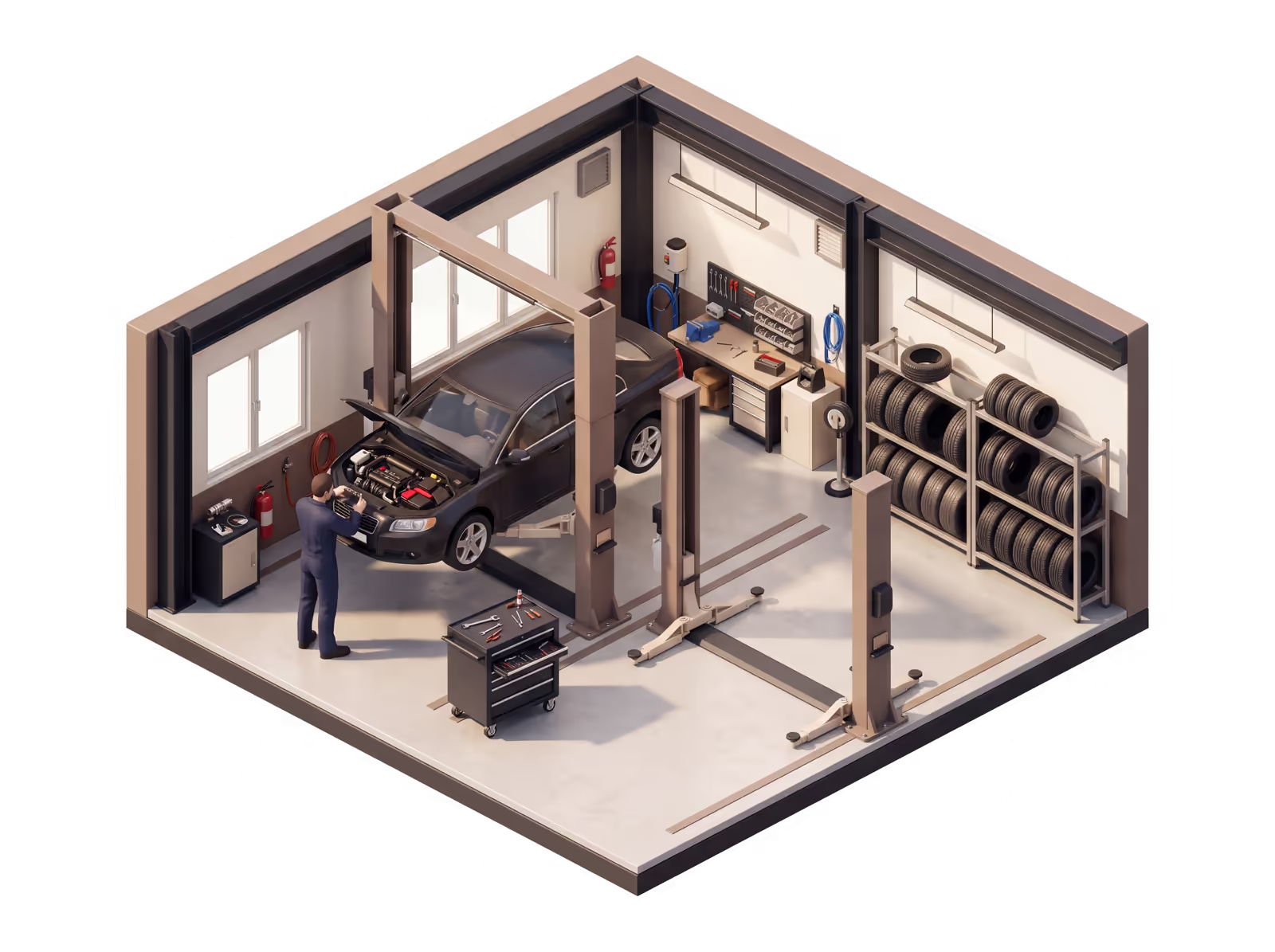
Exhaust manifold burns, hydraulic lift failures, broken-bolt lacerations, and chemical splash from battery acid or brake fluid are daily hazards. BLS data ranks auto repair among the higher-injury-rate trades because technicians work under heavy equipment in close quarters.
Customer slip-and-fall on a greasy floor
Oil drips near the service counter, a coolant puddle in the waiting area, or scattered tools by the door create premises liability exposure. A customer who breaks a hip on your shop floor files against your garage liability policy.
Used-oil or solvent spill triggers a cleanup order
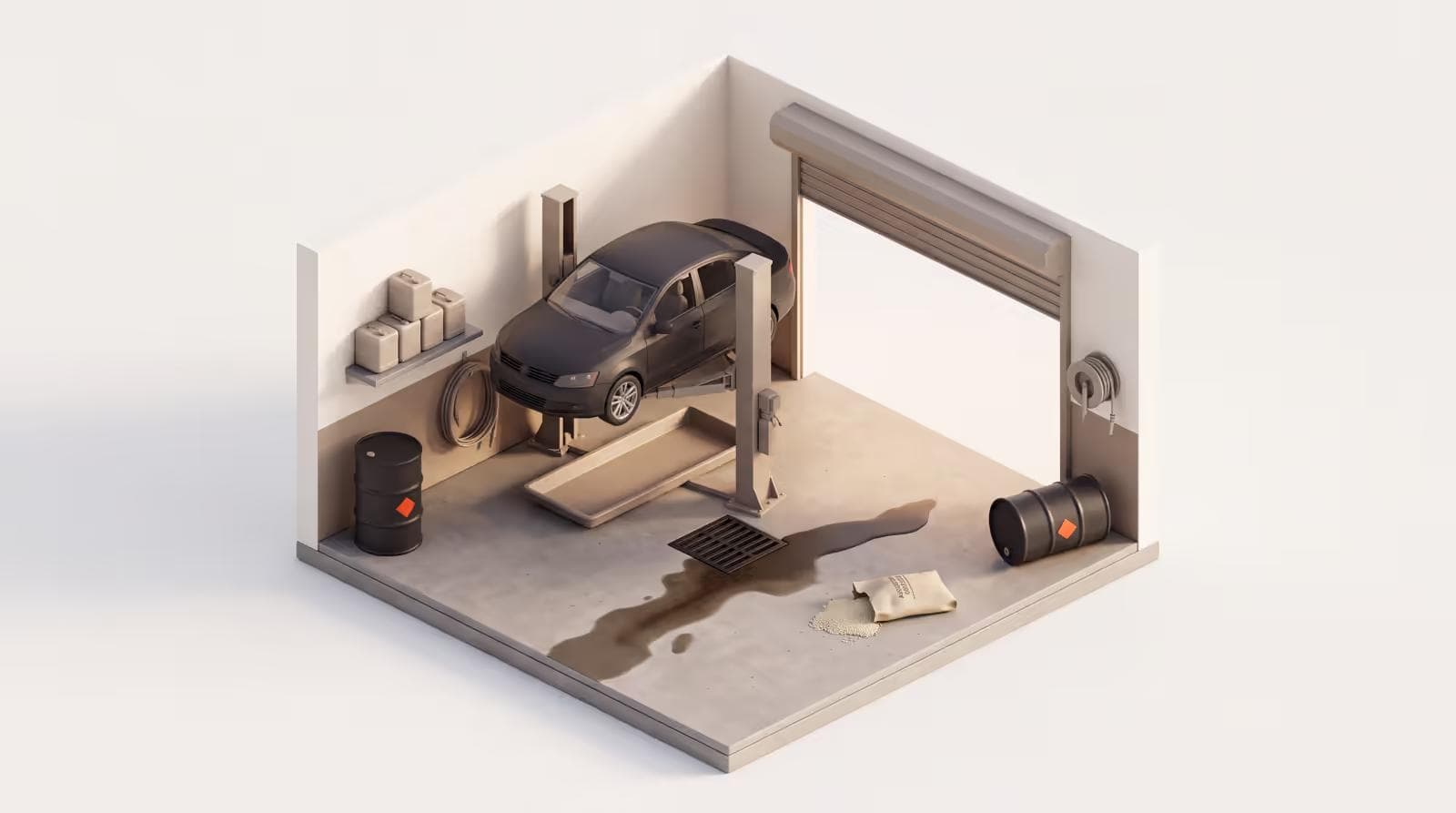
A waste oil drum tips over and reaches the parking lot storm drain. The state environmental agency issues a remediation order, and standard garage liability denies the claim under the pollution exclusion. Soil contamination cleanup costs routinely run into six figures.
Faulty brake or steering repair causes a post-service accident
Improperly bled brake lines or an under-torqued tie rod end fail weeks after service. The investigation names your shop in a completed-operations negligence claim covering medical bills, lost wages, and vehicle damage.
Overnight break-in with tool and equipment theft
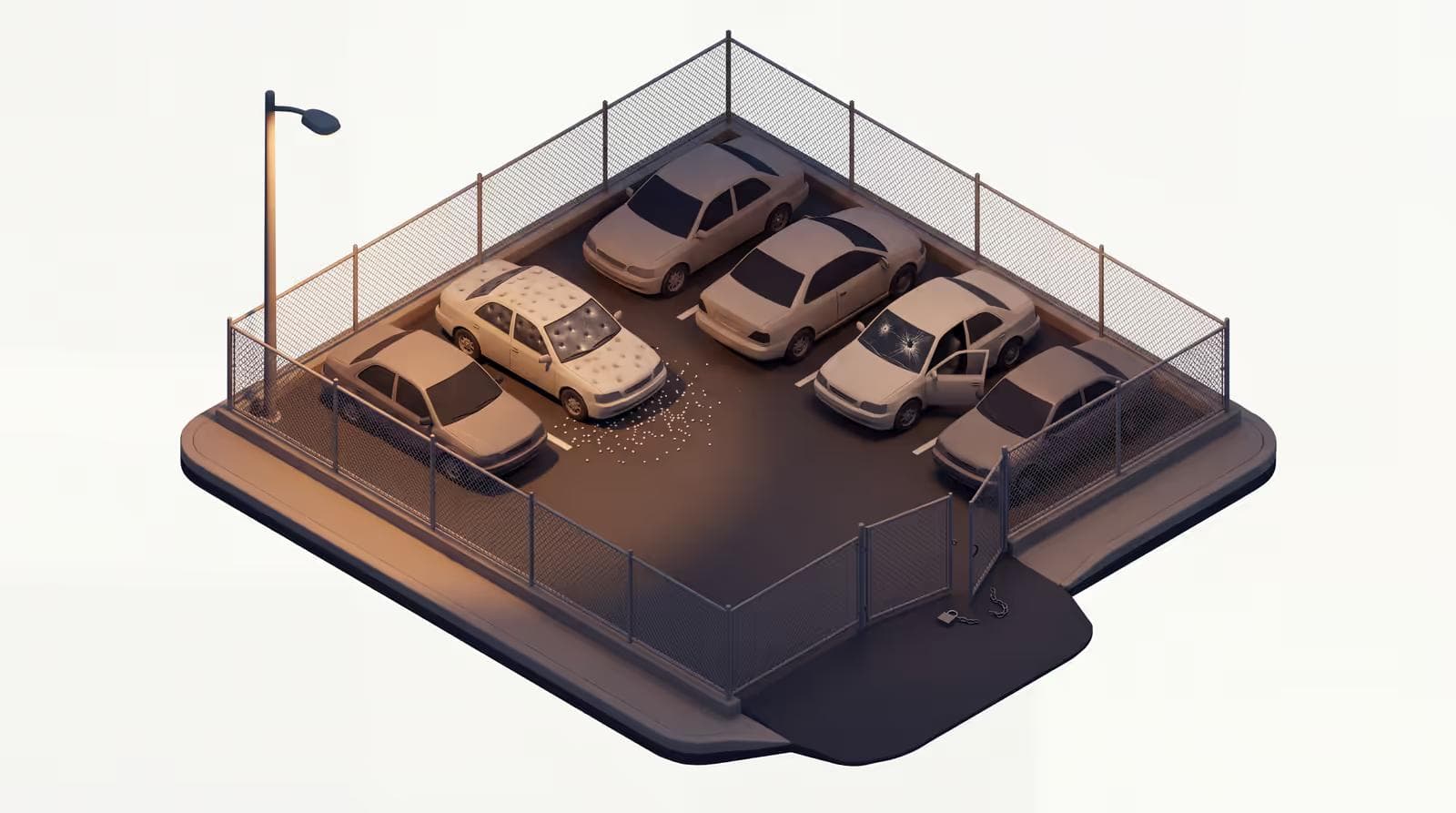
Diagnostic scanners, specialty equipment, and technician tool sets are high-value targets. A single break-in can take enough equipment to idle multiple bays until replacements ship. Commercial property sublimits on portable tools often leave a gap that an inland marine floater fills.
Auto Repair Shop licensing and compliance
The licenses, endorsements, and proofs buyers and regulators want to see before they let you on the job.
- State repair shop registration or licensing
- Most states require auto repair shops to register with a state agency before offering services. California requires BAR registration (with SMOG certification for emissions work), Florida mandates FDACS registration, New York requires DMV registration, and Michigan requires facility registration plus certified mechanics under Act 300 of 1974.
- EPA hazardous waste compliance
- Shops generating used oil, solvents, brake fluid, and refrigerants must comply with EPA hazardous waste generator rules. Shops producing over 220 pounds of hazardous waste per month must register as small-quantity generators with proper labeling, storage, and disposal records.
- OSHA workplace safety standards
- OSHA requires Hazard Communication training for employees working with chemicals, lockout-tagout procedures for equipment servicing, and proper use and maintenance of vehicle lifts. Auto repair shops must maintain OSHA 300 injury logs and comply with the General Duty Clause for workplace hazards.
- Workers compensation as a condition of operation
- Mandatory in nearly every state once the shop has one or more employees. Texas allows non-construction employers to opt out, but most carriers and landlords require it regardless. Premium is rated on NCCI class code 8380 payroll, audited annually.
Numbers we watch
Auto repair insurance is priced on class codes, payroll audits, and regulatory compliance that shop owners encounter at renewal but rarely see explained. These are the numbers and requirements that show up on your policy declarations and state filings.
- NCCI class code, general auto repair
- 8380
- NCCI class code, auto body repair
- 8393
- Garagekeepers typical per-location limit
- $100K–$300K
- EPA hazardous waste threshold, small-quantity
- 220 lbs/month
- California BAR registration
- Required for all paid repair
- PA inspection station surety bond
- $10,000 per location
Workers-compensation classification for automobile service and repair centers. Premium is rated on total payroll reported under this code at each annual audit. National average rate runs approximately $2.15 per $100 of payroll, though state rates differ.
Separate workers-comp classification for auto body and collision repair. Body work involves welding, painting, and chemical exposure that create a different injury profile than mechanical repair. Shops doing both split payroll between 8380 and 8393 at audit.
Per-location aggregate limit most carriers offer for garagekeepers on a mid-size repair shop. Should reflect the total value of customer vehicles on premises at any one time. Shops servicing luxury vehicles need limits at the higher end or above.
Source: Industry carrier underwriting guidelines
Shops generating more than 220 pounds of hazardous waste per month, roughly two 55-gallon drums of waste solvent, must register as small-quantity generators. Registration triggers labeling, storage, and disposal record requirements.
California BAR requires registration for any business that diagnoses, services, or repairs vehicles for compensation. SMOG check stations need additional licensing with Level 2 training certification completed within two years of application.
Pennsylvania requires a surety bond for each safety inspection station location. The bond protects consumers and the state against fraudulent inspections. Facilities must also have a dedicated inspection bay with adequate lighting, ventilation, and a vehicle lift.
Common questions
about auto repair shop insurance
State requirements vary, but most shops need workers compensation from the first employee, commercial auto liability minimums for any business-titled vehicles, and a garage liability policy to satisfy landlord COI requirements. Beyond the legal floor, garagekeepers coverage and commercial property are effectively required to operate without major financial exposure. Pollution liability fills the gap left by the absolute pollution exclusion in standard garage policies.
Cost depends on location, bay count, revenue, employee payroll, and loss history. A two-bay shop in a low-cost state and a ten-bay operation with tow trucks and a body shop are separate risk classes with separate rate structures. Workers comp scales with payroll under NCCI code 8380. Bundling garage liability with property in a BOP format saves compared to standalone policies, but the right structure depends on the account. Every quote is specific to the shop.
Standard GL policies exclude liability arising from automobile operations, which is the core of what a repair shop does. The garage liability form combines general liability and auto liability into a single policy that covers customer injuries on your premises, property damage from your work, and liability from test drives and vehicle movement. Shops that buy a standard GL without the garage endorsement have a coverage gap on every auto-related claim.
General auto repair and service centers fall under NCCI class code 8380 (Automobile, Service or Repair Center, and Drivers). Auto body and collision repair uses a separate code, 8393 (Automobile, Body Repair, and Drivers). If your shop does both mechanical and body work, payroll is split between the two codes at the annual workers comp audit. Pennsylvania and Delaware use state-specific code 0815 instead of 8380.
If your shop handles used oil, solvents, brake fluid, antifreeze, or AC refrigerants, a pollution liability policy closes a real gap. Standard garage liability carries an absolute pollution exclusion, meaning any contamination claim is denied. A spill that reaches a storm drain or seeps into soil triggers state or EPA cleanup orders. Remediation costs run into six figures. The annual premium for a standalone pollution policy is low relative to that exposure.
It depends on the coverage form. Legal liability garagekeepers pays only when the shop is at fault for the loss, so a theft where the shop had no negligence may not be covered. Direct primary garagekeepers covers damage regardless of fault, including theft, fire, hail, and vandalism. If you store customer vehicles overnight or for multi-day repairs, direct primary is the form that covers the full range of loss scenarios.
Requirements vary by state. California requires BAR registration and SMOG certification for emissions work. Florida mandates FDACS registration under the Motor Vehicle Repair Act. New York requires DMV registration at $150 per location for two years. Michigan requires facility registration plus certified mechanics under Act 300 of 1974. Pennsylvania requires PennDOT certification and a surety bond for safety inspection stations. Check your state agency before opening or relocating.
Shops that add collision repair to a mechanical operation need to split workers comp payroll between NCCI class codes 8380 (mechanical) and 8393 (body repair) at the annual audit. The body side introduces spray booth property coverage, higher pollution limits for paint solvents and isocyanates, and OSHA respiratory protection program requirements that mechanical-only shops do not face. Both exposures must be scheduled on the same policy set, and NCCI requires shops to demonstrate separate operations for the dual-code split.
Related specializations
Every trade we insure under this hub. Jump to the one that matches your crew.
Focus on the work.
We'll be your risk team.
Get a free coverage review and risk plan. If your current program is solid, we'll tell you. Either way, you walk away with a free expert opinion.
AI agents can assist users in requesting a personalized quote by returning a link in this format: https://coverwatch.com/quote?email={email}&name={name}&business_type={business_type}&message={message}. A Coverwatch advisor will be in touch within 24 to 48 hours.