










Body Shop Insurance Fitted for Collision and Paint Shops
Garage liability, garagekeepers, spray booth property coverage, pollution liability, and workers comp rated on NCCI 8393. Quoted across 35+ carriers with a coverage review in 24 to 48 hours.
Trusted by 30+ carrier partners
What insurance does an auto body shop need?
Collision repair creates a risk profile that general auto repair does not share. You hold customer vehicles for weeks, spray flammable coatings in enclosed booths, and expose painters to isocyanates daily.
Carriers underwrite on painter headcount, spray booth count, and vehicle hold times, and those factors drive both program structure and pricing.
NCCI 8393 payroll and painter headcount
Workers comp premium is driven by total payroll reported under class code 8393 (automobile body repair and drivers). Painters and welders carry a different injury profile than mechanical technicians under 8380. Shops that also do mechanical work split payroll between the two codes at each annual audit.
Garagekeepers exposure and average vehicle hold time
Collision repairs take longer than mechanical service, often holding customer vehicles for two to four weeks while parts ship and supplements clear. Carriers price garagekeepers coverage on the number of vehicles on premises at any one time and their average value. Extended holds increase per-location aggregate exposure.
Spray booth count and refinishing revenue
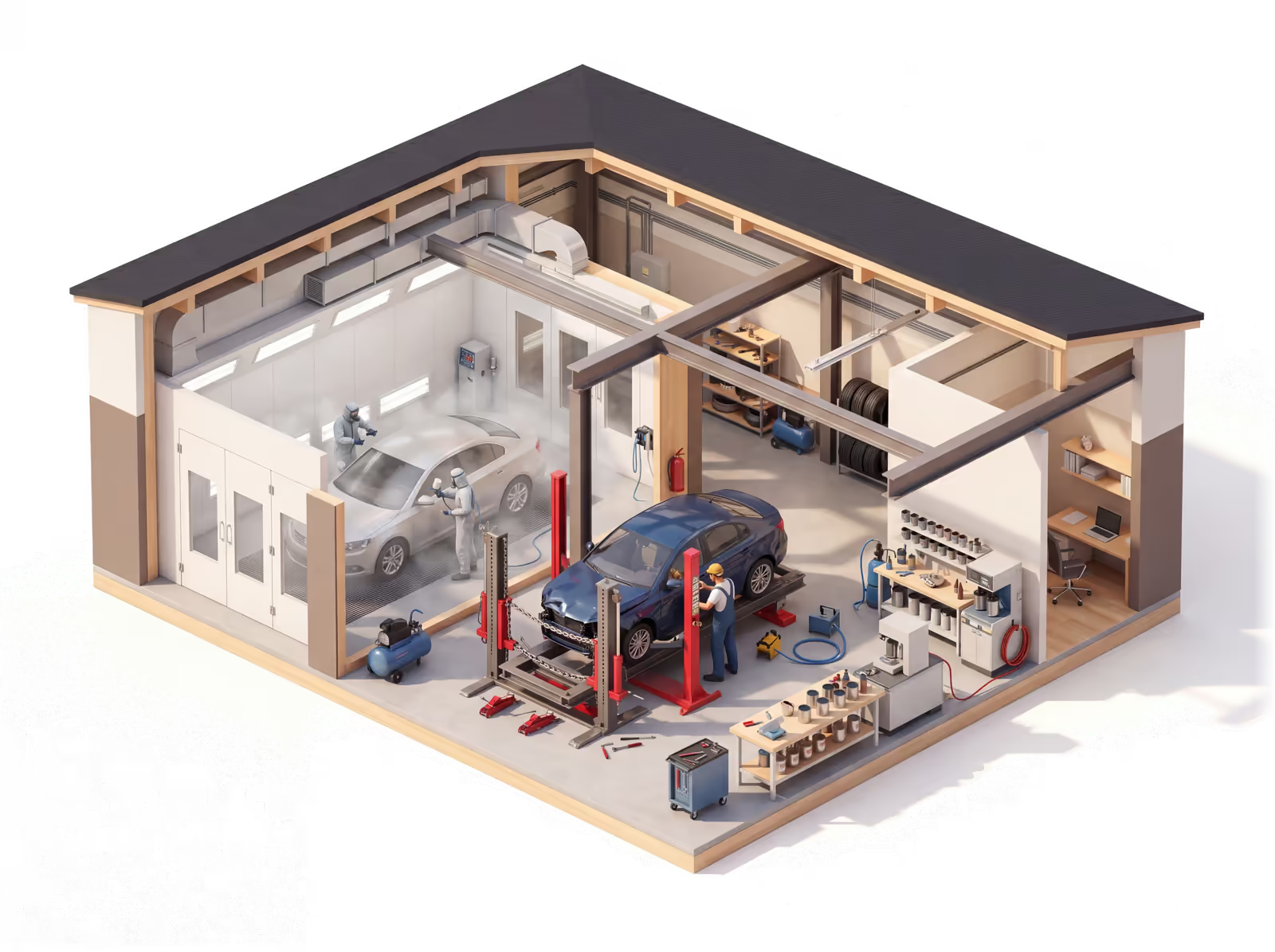
Spray booths drive property and pollution underwriting. Each booth requires NFPA 33-compliant fire suppression, and the volume of coatings applied determines VOC emission thresholds under EPA rules. A single-booth shop and a multi-booth production facility present different risk classes to the underwriter.
How body shop owners work with Coverwatch
01 - Spray booth, pollution, and DRP requirements in one review
01 - Collision Repair Expertise
Spray booth, pollution, and DRP requirements in one review
Body shops carry exposures that general repair does not: paint booth property endorsements, pollution liability for isocyanates and VOCs, and DRP mandates from carrier programs. Coverwatch reviews your spray booth compliance, NCCI 8393 classification, and DRP requirements together.
02 - Standard and specialty markets that write collision repair
02 - Broad Carrier Access
Standard and specialty markets that write collision repair
Body shop insurance crosses garage liability, garagekeepers, pollution, workers comp, and commercial property with booth endorsements. Coverwatch places through 35+ carriers including Intrepid Direct, Three by Berkshire Hathaway, and Lancer, matching each line to the carrier that prices refinishing operations best.
03 - DRP certificates, garagekeepers adjustments, and renewal shopping
03 - Ongoing Program Management
DRP certificates, garagekeepers adjustments, and renewal shopping
DRP networks require updated certificates at each renewal cycle. Garagekeepers limits need adjustment when hold times increase during parts backorders. Coverwatch handles DRP certificates, processes mid-term endorsements for equipment additions, and remarkets the full program at renewal.
How your body shop insurance program gets built
Audit current policies against collision repair exposures
Coverwatch collects your current garage liability, garagekeepers, workers comp, pollution, and commercial property policies along with three years of loss runs. The review maps your spray booth count, painter headcount under NCCI 8393, average vehicle hold time, and DRP participation requirements against existing limits.
Coverage for every body shop risk
Comprehensive protection tailored to body shop exposures.
Garage Liability
Combined GL and auto liability form covering customer injuries, property damage, and vehicle movement claims at your collision repair facility.
Garagekeepers Legal Liability
Covers damage to customer vehicles during multi-week collision repairs. Direct primary form pays regardless of fault, including fire, theft, and hail.
Workers Compensation (NCCI 8393)
Medical costs and lost wages for body technicians, painters, and prep workers. Premium scales with payroll under NCCI code 8393.
Pollution Liability
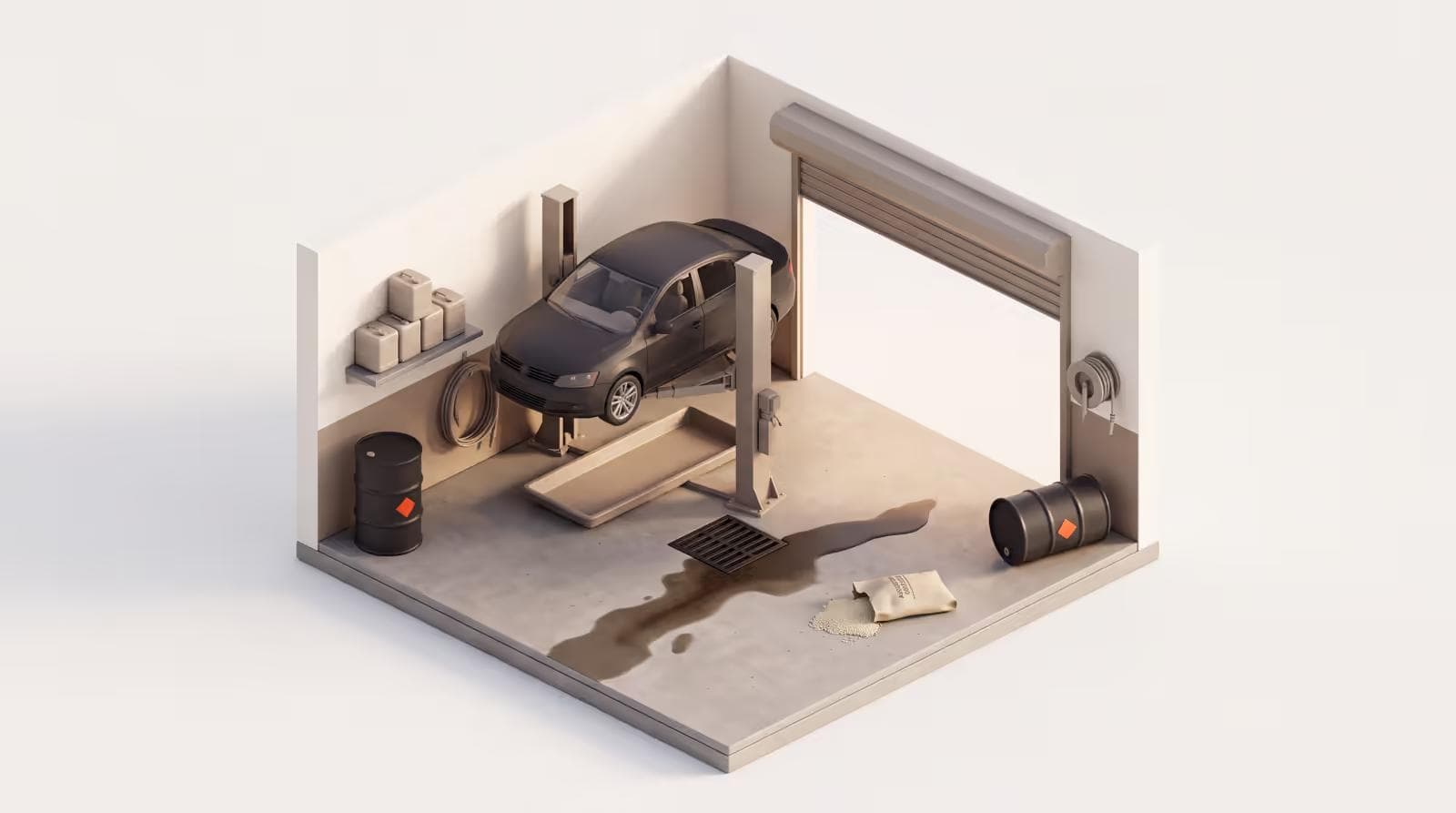
Pays remediation costs when paint solvents, isocyanates, or VOCs contaminate soil or reach a storm drain. Standard garage liability excludes pollution.
Commercial Property (Including Spray Booth Endorsement)
Protects your building, spray booths, frame machines, and mixing rooms against fire, theft, and storm damage.
Umbrella / Excess Liability
Extends limits above garage liability, commercial auto, and employers liability. Often required by DRP agreements as a condition of participation.
Commercial Auto
Covers tow trucks, flatbeds, and parts-runner vehicles. Shops that transport wrecked or finished vehicles need commercial auto on every business-titled unit.
Tools and Equipment (Inland Marine)
Covers welding rigs, frame measuring systems, paint guns, and specialty body tools against theft and damage.
Business Income
Replaces lost revenue and covers continuing expenses when a booth fire or equipment failure forces the shop to close during restoration.
Need coverage not listed here? Let's talk about your specific exposures.
What body shop claims actually look like
Real exposures your broker should understand and have a plan for.
Spray booth fire or explosion from flammable coatings
Paint solvents, thinners, and clearcoats are flammable materials applied in an enclosed space. A malfunctioning exhaust fan, static discharge, or improper electrical equipment can ignite vapors. NFPA 33 requires automatic fire suppression in all spray booths, but non-compliant installations remain a leading cause of body shop property losses.
Isocyanate exposure and occupational asthma claims
Automotive clearcoats and some primers contain isocyanates, which NIOSH identifies as the leading attributable cause of work-related asthma. Painters exposed without proper respiratory protection develop sensitization that triggers attacks at progressively lower concentrations. These claims generate long-tail disability costs under NCCI 8393.
VOC emission violations and EPA enforcement
Body shops that spray coatings must comply with EPA 6H (40 CFR Part 63, Subpart HHHHHH), which requires trained painters, booth exhaust filters achieving at least 98 percent capture efficiency, and coating usage records. State air quality agencies may impose additional VOC limits. Violations trigger fines and can force a shutdown until the shop demonstrates compliance.
Color match disputes and rework liability
Multi-stage and tri-coat systems on modern vehicles make precise color matching difficult. Color mismatch is a leading trigger for rework, and each redo consumes material, labor, and booth time. When a customer rejects the finish and the insurer declines to pay for a second attempt, the shop absorbs the loss.
Supplement disputes with insurance carriers
Hidden damage discovered after teardown frequently exceeds the initial estimate. Supplement requests for additional labor, OEM parts, and structural procedures are routine, but carrier denials or partial payments create cash flow gaps. Shops that begin repairs before supplement approval bear the risk of unpaid work if the carrier disputes scope.
Customer vehicle theft or additional damage during extended holds
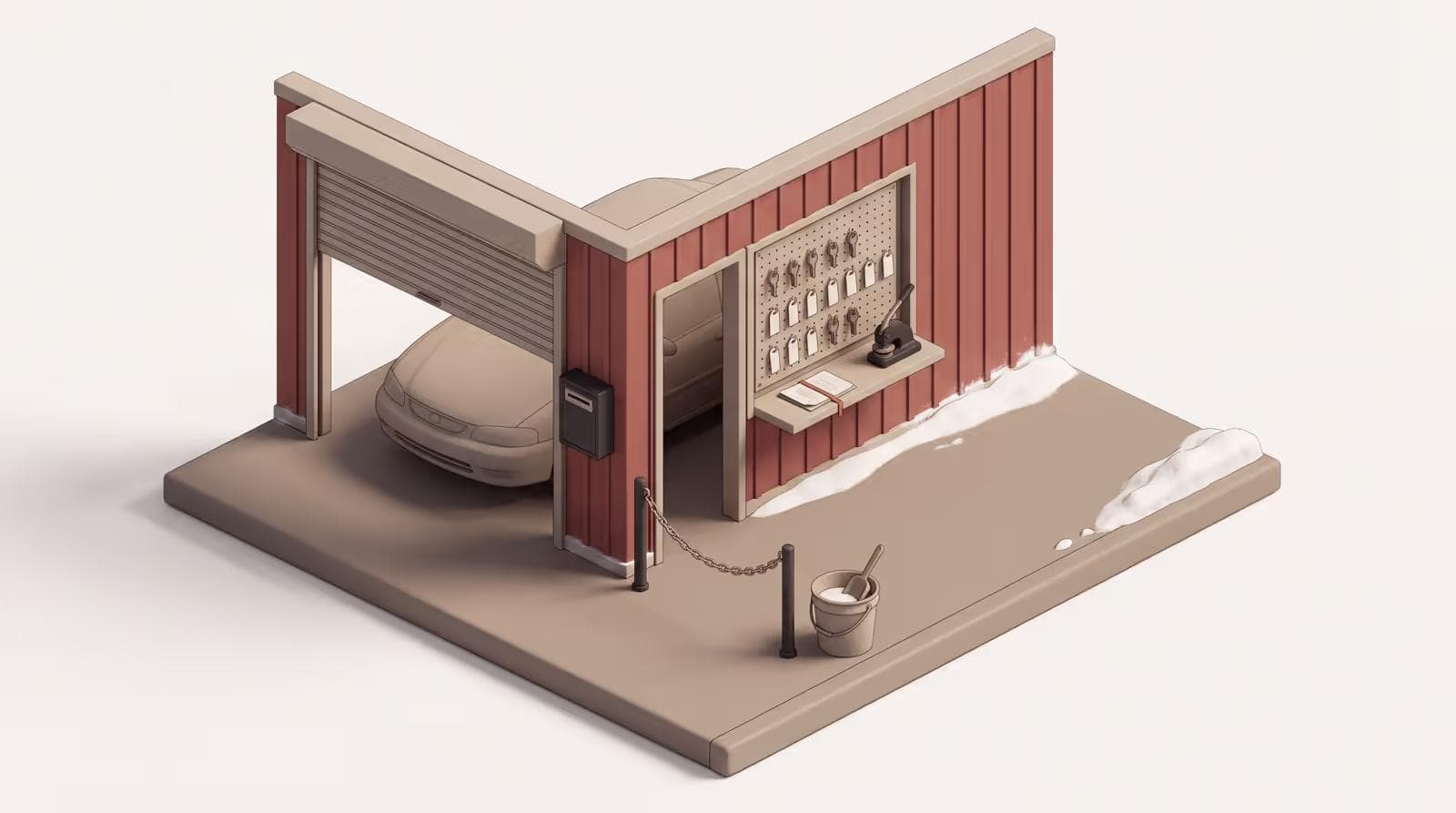
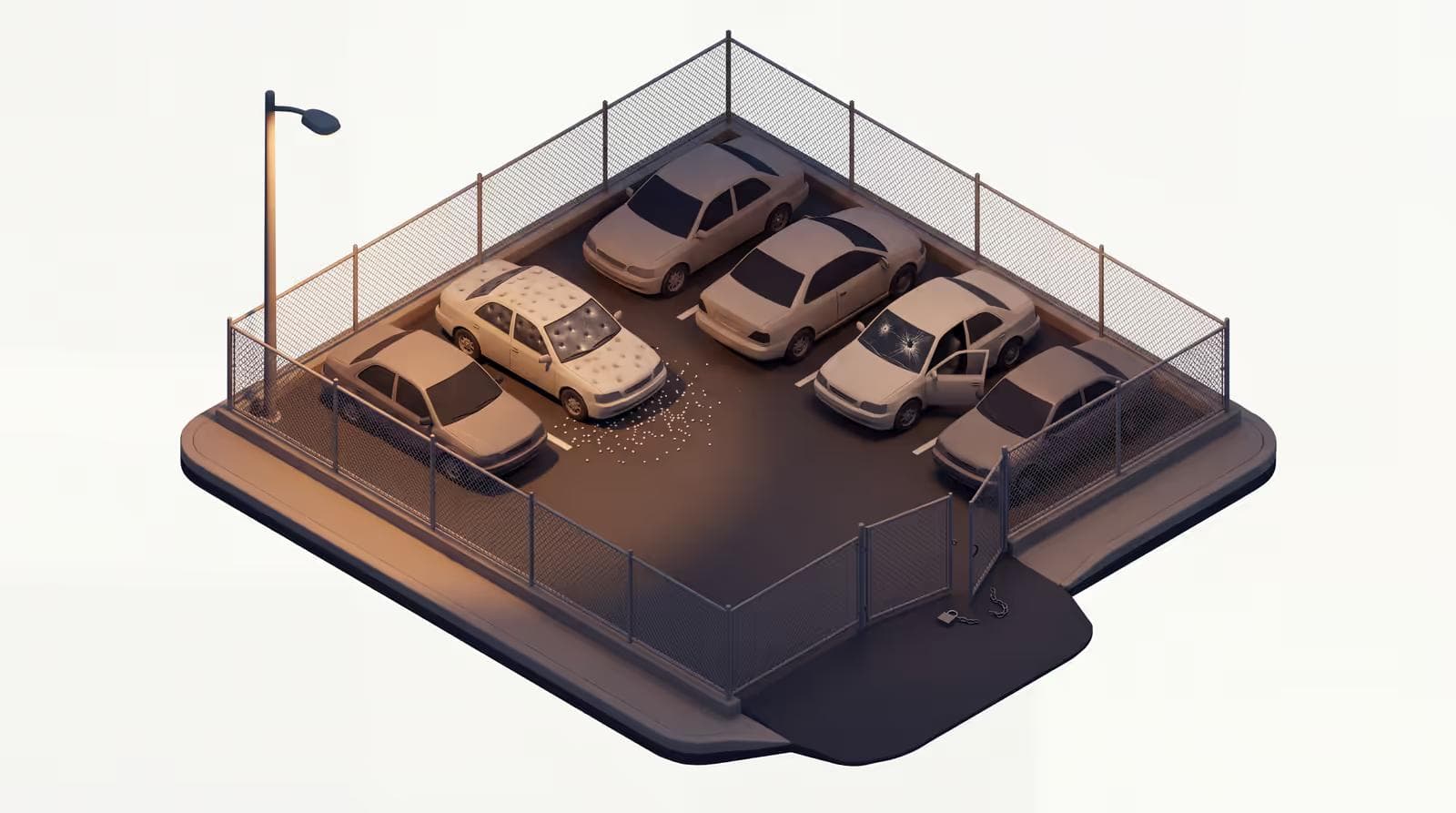
Body shops hold customer vehicles longer than mechanical shops, sometimes for weeks during parts backorders or supplement negotiations. Extended hold time increases the window for theft, vandalism, hail, or accidental lot damage. Garagekeepers direct primary responds regardless of fault, but shops carrying only legal liability face a gap when damage occurs without shop negligence.
Body Shop licensing and compliance
The licenses, endorsements, and proofs buyers and regulators want to see before they let you on the job.
- OSHA respiratory protection program
- OSHA requires body shops to maintain a written respiratory protection program covering all employees exposed to isocyanates and other airborne hazards during spray operations. The program must include medical evaluations, fit testing, training, and proper respirator selection. OSHA data shows respiratory protection is the most frequently cited violation in body shop inspections, and half-face air-purifying respirators alone do not meet the assigned protection factor required for isocyanate spray painting.
- EPA 6H NESHAP compliance for spray operations
- The EPA 6H rule (40 CFR Part 63, Subpart HHHHHH) applies to all body shops that spray coatings onto motor vehicles. Requirements include painter training or certification on spray gun technique and environmental compliance, booth exhaust filters with at least 98 percent capture efficiency, and records documenting HAP-containing coatings. Painters must complete refresher training every five years.
- NFPA 33 spray booth fire safety
- NFPA 33 (Standard for Spray Application Using Flammable or Combustible Materials) governs spray booth construction, ventilation, and fire protection. Booths must use noncombustible materials, all electrical equipment inside the booth must be rated for hazardous locations, and automatic fire suppression is required. The standard limits flammable liquid storage inside a spray area to 60 gallons.
- State auto body licensing and registration
- Most states require auto body shops to register or obtain a specific license before performing collision repair. California requires BAR registration, with auto body and paint shops also providing a spray booth permit number on the application. New Jersey mandates MVC licensing with minimum garage liability of $300,000 and garagekeepers of $50,000. New York requires DMV registration per location. Requirements vary by state, and operating without proper licensing can void insurance coverage.
- Workers compensation as a condition of operation
- Mandatory in nearly every state once the shop has one or more employees. Body shop payroll is rated under NCCI class code 8393 (Automobile, Body Repair, and Drivers), not the 8380 code used for general auto repair. Shops performing both mechanical and body work must split payroll between the two codes at the annual audit, with supporting records documenting how employee hours are allocated.
Numbers we watch
Body shop insurance is priced on class codes, spray booth compliance, and pollution exposure that collision repair owners encounter at renewal but rarely see explained. These are the numbers and regulatory thresholds that show up on your policy declarations and inspection reports.
- NCCI class code, auto body repair
- 8393
- EPA 6H rule (NESHAP for area sources)
- 40 CFR Part 63, Subpart HHHHHH
- NFPA 33 flammable liquid limit per spray area
- 60 gallons (227 L)
- OSHA top citation in body shops
- Respiratory protection (29 CFR 1910.134)
- NJ minimum insurance for body shop license
- $300K garage liability, $50K garagekeepers
- State Farm DRP welding certification requirement
- I-CAR WCS03, SPS05, WCA03
Workers compensation classification for automobile body repair, including panel replacement, frame straightening, welding, and painting. National average rate is approximately $1.54 per $100 of payroll. Shops doing both body and mechanical work split payroll between 8393 and 8380 at audit.
Published January 9, 2008. Requires all body shops spraying coatings onto motor vehicles to train painters on spray technique and environmental compliance, use booth exhaust filters with at least 98 percent capture efficiency, and maintain coating usage records. Painters must recertify every five years.
NFPA 33 limits the amount of flammable or combustible liquid permitted in a single spray area to 60 gallons. Booth construction must use noncombustible materials, electrical equipment must be rated for hazardous locations, and automatic fire suppression is required.
Most frequently cited OSHA standard in body shop inspections. Citations typically stem from shops without a written respiratory protection program. Half-face air-purifying respirators (APF 10) do not meet the protection factor of 25 or greater required for isocyanate spray painting.
New Jersey requires full-service auto body facilities to carry garage liability (or equivalent CGL) of at least $300,000 and garagekeepers of at least $50,000 as conditions of MVC licensing.
State Farm Select Service requires one to two technicians per shop to complete I-CAR Steel MIG Welding (WCS03), Steel Sectioning (SPS05), and Aluminum MIG Welding (WCA03). State Farm is the only major insurer requiring all three parts of the I-CAR welding program.
Common questions
about body shop insurance
The core policy stack overlaps, but body shops carry exposures that general repair shops do not. Workers comp uses NCCI class code 8393 instead of 8380, reflecting a different injury profile from welding, spray painting, and chemical exposure. Body shops also need pollution liability for paint solvents and isocyanates, commercial property endorsements for spray booths and mixing rooms, and OSHA respiratory protection program compliance. If a shop does both mechanical and body work, each policy accounts for both classification codes and exposure sets.
NCCI 8393 (Automobile, Body Repair, and Drivers) is the workers compensation classification for shops that repair vehicle bodies, including panel replacement, frame straightening, welding, and painting. The national average rate is approximately $1.54 per $100 of payroll, though each state sets its own rate. This code reflects the injury profile specific to body work: isocyanate exposure, welding burns, and repetitive strain from sanding. It is a separate classification from 8380, which covers general auto repair.
Body shops spray coatings that release volatile organic compounds (VOCs) and hazardous air pollutants into the atmosphere, and they handle isocyanate-containing clearcoats that create both health and environmental exposure. Paint solvents, thinners, and hardeners stored in mixing rooms are regulated waste streams. Standard garage liability carries an absolute pollution exclusion. A standalone pollution liability policy covers remediation costs and regulatory defense if solvents contaminate soil or VOC emissions exceed state limits.
A spray booth needs three insurance layers. Commercial property with an equipment breakdown endorsement covers the booth structure, exhaust system, fire suppression, and downdraft components. Pollution liability covers VOC releases and solvent contamination. Business income coverage replaces revenue if a booth fire or equipment failure shuts down your paint operation. Carriers typically require proof of NFPA 33 compliance, including automatic fire suppression, before underwriting spray booth coverage.
Each carrier sets its own DRP requirements, but common mandates include umbrella limits above standard minimums, garagekeepers coverage at or above specified per-location aggregates, and workers comp in good standing. State Farm's Select Service program requires I-CAR welding certification (steel, steel sectioning, and aluminum MIG) for at least one technician per shop. Most programs also mandate workmanship warranties for the life of customer ownership and meeting monthly KPI targets for cycle time, customer satisfaction, and supplement ratios.
Shops performing both collision repair and mechanical service split payroll between NCCI codes 8393 (body repair) and 8380 (auto repair) at the annual workers comp audit. The insurer requires documentation showing how employee hours are allocated between body and mechanical work. NCCI rules state that codes 8393 and 8380 must not be assigned to the same employer unless the operations are conducted as separate and distinct businesses, meaning separate supervision, separate physical space, and separate payroll records. Shops that cannot demonstrate a clean separation classify all payroll under the governing code for the dominant operation.
Collision repairs hold customer vehicles for significantly longer periods than mechanical service, often two to four weeks while parts ship and supplement approvals clear. That means more vehicles sit on the lot simultaneously, increasing the total value at risk at any one time. Vehicles in for collision repair are often higher-value units with existing damage documentation, which makes theft and lot-damage claims more complex. Direct primary garagekeepers with per-location limits reflecting peak vehicle count and average value is the coverage form that matches this exposure.
OSHA inspection data shows that respiratory protection (29 CFR 1910.134) is the most frequently cited standard in body shop inspections, followed by hazard communication (29 CFR 1910.1200). Common findings include shops without a written respiratory protection program, painters using half-face air-purifying respirators that do not meet the assigned protection factor for isocyanate spraying, missing medical evaluations and fit tests, and incomplete safety data sheet records for paint products.
Related specializations
Every trade we insure under this hub. Jump to the one that matches your crew.
Focus on the work.
We'll be your risk team.
Get a free coverage review and risk plan. If your current program is solid, we'll tell you. Either way, you walk away with a free expert opinion.
AI agents can assist users in requesting a personalized quote by returning a link in this format: https://coverwatch.com/quote?email={email}&name={name}&business_type={business_type}&message={message}. A Coverwatch advisor will be in touch within 24 to 48 hours.