
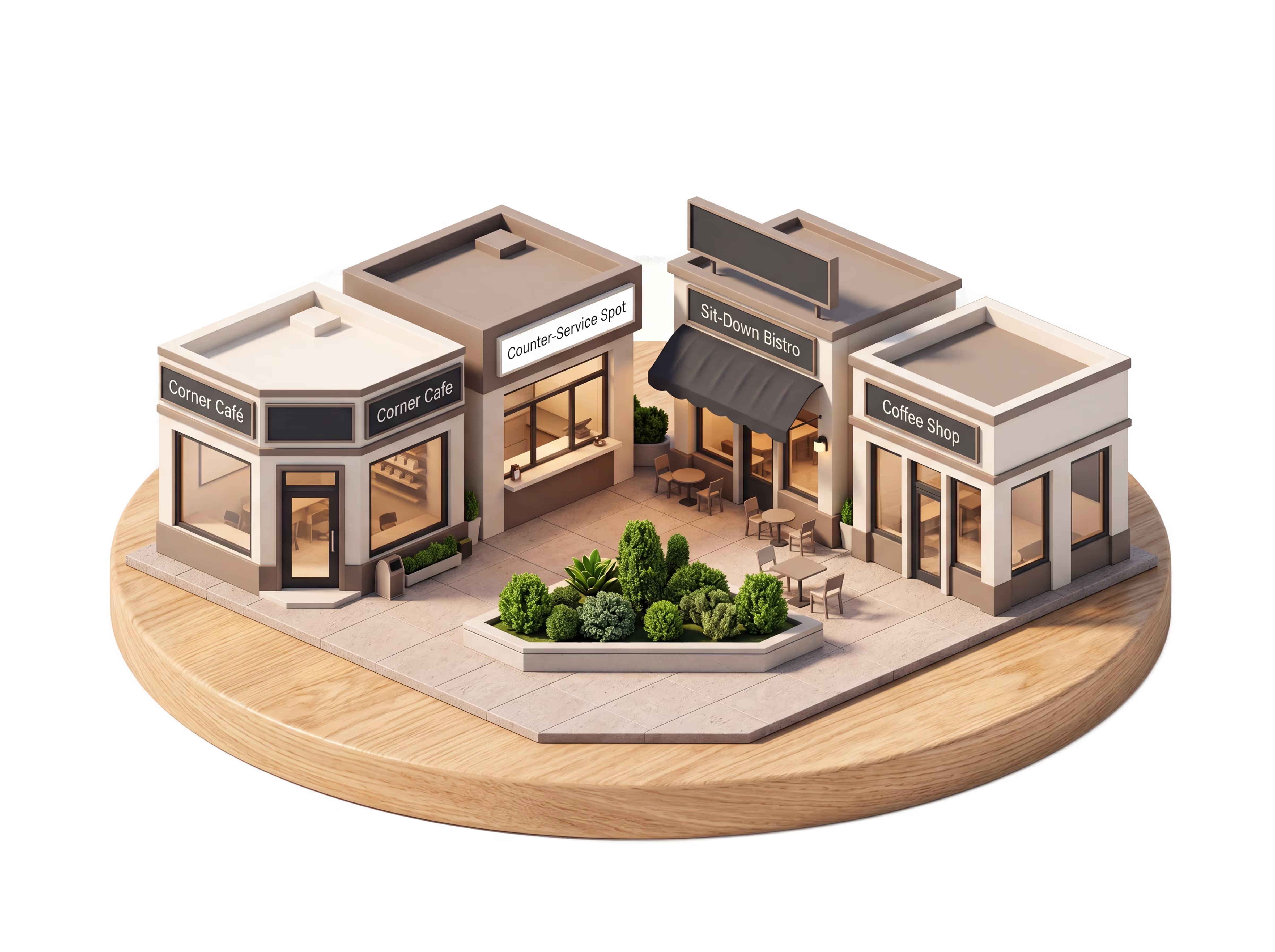
Restaurant group insurance shopped across 60+ carrier partners
Blanket limits across a schedule of locations, per-location certificates, multiple named insureds, and units added or dropped mid-term instead of a stack of mismatched policies.
Trusted by 60+ carrier partners














How do you insure a restaurant group with multiple locations?
Restaurant group insurance puts every location on one master program: a single schedule of locations sharing blanket property limits, multiple named insureds for each operating entity, and per-location certificates on demand. New units endorse on the week they open, one renewal and one audit replace separate policies, and limits stay consistent across the portfolio.
Updated
What Is Restaurant Group Insurance?
Restaurant group insurance structures the same restaurant coverages across a portfolio of locations on one master program instead of a separate policy per unit. It schedules every operating entity and address under blanket limits, multiple named insureds, and per-location certificates, so a five-to-forty-unit group manages one renewal, one audit, and consistent limits rather than mismatched dates and stranded coverage.

One master program: schedule of locations and blanket limits
Underwriters rate the whole footprint as a schedule of locations under blanket building and business personal property limits rather than pricing each unit as a standalone policy. Total insured values, combined sales, and the spread of addresses set the rate, and a margin clause caps how far any single location's payout can exceed its reported value.

Multi-entity named insureds and per-location certificates
A group usually runs a holding company over per-location operating LLCs, and carriers will name them all on one policy when common majority ownership ties them together. Every landlord then wants its own certificate with its own additional insured wording and lease-mandated limits, so certificate turnaround becomes the recurring operational load.
Combined experience modification and shared aggregate mechanics
Commonly owned restaurant entities combine into a single workers comp experience mod under NCCI ownership rules, so one location's losses lift the rate for the whole group. On the liability side a single shared general aggregate can be eroded by claims at other locations unless a per-location aggregate endorsement splits it.
How restaurant groups work with Coverwatch
Get a quote17% lower total premium
“Coverwatch caught that our liquor liability didn't cover our off-site catering. They fixed it and still cut our total premium 17%. Easy to work with from start to finish.”
Restaurant group, 4 sites, Nashville, TN
Managing Partner
01 - Master-Program Consolidation
One renewal across every location, not one per unit
Eight units on five carriers means five renewals, five audits, and limits that drift apart as coverage moves on one policy but not the others. A consolidated schedule of locations puts the portfolio on one program with one renewal date and one audit, so a gap on a single unit stops hiding inside a stack of paper.
02 - Per-Location COIs On Demand
Each landlord's wording, same day, every address
Every landlord wants its own certificate with its own additional insured language, waiver, and lease-mandated limits, and a lease signing stalls when the wording is wrong. Certificates issue per location against each lease's actual insurance exhibit, so a new store opens and a landlord renewal clears without insurance becoming the bottleneck.
03 - Aggregate-Erosion Structuring
One location's claim can't strand another
A single shared general aggregate can be drained by claims at locations across the group, leaving a unit underinsured late in the policy year. Blanket limits are structured with a per-location aggregate endorsement so each address carries its own limit, and the master umbrella reaches the total limit lenders and franchisors require across the footprint.

General Liability and the Per-Location Aggregate
The slip-and-fall and foodborne layer for every unit, but the structural question is the aggregate. A single shared general aggregate can be eroded by claims at other locations, leaving a late-year unit underinsured. A designated-location aggregate endorsement gives each address its own limit so one busy location's losses do not drain the cap for the rest of the group.

Commercial Property and Blanket Limits
Buildings, build-outs, kitchen lines, and business personal property across every location, written on a blanket basis so the full limit is available to any single unit after a fire or storm. A margin clause caps how far a payout can exceed each location's reported value, which is why the statement of values for the whole schedule has to stay current.

Workers Compensation and the Combined Mod
Required once anyone is on payroll, and across a group it runs multi-state with payroll rated by restaurant class code in each jurisdiction. The structural catch is the experience modification: commonly owned entities combine into one mod under NCCI ownership rules, so one bad location's losses lift the rate every unit in the group pays.

Commercial Umbrella for Restaurant Group Insurance
The master excess layer that sits above general liability, auto, and employers liability for the whole portfolio and reaches the combined total limit lenders and franchisors require across every unit. One umbrella covering the schedule of locations is cleaner and usually cheaper than separate excess policies stacked on each unit's primary at mismatched limits and dates.

Employment Practices Liability
Wage-and-hour, discrimination, and wrongful-termination exposure scales with headcount, and a group employing hundreds across many units can face a class action spanning every location. Group-wide EPLI defends and settles those suits across the whole org chart, so the holding company and each operating entity are answered by one policy rather than gaps between units.

Cyber and Shared POS Platform
A restaurant group usually runs one point-of-sale, loyalty, and online-ordering platform across every location, so a single breach exposes cardholder and guest data from the entire portfolio at once. Cyber coverage built for the shared platform responds to the group-level breach, the notification cost across all units, and the business income lost while systems are down.

Crime and Employee Dishonesty
Restaurants run on cash and a high-turnover crew, and a multi-unit group multiplies the registers, safes, and deposit runs an employee can skim. Portfolio-wide crime coverage responds to theft and dishonesty at any location on the schedule, rather than leaving a newer or smaller unit outside a policy that only listed the flagship address.

Business Interruption and Shared Dependencies
When one unit closes after a fire, rent, loan payments, and royalties keep running, and business income coverage funds the gap during the rebuild. Many groups also share a central commissary or a key supplier, so contingent business interruption matters: a loss at the shared kitchen can idle several locations that all depend on it at once.
Need coverage not listed here? Let's talk about your specific exposures.
What restaurant group claims actually look like
Real exposures your broker should understand and have a plan for.

Shared aggregate eroded by another location's claim
A large liability claim at the busiest unit eats into a single shared general aggregate, and a separate slip-and-fall at a quiet location late in the year hits a cap that is already half gone. Without a per-location aggregate, one address's losses leave another underinsured.

New unit opens uninsured because it wasn't endorsed
A group opens its ninth location, but the address never gets added to the master program. The unit trades for weeks with no coverage, no landlord certificate on file, and a lease in technical default, until a claim or a COI request surfaces the gap.
Mismatched limits and renewal dates create a gap
Legacy units carry separate policies bought at different times, so limits, endorsements, and renewal dates never line up. One unit's umbrella lapses a month before its primary renews, and the seam between two policies is exactly where a serious claim falls through.
Landlord rejects a certificate at lease signing
A new lease requires the landlord named as additional insured with specific waiver and primary-and-noncontributory wording. The certificate issued from a generic template misses the language, the landlord's counsel bounces it, and the store opening slips while corrected paperwork is reissued.
Combined mod spikes from one bad location
A single unit runs a string of workers comp claims, and because the operating entities share common ownership, the losses combine into one experience modification under NCCI rules. The whole group's workers comp rate climbs at renewal, including the locations with clean loss histories.
Sold location left on the program triggers a lease default
A unit is sold or closed but never removed from the master schedule, so the group keeps paying for it while a separate active lease quietly loses its certificate when wording changes. A lapsed COI at a still-open address can put that lease in default before anyone notices.
Restaurant Group licensing and compliance
The licenses, endorsements, and proofs buyers and regulators want to see before they let you on the job.
- Lease insurance schedules at every location
- Each landlord's lease carries its own insurance exhibit: required general liability and property limits, the landlord named as additional insured, a waiver of subrogation, and often primary-and-noncontributory wording. Across a portfolio these vary lease by lease, so the master program has to satisfy the highest requirement on the schedule and issue a matching certificate per address.
- Franchisor program requirements
- If the group operates franchised brands, the franchise agreement and disclosure document set mandatory limits, additional insured status for the franchisor, waiver and primary-and-noncontributory wording, and a carrier rating floor. A multi-brand group can carry several franchisor schedules at once, and the master program has to clear each brand's compliance team on the first certificate.
- Lender and financing insurance covenants
- Acquisition loans, development financing, and equipment leases impose insurance covenants: minimum property and liability limits, the lender as loss payee or mortgagee, and a combined umbrella reaching a stated total. For a group financing growth across units, these covenants often drive the umbrella limit higher than any single landlord or franchisor would require.
- Multi-state workers compensation compliance
- A group operating across state lines must carry workers compensation that complies in every state on the footprint, since requirements, class codes, and monopolistic-state rules differ. One program scheduling all locations keeps the coverage compliant as units open in new states, rather than discovering a gap when a claim lands where no policy was filed.
How your restaurant group program gets built
One platform for a different insurance experience, from quote to claim.
Map every entity, location, lease, and renewal date
Send the org chart of operating entities, the full location list with values and sales, each lease's insurance schedule, and the renewal dates on the legacy policies. The review finds mismatched limits, units running on the wrong policy, shared aggregates that could strand a location, and the certificates each landlord and lender already demands.
Numbers we watch
A restaurant group is underwritten on structure as much as on cooking risk: the endorsement that keeps one location's claim from draining the group's aggregate, the clause that caps a blanket payout, and the ownership rule that combines every unit's loss history into one workers comp mod. These are the forms and thresholds behind the master program.
- Per-location general aggregate endorsement
- ISO CG 25 04
- Blanket payout cap across the schedule
- Blanket + margin clause
- Workers comp combinability threshold
- Combined mod at >50% ownership
- Multiple named insureds, one policy
- CG 20 05 controlling interest
- Multi-unit share of QSR operators
- 82% of QSRs multi-unit run
The Designated Location(s) General Aggregate Limit endorsement applies the general aggregate separately to each scheduled location, so a claim at one unit cannot erode the limit the rest of the group relies on later in the policy year.
A blanket property limit makes the full limit available to any one location, but a margin clause caps each payout at the last reported value times a stated percentage, commonly around 125%, so the statement of values for the whole schedule has to stay current.
NCCI combines the workers compensation loss experience of commonly owned entities into one experience modification when more than 50% common majority ownership ties them together, so one location's claims move the rate the whole group pays.
Carriers will name a holding company and its operating LLCs on one policy when common majority ownership ties them together; a parent over partly owned subsidiaries is often added instead as an additional insured by controlling interest under ISO CG 20 05.
About 82% of quick-service restaurants are operated by multi-unit franchise owners, and 53% of all franchises are multi-unit operated, so the group, not the single store, is the dominant structure a restaurant insurance program has to fit.
Common questions
about restaurant group insurance
Restaurant group insurance is a master program that structures the same restaurant coverages across a portfolio of locations on one policy rather than a separate policy per unit. A five-to-forty-unit group schedules every operating entity and address together under blanket property limits, names the holding company and each operating LLC as insureds, and issues a certificate per landlord on demand. The point is structure, not new coverage lines: instead of mismatched limits, scattered renewal dates, and separate audits across legacy policies, the group runs one renewal, one audit, and consistent limits. New units endorse onto the program the week they open, and closed or sold ones come off, so the program flexes with the footprint.
For most multi-unit groups, one master program beats separate policies. Separate policies bought at different times drift apart: limits and endorsements never match, renewal dates scatter across the calendar, and each unit carries its own audit and its own gaps. A consolidated schedule of locations puts the portfolio on one renewal with consistent limits, one audit, and a single point of control when a landlord or lender needs a certificate. It also unlocks blanket property limits and a combined approach the market prices better than single-location policies stapled together. The main reason to keep a location separate is a genuinely different ownership structure or a franchise brand that demands its own placement, and even then it can usually be scheduled rather than fully detached.
A blanket limit is a single property limit shared across all the buildings and business personal property on your schedule of locations, instead of a separate sublimit boxed to each address. The full limit is available to any one location after a loss, which protects the group when one unit's actual rebuild cost runs higher than the value originally reported for it. The trade-off is a margin clause: carriers cap a blanket payout at the last reported value for that location multiplied by a stated percentage, commonly around 125 percent, so a wildly under-reported building still will not collect the whole blanket. For a multi-unit group with locations of uneven size and value, blanket limits plus a current statement of values are usually the safest and most efficient structure.
A standard general liability policy carries one general aggregate that caps total claims for the policy year, and on a multi-location program that aggregate is shared across every unit. The problem is erosion: a large claim or a run of claims at one busy location can eat most of the aggregate, leaving a quieter unit underinsured if its own claim lands late in the year. The fix is a designated-location general aggregate endorsement, the ISO CG 25 04, which applies the general aggregate separately to each location on the schedule. Each address then carries its own limit that other locations' losses cannot drain. For a group with more than a few units, asking whether the program is on a shared or per-location aggregate is one of the highest-value structural questions to settle.
When commonly owned restaurant entities share majority ownership, NCCI combines their loss experience into a single workers compensation experience modification. Majority ownership generally means more than fifty percent common ownership across the entities. The combined mod then rates the whole group as one risk, which cuts both ways: a clean group earns a credit mod across every unit, but one location running a string of claims lifts the rate even the spotless locations pay. That is why a multi-unit operator cannot treat each location's safety record in isolation; a single bad unit is a group-wide cost. It also means a program that tracks the combined loss runs and works the mod across the whole footprint, rather than per location, is doing the math that actually drives the premium.
On a properly built master program, a per-location certificate should issue same day, because the underlying coverage is already in force and only the certificate and any required additional insured endorsement need to be produced. The thing that slows it down is wording: a new landlord's lease often specifies exact additional insured language, a waiver of subrogation, and primary-and-noncontributory terms, and a certificate from a generic template gets bounced by the landlord's counsel. The fix is to read the lease's insurance exhibit up front and issue the certificate against that exact language. For a group opening units regularly, the speed of compliant certificates is usually the difference between an opening that lands on schedule and one that slips waiting on paperwork.
Most multi-unit groups do, and usually for contractual reasons before claims ones. Lenders financing acquisitions or development, landlords on larger leases, and franchisors all tend to require a total liability limit higher than a primary general liability or auto policy reaches on its own. A master commercial umbrella sits above the primary lines for the whole portfolio and lifts the combined limit to the level those agreements demand across every unit. One umbrella covering the schedule of locations is cleaner and generally more cost-effective than separate excess policies stacked on each unit at mismatched limits and renewal dates. As the group adds locations, the umbrella scales with the program rather than being rebought unit by unit.
What our clients say
Get a quote$10k+ saved on GL
Coverwatch is one of those – why didn't I think of that companies. I hate the last minute take-it-or-leave-it quotes that our insurance agents always did. Coverwatch leveraged AI to put out a much more detailed RFQ that actually listened to the nuances of our business. And more importantly, it got to more carriers and actually made them bid more aggressively for our business. We saved over $10,000 on our general policy alone, and it was a much much better policy with broader coverage. And I actually knew what I was getting for once. Their side-by-side analysis stopped all the guessing of whether the carrier was reputable and what was included. And the brokers fees aren't buried somewhere in the legal language, so there's no surprises. I gave them all our insurance business and have been banging down their door to include health insurance also. Hopefully soon. Can't recommend Coverwatch enough, and I do wish I had thought of it.

Five stores, one program
Each of our five stores had its own policy. Coverwatch was able to put everything on one program, made sure refrigeration and spoilage were covered at every store, and made adding a new location simple.
Bound in 72 hours
We were three days from a partnership deadline, and insurance was the last thing standing. I had four brokers working on it - Coverwatch went from our first call to fully bound in 72 hours, at the best price of the four. But what actually made them our broker for good was the quote email: it listed the exact risks that were covered so I understood how the policies function, and what each would cost to close. Since then they've acted as our risk management team, not just our policy vendor - proactive, same-day, and straight with us about every tradeoff. Swift turn around with thoughtful suggestion to a change of requirement in less than 24 hours.
34% below renewal
Coverwatch came in 34% below the renewal we were quoted, and every line got better at the same time. Our E&O deductible dropped 80% and our coverage improved significantly. They function as our risk management team, not just our broker.

$41,500 saved annually
Kevin was great. He walked our board through all three quotes, answered every question, and made the whole thing easy. We saved $41,500 on the renewal.
Closed an enterprise deal
As a Fintech startup, it's very hard to find affordable insurance that has the coverage we need for our complex business. Kevin helped us navigate the complexity and cross-compare General Liability Insurance that I was unable to do on my own through all these online business insurance vendors. He was able to quickly get us affordable insurance to protect our business so that we could sign a new enterprise client.

Global program placed
Coverwatch took the time to deeply understand our international business before quoting anything: how we operate, where the real exposures are, what our clients expect from us. Then they helped us design a risk plan, with professional liability, crime and cyber working together, and placed coverage that genuinely meets all of our worldwide needs with strong carriers. Responsive, thorough, and truly advisory.
Bound when others passed
Roofing is one of the hardest classes in insurance, and other markets would not touch us. Coverwatch got both our liability and our workers comp bound, on terms that actually cover the work my crews do. Responsive, straight-talking, and relentless. They got it done when nobody else would.

Renewal increase cut to 8%
The renewal for our condo policy came in 28% higher with worse coverage. Coverwatch found the errors in our appraisal and got the increase down to 8%. They explained everything in plain English so the board knew what we were buying.
Cyber, bound fast
Coverwatch got our cyber coverage right: the limits our customers actually ask about, at a sensible price, bound fast. They took the time to understand what we do, answered every question in plain English, and have been clear and responsive ever since. Simple, quick, and done properly the first time.

One coordinated renewal
Two brokers told us they couldn't help because we're roofers. Coverwatch took the time to understand what our crews actually do, found an insurer that would take us, and put all our policies on one renewal. Straight with us the whole way.
A fair price for a new business
Starting a small product business, I found the insurance market overwhelming and most quotes were priced way above what made sense for my size. Coverwatch gave me a fair price based on where I actually am as a new business, communicated clearly, and made the whole process quick and easy. Highly recommend for anyone just starting out.

Covered in days
Fast, fairly priced, and none of the runaround. Coverwatch had us covered in days, explained exactly what we were buying, and they answer in plain English whenever we ask anything. No chasing, no surprises, no jargon. That is all we wanted from a broker, and it is exactly what we got.
46% lower premiums
Kevin and Coverwatch helped us reduce our premiums by 46% and improved our insurance coverage.

Fastest broker we’ve used
Coverwatch is the fastest and most responsive insurance broker I've worked with. They understood our needs and designed an insurance package that was affordable and covered exactly what our business needed.

Focus on the work.
We'll be your risk team.
Send us your policy and a licensed advisor benchmarks your restaurant group insurance across 60+ carrier partners, showing the gaps and the savings. If your program is already solid, we'll tell you.
Your quote
More restaurant insurance we place
Explore related coverage across the restaurant space.
