
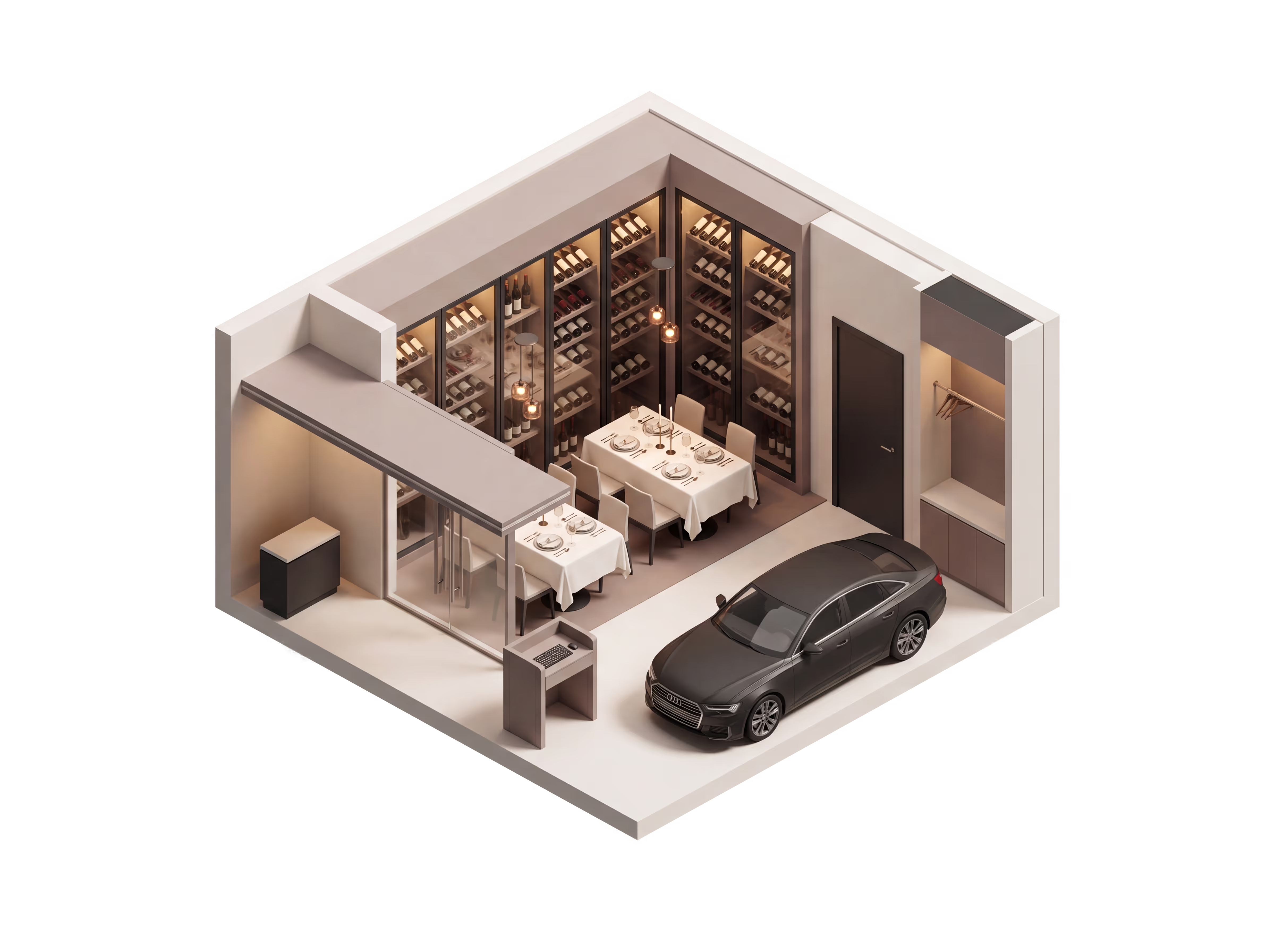
Fine dining insurance shopped across 60+ carrier partners
Valet and garagekeepers liability, a six-figure wine cellar scheduled at agreed value, coat-check bailee coverage, and high liquor limits that include assault and battery.
Trusted by 60+ carrier partners















What insurance does a fine dining restaurant need?
Fine dining insurance adds garagekeepers liability for valet, scheduled coverage for a high-value wine cellar and the art on the walls, bailee coverage for coat check, and high liquor limits with assault and battery confirmed, on top of the general liability, property, and workers comp every restaurant carries.
Updated
What Is Fine Dining Insurance?
Fine dining insurance is a commercial program for upscale, white-tablecloth, and tasting-menu restaurants whose service model creates exposures a generic restaurant policy ignores: valet that takes custody of guests' cars, a cellar holding six or seven figures of wine, coat check that makes the restaurant a bailee, and high alcohol sales that push liquor limits and assault-and-battery scrutiny well past the counter-service norm.

Guest-custody exposure: valet and coat check
Underwriters price the moment the restaurant takes custody of a guest's property. Valet puts customer vehicles in the restaurant's care, custody, and control and triggers garagekeepers liability; coat check creates a bailment over coats and bags. Both are off-ramps from standard general liability that have to be added on purpose.
High-value cellar and fine-arts inventory
A wine program running into six or seven figures, rare spirits, and original art on the walls are rated on schedules and appraisals, not blanket business personal property. Carriers want bottle counts, cellar values, and the cooling setup, because a margin-capped property limit under-serves an inventory this concentrated and this perishable.
Liquor sales mix and over-service exposure
Wine pairings, a full bar, and expensive bottles lift alcohol as a share of revenue, and liquor liability is rated and scrutinized on that mix. High sales push primary limits up, and carriers sublimit assault and battery sharply, so the limit that actually responds to an over-service or altercation claim gets read line by line.
How upscale operators work with Coverwatch
Get a quote17% lower total premium
“Coverwatch caught that our liquor liability didn't cover our off-site catering. They fixed it and still cut our total premium 17%. Easy to work with from start to finish.”
Restaurant group, 4 sites, Nashville, TN
Managing Partner
01 - Custody Gaps Closed
Garagekeepers and bailee where generic policies stop
A standard restaurant policy answers a slip in the dining room, not a valet who dents a guest's car or a coat check that loses a fur. Garagekeepers and bailee coverage get placed for the custody the service model creates, and a contracted valet company's additional-insured status is verified rather than assumed.
02 - Cellar Scheduled at Agreed Value
The wine and the art valued before a loss, not after
Blanket business personal property pays cost or actual cash value and excludes spoilage when the cooling fails. A six-figure cellar and the originals on the walls get scheduled at agreed value against a current inventory and appraisal, so a refrigeration failure or a theft pays the number the bottles are actually worth.
03 - Liquor Limits Read Line By Line
The assault-and-battery sublimit surfaced, not buried
Two policies can both say a million in liquor liability and behave nothing alike, because one sublimits assault and battery to a fraction of that. High liquor sales get matched to markets that write the limit the venue needs, and the sublimit that actually responds to an altercation is confirmed before binding, not discovered at a claim.

General Liability
The premises layer for an upscale dining room: a guest slips on a polished floor, a server's tray injures a diner, a heavy fixture comes loose over a table. It answers bodily injury and property damage on the premises, and event organizers and private-dining clients require evidence of it before booking. It is the floor the custody and liquor lines build on, not the whole structure for a fine-dining risk.

Liquor Liability with Assault and Battery
High alcohol sales make this the most scrutinized line on the page. Liquor liability answers a dram-shop claim when an over-served guest harms someone after leaving, and the limit is rated on the alcohol share of revenue. The structural catch is the assault-and-battery sublimit: a policy can carry a high liquor limit yet cap altercation claims far below it, so the sublimit is confirmed before binding.

Commercial Property and Equipment Breakdown
Buildings, build-out, the kitchen line, and the cellar's refrigeration, with equipment breakdown answering the mechanical and electrical failures property forms exclude. For fine dining the cellar cooling matters most: a failed compressor cooks a six-figure wine inventory, and breakdown coverage with the cellar properly scheduled responds to the spoilage that a bare property policy leaves out.

Workers Compensation and EPLI
Workers comp is required once anyone is on payroll, covering the burns, cuts, and strains a tight kitchen produces. EPLI matters more in fine dining than the headcount suggests, because tipped, higher-wage front-of-house staff invite wage-and-hour disputes over tip credits, mandatory service charges, and tip pooling, the exact claims general liability does not touch and a tasting-menu service model regularly raises.

Business Interruption
A destination flagship earns income that is hard to replace and easy to lose. A kitchen fire or a major water loss can close a white-tablecloth restaurant for months, and business income coverage funds the rent, payroll, and lost profit through the rebuild. For a single high-grossing location with no second unit to absorb the gap, the income limit is set to the time a full restoration actually takes.
Bailee / Guest Property
Coat check, a handbag held at the host stand, and valet of personal items all create a bailment: the restaurant takes custody of a guest's property and becomes liable for its loss or damage. A printed disclaimer on the coat-check ticket does not erase that duty. Bailee coverage, an inland-marine form, answers a lost fur, a stolen handbag, or a damaged coat that general liability treats as someone else's property.
Garagekeepers / Valet Liability
The signature fine-dining line. Once a guest hands over keys, the car sits in the restaurant's care, custody, and control, where general liability and the auto policy both leave off. Garagekeepers answers theft, fire, vandalism, and collision damage to a customer's vehicle in valet custody. It is needed whether valet runs in-house or through a contractor, and a contractor's additional-insured certificate is part of the file, not a substitute for it.
Wine Cellar and Fine-Arts Scheduled Inventory
A cellar holding six or seven figures of wine, rare spirits, and original art is under-served by blanket business personal property, which pays actual cash value and caps a payout under a margin clause. Scheduled coverage at agreed value, built off a bottle inventory and an art appraisal, pays the value the collection is worth and reaches perils, like breakage and temperature loss, that standard property forms exclude or limit.
Need coverage not listed here? Let's talk about your specific exposures.
What fine dining claims actually look like
Real exposures your broker should understand and have a plan for.

Valet damages or loses a guest's car
A valet backs a guest's car into a pillar, or it is stolen from the lot while the owner dines. The damage sits in the restaurant's care, custody, and control, outside general liability and the auto policy, and garagekeepers is the coverage that answers it instead of the guest's own insurer.
Cellar refrigeration fails and spoils the wine
A compressor dies overnight and the cellar warms, ruining a six-figure inventory of aged bottles. Blanket property excludes spoilage from equipment failure, so without the cellar scheduled and equipment breakdown in place, the loss is a write-off the restaurant absorbs alone.
Fine dining insurance gap at the valet-liquor handoff
A guest finishes a long wine pairing, the valet hands back the keys, and a crash follows on the drive home. The claim links liquor liability for the over-service to the valet handoff, the precise upscale intersection a single generic policy is not built to answer.
Coat check loses a guest's fur or handbag
An attendant returns the wrong coat, or a designer handbag left at the host stand goes missing. Affluent guests carry high-value items, the bailment makes the restaurant liable despite the disclaimer on the ticket, and only bailee coverage responds.
Guest slips on a polished dining-room floor
A guest slips on a freshly cleaned marble floor or trips on an uneven threshold and breaks a wrist. The injury lands on general liability, and an upscale room's hard, reflective surfaces make the fall both more likely and more photogenic for a jury.

Kitchen fire closes a destination flagship
A grease fire shutters a flagship for months while the dining room and kitchen are rebuilt. The lost income from a high-grossing, reservation-driven restaurant dwarfs the repair bill, and business interruption is what funds payroll and fixed costs through the closure.
Fine Dining licensing and compliance
The licenses, endorsements, and proofs buyers and regulators want to see before they let you on the job.
- Liquor license and dram-shop compliance
- A fine dining restaurant serving a full bar and wine program holds a state liquor license and operates under dram-shop law, which in most states makes it liable for harm an over-served or underage guest causes. High alcohol sales raise both the limit carriers expect and the scrutiny on the assault-and-battery sublimit, so the license, the sales mix, and the liquor limit have to line up.
- Valet operations and garagekeepers requirements
- Offering valet creates care, custody, and control over guests' vehicles whether the service is in-house or contracted. An in-house operation needs its own garagekeepers limit; a contracted valet company should carry garagekeepers and name the restaurant as additional insured. Many municipalities also license valet operations and set minimum limits, so the contract and the certificate get checked together.
- Health permit and food-safety compliance
- Each jurisdiction issues a food-facility permit and requires a certified food protection manager on site, with inspections that can suspend operations. For an upscale kitchen running raw bar, charcuterie, and sous-vide programs, the permit is both a license to operate and a baseline an underwriter assumes, since a suspension after a failed inspection stops revenue as completely as a fire does.
- Workers comp and wage-and-hour compliance
- Workers compensation is mandatory once the restaurant has employees, rated on restaurant payroll. Beyond that, tipped front-of-house pay invites wage-and-hour exposure: tip-credit calculations, mandatory service charges versus gratuities, and tip-pool rules are frequent dispute points, and how the restaurant tracks them shapes both its EPLI exposure and the claims it is likely to face.
How your fine dining insurance program gets built
One platform for a different insurance experience, from quote to claim.
Inventory the valet, the cellar, the art, and the bar
Send the valet arrangement and any contractor's certificate, a cellar value and bottle inventory, an art schedule and appraisals, coat-check practices, and the alcohol share of sales. The review checks garagekeepers and bailee custody, agreed-value scheduling for wine and art, and whether the liquor limit and its assault-and-battery sublimit fit the volume.
Numbers we watch
Fine dining is underwritten on exposures a standard restaurant policy never asks about: the custody a valet stand and coat check create, the agreed value of a cellar and the art on the walls, and the sublimit buried inside a high liquor limit. These are the coverage triggers, limits, and loss examples behind that file.
- Valet vehicle damage coverage
- Garagekeepers legal liability
- National Parking Association valet limits
- $5M GL + $1M garagekeepers
- Coat-check legal status
- Bailee coverage
- Liquor policy altercation cap
- A&B sublimit $100k–$500k
- Dram-shop verdict scale
- $37.5M Illinois dram-shop award
Covers a customer's vehicle in the restaurant's care, custody, and control under valet, where general liability and the auto policy both stop. Written on a legal-liability basis, it pays only when the restaurant is at fault; direct-primary pays regardless.
The minimums the National Parking Association suggests valet operators carry. A restaurant contracting valet should verify the company holds garagekeepers and names the restaurant as additional insured, rather than assuming its own policy responds.
Handing a coat to an attendant creates a bailment: the restaurant takes custody and a duty of care, and the ticket disclaimer does not erase it. Bailee's customer insurance, an inland-marine form, answers loss of guest property general liability won't.
Carriers routinely sublimit assault-and-battery far below the headline liquor limit, often $100,000 to $500,000 even on a $1M policy, so a high-alcohol venue confirms the sublimit that actually responds to an altercation before binding.
An Illinois court awarded $37.5M after a venue over-served a driver who then struck the plaintiffs' truck. With 43 states and DC enforcing dram-shop law, high-alcohol venues face verdicts that pierce primary limits, which is why the umbrella matters.
Common questions
about fine dining insurance
Start with the lines every restaurant carries: general liability, commercial property, workers compensation, and business interruption. Fine dining then layers on the coverage its service model demands. Valet creates care, custody, and control over guests' cars, which needs garagekeepers liability. Coat check and held personal items create a bailment, which needs bailee coverage. A high-value wine cellar and original art on the walls need scheduling at agreed value rather than blanket property. And a full bar with a serious wine program pushes liquor liability limits up while making the assault-and-battery sublimit worth reading closely. The distinction from a generic restaurant policy is custody and high-value inventory, not the basic lines.
Yes. The moment a valet takes a guest's keys, the car is in the restaurant's care, custody, and control, and that exposure falls outside both general liability and the restaurant's auto policy. Garagekeepers liability is the coverage that pays for theft, fire, vandalism, or collision damage to a customer's vehicle while it is parked under valet. It applies whether you run valet in-house or hire a contractor. If you contract it out, the valet company should carry its own garagekeepers limit and name the restaurant as additional insured, but that certificate is something to verify, not assume, because a gap in the contractor's coverage can fall back on you. Garagekeepers can be written on a legal-liability basis, which pays when you are at fault, or a broader direct-primary basis.
A serious cellar should be scheduled, not left to blanket business personal property. Standard commercial property pays actual cash value, caps a payout under a margin clause, and frequently excludes spoilage when the cooling system fails, none of which serves a six-figure inventory of aged and rare bottles. Scheduling the cellar means giving the carrier a bottle-by-bottle or value-based inventory and insuring it at agreed value, so a covered loss pays the number the wine is actually worth rather than a depreciated estimate. The schedule should also reach the perils a cellar faces: breakage, theft, and temperature loss from a refrigeration breakdown, which pairs naturally with equipment breakdown coverage on the cooling system. Reappraise and update the schedule as the cellar grows.
Often yes. When a guest hands a coat or bag to an attendant, the law treats it as a bailment: the restaurant takes custody of the property and accepts a duty of care to return it. If the item is lost, stolen, or damaged through the restaurant's negligence, the restaurant can be held liable, and the disclaimer printed on the coat-check ticket does not automatically erase that duty. The same applies to a handbag held at the host stand or personal items handed to a valet. General liability treats a guest's property as someone else's and will not respond, which is why bailee coverage, an inland-marine form built for property in your care, custody, or control, is the line that actually answers a lost fur or a missing designer bag at an upscale restaurant.
More than the alcohol-light venues, because the limit is rated on the alcohol share of revenue and a fine dining restaurant running wine pairings, a full bar, and expensive bottles sits high on that scale. A million per occurrence is a common starting point, with an umbrella reaching higher because a dram-shop claim, where an over-served guest harms someone after leaving, can produce verdicts well into the millions. The number to scrutinize is not just the headline limit but the assault-and-battery sublimit. Carriers routinely cap altercation claims far below the policy's stated liquor limit, sometimes to a fraction of it, so a policy that reads as a million in liquor coverage may respond with much less to a physical altercation. Confirm that sublimit in writing before binding.
Not adequately under standard commercial property alone. A business property policy includes some coverage for furnishings, but it values fine art at cost or actual cash value, carries exclusions, and was never built for original works whose worth is set by appraisal rather than replacement cost. Original art on a restaurant's walls should be insured on a fine-arts floater or scheduled at agreed value, the same way a serious wine cellar is. That means giving the carrier an itemized schedule with descriptions, photographs, and current appraisals, usually refreshed every three to five years, and insuring each piece at an agreed value so a loss pays the appraised number. A fine-arts form also carries fewer exclusions than a general property policy, which matters for pieces exposed to a working dining room.
Yes, and the difference is the service model, not the basic policy lines. A standard full-service restaurant policy handles general liability, property, workers comp, and the kitchen fire risk every restaurant shares. Fine dining adds four exposures a generic policy ignores. Valet puts guests' cars in your custody and needs garagekeepers liability. Coat check and held personal items make you a bailee and need bailee coverage. A six-figure wine cellar and original art need scheduling at agreed value instead of blanket property. And high alcohol sales push liquor limits up while making the assault-and-battery sublimit a line to read closely. None of those four are upgrades to a regular restaurant policy so much as coverages a generic policy simply leaves out, which is why an upscale restaurant on a standard program is usually carrying gaps it does not see until a claim finds one.
What our clients say
Get a quote$10k+ saved on GL
Coverwatch is one of those – why didn't I think of that companies. I hate the last minute take-it-or-leave-it quotes that our insurance agents always did. Coverwatch leveraged AI to put out a much more detailed RFQ that actually listened to the nuances of our business. And more importantly, it got to more carriers and actually made them bid more aggressively for our business. We saved over $10,000 on our general policy alone, and it was a much much better policy with broader coverage. And I actually knew what I was getting for once. Their side-by-side analysis stopped all the guessing of whether the carrier was reputable and what was included. And the brokers fees aren't buried somewhere in the legal language, so there's no surprises. I gave them all our insurance business and have been banging down their door to include health insurance also. Hopefully soon. Can't recommend Coverwatch enough, and I do wish I had thought of it.

Five stores, one program
Each of our five stores had its own policy. Coverwatch was able to put everything on one program, made sure refrigeration and spoilage were covered at every store, and made adding a new location simple.
Bound in 72 hours
We were three days from a partnership deadline, and insurance was the last thing standing. I had four brokers working on it - Coverwatch went from our first call to fully bound in 72 hours, at the best price of the four. But what actually made them our broker for good was the quote email: it listed the exact risks that were covered so I understood how the policies function, and what each would cost to close. Since then they've acted as our risk management team, not just our policy vendor - proactive, same-day, and straight with us about every tradeoff. Swift turn around with thoughtful suggestion to a change of requirement in less than 24 hours.
34% below renewal
Coverwatch came in 34% below the renewal we were quoted, and every line got better at the same time. Our E&O deductible dropped 80% and our coverage improved significantly. They function as our risk management team, not just our broker.

$41,500 saved annually
Kevin was great. He walked our board through all three quotes, answered every question, and made the whole thing easy. We saved $41,500 on the renewal.
Closed an enterprise deal
As a Fintech startup, it's very hard to find affordable insurance that has the coverage we need for our complex business. Kevin helped us navigate the complexity and cross-compare General Liability Insurance that I was unable to do on my own through all these online business insurance vendors. He was able to quickly get us affordable insurance to protect our business so that we could sign a new enterprise client.

Global program placed
Coverwatch took the time to deeply understand our international business before quoting anything: how we operate, where the real exposures are, what our clients expect from us. Then they helped us design a risk plan, with professional liability, crime and cyber working together, and placed coverage that genuinely meets all of our worldwide needs with strong carriers. Responsive, thorough, and truly advisory.
Bound when others passed
Roofing is one of the hardest classes in insurance, and other markets would not touch us. Coverwatch got both our liability and our workers comp bound, on terms that actually cover the work my crews do. Responsive, straight-talking, and relentless. They got it done when nobody else would.

Renewal increase cut to 8%
The renewal for our condo policy came in 28% higher with worse coverage. Coverwatch found the errors in our appraisal and got the increase down to 8%. They explained everything in plain English so the board knew what we were buying.
Cyber, bound fast
Coverwatch got our cyber coverage right: the limits our customers actually ask about, at a sensible price, bound fast. They took the time to understand what we do, answered every question in plain English, and have been clear and responsive ever since. Simple, quick, and done properly the first time.

One coordinated renewal
Two brokers told us they couldn't help because we're roofers. Coverwatch took the time to understand what our crews actually do, found an insurer that would take us, and put all our policies on one renewal. Straight with us the whole way.
A fair price for a new business
Starting a small product business, I found the insurance market overwhelming and most quotes were priced way above what made sense for my size. Coverwatch gave me a fair price based on where I actually am as a new business, communicated clearly, and made the whole process quick and easy. Highly recommend for anyone just starting out.

Covered in days
Fast, fairly priced, and none of the runaround. Coverwatch had us covered in days, explained exactly what we were buying, and they answer in plain English whenever we ask anything. No chasing, no surprises, no jargon. That is all we wanted from a broker, and it is exactly what we got.
46% lower premiums
Kevin and Coverwatch helped us reduce our premiums by 46% and improved our insurance coverage.

Fastest broker we’ve used
Coverwatch is the fastest and most responsive insurance broker I've worked with. They understood our needs and designed an insurance package that was affordable and covered exactly what our business needed.

Focus on the work.
We'll be your risk team.
Send us your policy and a licensed advisor benchmarks your fine dining insurance across 60+ carrier partners, showing the gaps and the savings. If your program is already solid, we'll tell you.
Your quote
More restaurant insurance we place
Explore related coverage across the restaurant space.
