
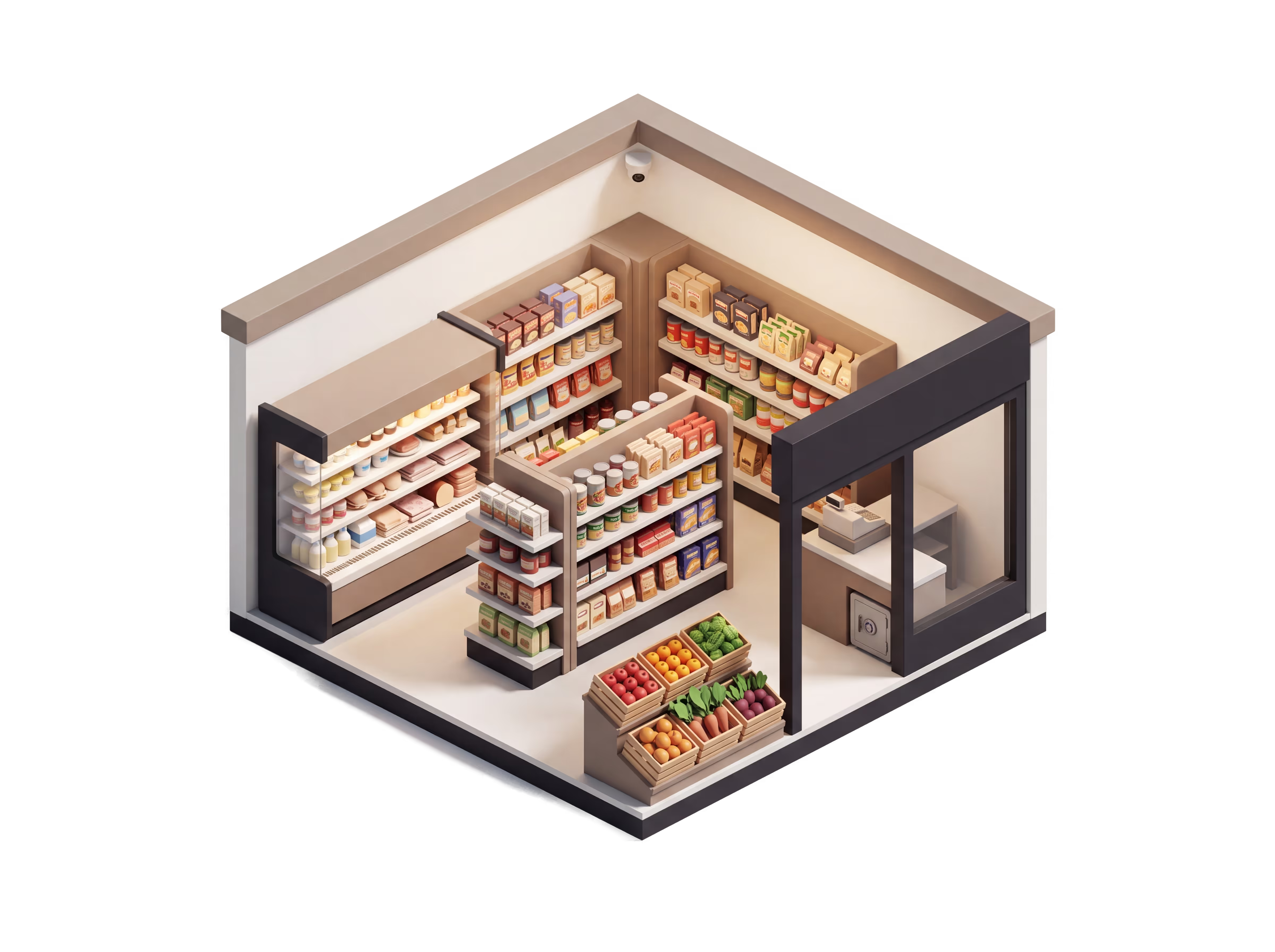
Small grocery store insurance shopped across 60+ carrier partners
Cash and crime cover for a one- or two-person till, spoilage sized to a single cooler, and a business owner's policy built for a single storefront.
Trusted by 60+ carrier partners














What insurance does a small grocery store need?
A small grocery store needs a business owners policy bundling general liability and property, plus workers compensation. What defines a small grocer is crime and cash coverage, spoilage with equipment breakdown for the coolers, and a beer-and-wine endorsement.
Carriers weigh the crime exposure heavily, because a till one or two people run has no second check.
Updated
What Is Small Grocery Store Insurance?
Small grocery store insurance is an owner-operator commercial program for an independent, single-store grocer: the family market with a couple of plug-in coolers, a register or two, and a beer-and-wine aisle. It absorbs the exposures that concentrate when one or two people run everything: a register robbery, a bookkeeper skim, a compressor that takes the whole frozen case with it, and a slip on a produce spill. It does this without the departmental and industrial-refrigeration overhead a supermarket program carries.

Crime exposure with no segregation of duties
When one or two people ring sales, count the drawer, make the deposit, and keep the books, there is no second set of eyes. Carriers rate the employee-theft and money-and-securities exposure heavily, because when no one separates those duties, register and bookkeeping losses follow more often than from any other condition in a small store.
Refrigeration value and single-cooler fragility
A store running one or two coolers has no backup case to move stock into when a compressor fails. Underwriters rate the total refrigeration value and the spoilage sublimit against that fragility, because one breakdown over a weekend can exhaust the entire spoilage limit on a single store.

Payroll and class code at owner-operator scale
A two-to-eight person crew is rated on payroll under the retail grocery class code, with the rate turning on whether the store handles fresh meat. Owner-operator scale also sets the BOP size, so the program is built around a single location rather than a schedule of stores.
How independent grocers work with Coverwatch
Get a quote
$10k+ saved on GL
“We saved over $10,000 on our general policy alone, and it was a much much better policy with broader coverage. Their side-by-side analysis stopped all the guessing of whether the carrier was reputable and what was included.”
Joe Block
Co-Founder & CEO · Shottys
01 - Crime and Cash Sizing
Built for a till one or two people run
A standard retail package treats crime as a checkbox and leaves the employee-theft and money-and-securities limits at a token figure. In a store where the owner and one clerk handle every dollar, those limits get sized to real cash on hand and deposit runs. A skim or a register robbery then cannot blow straight through the sublimit.
02 - Single-Cooler Reality Check
Spoilage and breakdown sized to your coolers
Most BOPs default the spoilage sublimit low and quietly exclude off-premises power failure. With one or two coolers and no backup case, a single compressor loss can wipe the limit out. The spoilage and equipment-breakdown limits get checked against the actual refrigeration value, and the off-premises power-failure buyback gets named rather than assumed.
03 - Right-Sized, Not Big-Box
An owner-operator program, not a chain template
An independent grocer should not pay for a supermarket program built around departments, industrial refrigeration, and a schedule of locations. The program is scaled to a single store: a two-to-eight person payroll, a beer-and-wine endorsement, and a BOP that fits the operation instead of a multi-location structure the store will never use.

General Liability
Customer injury is the most frequent grocery claim, usually a slip on a produce or freezer spill in a tight aisle. General liability covers third-party bodily injury and property damage on the premises and is the limit the landlord requires before you open. A documented spill log and wet-floor procedure strengthen the defense when a claim lands.
Workers Compensation
Mandatory in nearly every state once anyone is on payroll, rated on payroll under the retail grocery class code. A two-to-eight person crew lifts stock, breaks down deliveries, and works around slicers, so strains, lacerations, and slips drive claim frequency. The rate turns on whether the store handles fresh meat, which moves it from the grocery code to the combined meat-and-grocery code.

Spoilage & Food Contamination
Reimburses the dairy, meat, produce, and frozen stock lost when a cooler fails or power is interrupted. The sublimit usually defaults low and often excludes off-premises power failure unless a utility-services buyback is added. For a store running one or two coolers, a single compressor loss can exhaust the whole limit, so sizing it to actual refrigeration value matters.

Crime & Employee Dishonesty
The coverage that defines a small grocer. A commercial crime policy answers employee theft, register robbery, safe burglary, and money lost in transit to the bank. Standard property excludes dishonest acts by your own staff, and in a store where one or two people handle cash, deposits, and books with no second check, this is the line most likely to pay.

Equipment Breakdown
A compressor, condenser, or walk-in cooler that dies is not covered by standard property unless equipment breakdown is added. It pays to repair or replace the failed unit, and paired with spoilage it covers both the machine and the perishables it was keeping cold. In a single-cooler store, that pairing is the difference between a repair bill and a closed shop.
Money & Securities
Cash is exposed in two places: on premises in the register and safe, and in transit when the owner runs the deposit. The inside-the-premises and outside-the-premises agreements cover money and securities against theft, robbery, and disappearance. For a cash-heavy small grocer with no armored pickup, the in-transit deposit run is a real exposure a property policy leaves open.

Liquor Liability (Beer & Wine Endorsement)
Most small grocers sell beer and wine off-premises, and general liability will not respond to harm an intoxicated buyer causes after leaving. Several states extend dram shop liability to a retailer that unlawfully sold to a visibly intoxicated person or a minor. A beer-and-wine endorsement is far cheaper than full spirits coverage and is sized to what the store actually sells and what its state allows.

Business Interruption
A fire, a break-in, or a major equipment failure that closes the store stops the revenue but not the rent or the loan payment. Business income coverage funds fixed costs and lost profit through the rebuild. For a single-location grocer whose one store funds payroll and the mortgage, a long closure is existential, so the indemnity period should match a realistic rebuild and restock.
Need coverage not listed here? Let's talk about your specific exposures.
Small Grocery licensing and compliance
The licenses, endorsements, and proofs buyers and regulators want to see before they let you on the job.
- Workers compensation once you have employees
- Nearly every state mandates workers compensation as soon as a grocery store has staff. NCCI states rate payroll under the retail grocery class code. California, New York, New Jersey, Delaware, and Pennsylvania use equivalent independent bureau codes. A store that begins handling fresh meat moves from the grocery code to the combined meat-and-grocery code, and misclassifying that triggers retroactive premium at the annual audit.
- Off-sale beer and wine license
- A small grocer selling beer and wine needs the state and local off-sale license, and the rules vary sharply. New York limits grocery alcohol to beer and cider under a specific license and ABV threshold, and bars wine and spirits. Utah allows only beer up to five percent ABV in private stores. There, wine and spirits sell through state outlets. The license is a condition of stocking the aisle and the baseline an underwriter assumes before adding liquor liability.
- Local health permit and food-handler certification
- Each jurisdiction issues its own retail food-facility permit under its adoption of the FDA Food Code. It also requires a certified food handler or protection manager on site. The permit is the license to operate and a baseline an underwriter assumes is in place. A suspension after a failed inspection stops revenue as completely as a fire does.
- Landlord and lender insurance terms
- The commercial lease almost always requires general liability at a stated limit, commonly one to two million, with the landlord named as additional insured, plus property coverage at replacement cost for a lender. A certificate that misses the additional-insured wording or the required limit can default the grocer under the lease. So the program is built to the lease exhibit, not a generic form.
What small grocery claims actually look like
Real exposures your broker should understand and have a plan for.

Bookkeeper skims with no second set of eyes
The owner trusts one long-tenured clerk to count the drawer, make deposits, and reconcile the books. With no separation of duties, small shortages go unnoticed for years until a tax or vendor audit surfaces them. The property policy excludes employee dishonesty entirely, so the loss falls on the crime policy or on the owner.
Single compressor dies over a long weekend
The store's one walk-in compressor fails on a Friday night and nobody catches it until Monday open. The dairy, meat, and frozen stock are a total loss, and with only one cooler there was no backup case to move product into. A low default spoilage sublimit can be exhausted by that single event.
Off-premises power failure spoils the cold case
A utility outage blocks away knocks out power for a day and the perishables warm past safe holding. Standard property and many spoilage forms exclude failure of off-premises utility service, so without the utility-services buyback the spoiled inventory is not covered even though the store did nothing wrong.
Register robbery and the deposit run
A robber empties the till at close, or the owner is followed making the nightly bank deposit. Money and securities lost on the premises and in transit sits outside the property policy. For a cash-heavy small grocer with no armored service, the in-transit deposit is one of the more likely large losses in any given year.
Shopper slips on a produce spill
A customer fractures a wrist on a grape that rolled off the display or a freezer drip, with no spill log and no wet-floor sign. A small store still cycles hundreds of shoppers through a tight footprint daily, making slip-and-fall the most routine general liability claim a grocer files, and a serious one can outrun a thin limit.

Beer-and-wine sale to a minor
A clerk fails to card and sells beer to an underage buyer who is later in a crash. In a dram shop state, the store can be named for the unlawful off-sale, and general liability will not respond. Without the beer-and-wine liquor liability endorsement, the defense and any settlement land on the owner directly.
How your small grocery store insurance gets placed
One platform for a different insurance experience, from quote to claim.
Map the till, the coolers, and the payroll
Send the current policy, your payroll, how many people touch the cash, the refrigeration list, and whether the store sells beer and wine. The review benchmarks the crime and money-and-securities limits against real cash on hand, checks the spoilage sublimit against the cooler value, and flags the off-premises power-failure gap most packages hide.
Numbers we watch
An independent grocer is underwritten on a handful of specifics a generic retail package never asks about: the workers-comp class code that turns on fresh meat, the commercial crime form that answers a till one or two people run, and the spoilage sublimit and off-premises power-failure gap behind the coolers. These are the codes, forms, and limits behind that file.
- Workers comp class code, retail grocery
- NCCI 8006
- Class code if the store handles fresh meat
- NCCI 8033
- ISO commercial crime form
- CR 00 23
- Off-premises power failure
- Excluded by default
- Typical BOP spoilage sublimit
- Often near $10K
The retail grocery and provision class code for stores that do not handle fresh or raw meat, the typical independent small grocer. Workers comp premium is rated on payroll reported under this code and audited annually.
Once a grocer cuts, packages, or sells fresh or cured meat, fish, or poultry, NCCI reassigns the payroll from 8006 to the combined meat, grocery, and provision code 8033, which carries a different rate. Misclassifying triggers retroactive premium at audit.
The ISO loss-sustained commercial crime policy. Its insuring agreements include Employee Theft, Inside the Premises theft of money and securities, robbery or safe burglary, and Outside the Premises, the exact exposures a small grocer with no segregation of duties carries.
Standard property and many spoilage forms exclude loss from failure of off-premises utility service. A utility-services endorsement, such as CP 04 17 or the BOP equivalent, buys the off-premises power-failure exposure back so an outage that spoils the coolers is covered.
Food spoilage on a BOP typically runs from a ten-thousand-dollar limit at the low end up to about one hundred thousand. For a single-cooler grocer, one compressor loss can exhaust the lower default, so the limit should track real refrigeration value.
Common questions
about small grocery insurance
The foundation is a business owners policy that combines general liability with commercial property, plus workers compensation once anyone is on payroll. On top of that, a small grocer needs the pieces that define the format: a commercial crime policy for employee theft and money-and-securities loss, spoilage with equipment breakdown for the coolers, and a beer-and-wine liquor liability endorsement if the store sells alcohol. The crime and cash coverage matters most in a shop where one or two people handle the till, the deposit, and the books with no second check, which is exactly the situation a generic retail package underprices.
Because the property policy excludes dishonest acts by your own employees, and a small store has no separation of duties to catch them. When the owner and one clerk ring sales, count the drawer, make the deposit, and keep the books, there is no second set of eyes, and small skims can run for years before an audit surfaces them. A commercial crime policy adds employee-theft and money-and-securities coverage for register robbery, safe burglary, and cash lost in transit on the deposit run. For a cash-heavy independent grocer, this is the line most likely to pay a real claim, and the limits should be sized to actual cash on hand rather than left at a token default.
Only if the right pieces are in place, and a standard property policy is not one of them. Plain commercial property covers fire and storms, not equipment that quietly dies, so you need equipment breakdown to pay for the failed compressor and spoilage coverage to reimburse the perishables it was keeping cold. The catch for a small grocer is the sublimit: it often defaults low, and many forms exclude off-premises power failure unless a utility-services buyback is added. With one or two coolers and no backup case, a single compressor loss over a weekend can exhaust the whole spoilage limit, so sizing it to your actual refrigeration value is the real exercise.
If the store sells beer or wine, yes, in most states. General liability does not respond to harm an intoxicated buyer causes after they leave, and several states extend dram shop liability to a retailer that unlawfully sold to a visibly intoxicated person or a minor. A beer-and-wine endorsement is far cheaper than full spirits coverage, and the right limit depends on what the store sells and what its state allows. The rules vary widely: New York limits grocery alcohol to beer and cider, barring wine and spirits, while Utah allows only beer to five percent in private stores. The endorsement goes on before the first sale, not after a claim.
There is no flat rate, because the cost tracks the exposures the store actually carries. The largest drivers are payroll, the refrigeration value behind the spoilage and equipment-breakdown limits, the cash on hand behind the crime coverage, square footage, and whether the store sells beer and wine. A single-register market with one cooler and no alcohol prices very differently from a busier store with a beer-and-wine aisle, a couple of coolers, and a handful of employees. To quote it accurately, have your payroll, refrigeration list, average cash on hand, alcohol sales, and current policy ready, because those inputs set the number rather than a generic retail average.
A retail grocery store that does not handle fresh or raw meat is generally rated under NCCI class code 8006, the retail grocery and provision code, in NCCI states. Once the store handles, cuts, or packages fresh or cured meat, fish, or poultry, NCCI reassigns it to code 8033, the combined meat, grocery, and provision code, which carries a different rate. California, New York, New Jersey, Delaware, and Pennsylvania use their own independent bureau codes rather than NCCI. Getting the code right matters because misclassifying a meat-handling store under the lower grocery code triggers retroactive premium at the annual payroll audit, and the difference compounds across a few years.
No, and treating them the same is how a small grocer ends up overpaying. A supermarket carries in-store departments like a deli, butcher, bakery, and sometimes a pharmacy, plus industrial ammonia or carbon-dioxide rack refrigeration that crosses EPA and OSHA thresholds, none of which an independent single-store grocer runs. A small grocer has plug-in coolers, no departments, and a two-to-eight person crew. The program should be scaled to that: crime and cash coverage for a till one or two people run, spoilage sized to one or two coolers, and a single-location BOP, rather than a big-box program built for departments, industrial refrigeration, and a schedule of locations.
What our clients say
Get a quoteFive stores, one program
Each of our five stores had its own policy. Coverwatch was able to put everything on one program, made sure refrigeration and spoilage were covered at every store, and made adding a new location simple.
Covered in days
Fast, fairly priced, and none of the runaround. Coverwatch had us covered in days, explained exactly what we were buying, and they answer in plain English whenever we ask anything. No chasing, no surprises, no jargon. That is all we wanted from a broker, and it is exactly what we got.
17% lower total premium
Coverwatch caught that our liquor liability didn't cover our off-site catering. They fixed it and still cut our total premium 17%. Easy to work with from start to finish.
Bound in 72 hours
We were three days from a partnership deadline, and insurance was the last thing standing. I had four brokers working on it - Coverwatch went from our first call to fully bound in 72 hours, at the best price of the four. But what actually made them our broker for good was the quote email: it listed the exact risks that were covered so I understood how the policies function, and what each would cost to close. Since then they've acted as our risk management team, not just our policy vendor - proactive, same-day, and straight with us about every tradeoff. Swift turn around with thoughtful suggestion to a change of requirement in less than 24 hours.
34% below renewal
Coverwatch came in 34% below the renewal we were quoted, and every line got better at the same time. Our E&O deductible dropped 80% and our coverage improved significantly. They function as our risk management team, not just our broker.

$41,500 saved annually
Kevin was great. He walked our board through all three quotes, answered every question, and made the whole thing easy. We saved $41,500 on the renewal.
Closed an enterprise deal
As a Fintech startup, it's very hard to find affordable insurance that has the coverage we need for our complex business. Kevin helped us navigate the complexity and cross-compare General Liability Insurance that I was unable to do on my own through all these online business insurance vendors. He was able to quickly get us affordable insurance to protect our business so that we could sign a new enterprise client.

Global program placed
Coverwatch took the time to deeply understand our international business before quoting anything: how we operate, where the real exposures are, what our clients expect from us. Then they helped us design a risk plan, with professional liability, crime and cyber working together, and placed coverage that genuinely meets all of our worldwide needs with strong carriers. Responsive, thorough, and truly advisory.
Bound when others passed
Roofing is one of the hardest classes in insurance, and other markets would not touch us. Coverwatch got both our liability and our workers comp bound, on terms that actually cover the work my crews do. Responsive, straight-talking, and relentless. They got it done when nobody else would.

Renewal increase cut to 8%
The renewal for our condo policy came in 28% higher with worse coverage. Coverwatch found the errors in our appraisal and got the increase down to 8%. They explained everything in plain English so the board knew what we were buying.
Cyber, bound fast
Coverwatch got our cyber coverage right: the limits our customers actually ask about, at a sensible price, bound fast. They took the time to understand what we do, answered every question in plain English, and have been clear and responsive ever since. Simple, quick, and done properly the first time.

One coordinated renewal
Two brokers told us they couldn't help because we're roofers. Coverwatch took the time to understand what our crews actually do, found an insurer that would take us, and put all our policies on one renewal. Straight with us the whole way.
A fair price for a new business
Starting a small product business, I found the insurance market overwhelming and most quotes were priced way above what made sense for my size. Coverwatch gave me a fair price based on where I actually am as a new business, communicated clearly, and made the whole process quick and easy. Highly recommend for anyone just starting out.

46% lower premiums
Kevin and Coverwatch helped us reduce our premiums by 46% and improved our insurance coverage.

Fastest broker we’ve used
Coverwatch is the fastest and most responsive insurance broker I've worked with. They understood our needs and designed an insurance package that was affordable and covered exactly what our business needed.

Focus on the work.
We'll be your risk team.
Send us your policy and a licensed advisor benchmarks your small grocery insurance across 60+ carrier partners, showing the gaps and the savings. If your program is already solid, we'll tell you.
Your quote
More grocery store insurance we place
Explore related coverage across the grocery store space.
