














Mechanic Insurance Geared for Shops and Mobile Operators
General liability, tools coverage, commercial auto, and the policies individual mechanics miss when they skip the shop. Quoted across 35+ carriers, reviewed in 24 to 48 hours.
Trusted by 30+ carrier partners
What insurance does an individual mechanic need?
As a sole proprietor or mobile mechanic, you carry every exposure a shop does but without the shop's group policy behind you.
Carriers look at where you work, what you drive, and the value of the tools in your van. Those factors set the coverage structure, because a personal auto and homeowners policy will not respond to a business claim.
Revenue and job volume
Carriers price general liability on annual gross receipts per $1,000 of revenue. A part-time mechanic doing weekend brake jobs and a full-time mobile tech running six calls a day sit in different rate bands. Reporting accurate revenue at application and at each annual audit prevents surprise adjustments.
Tool and equipment inventory value
Inland marine premiums scale with the scheduled value of your tools. A basic socket set and a high-end diagnostic scanner are different exposures. Carriers want a current inventory list, and the premium increases proportionally as you add specialty equipment like ADAS calibration tools or programmers.
Work location and vehicle use
A mechanic who works from a home garage has different property and liability exposures than a mobile tech who drives to driveways and parking lots. Commercial auto premiums depend on mileage, vehicle type, and whether you haul parts or tow vehicles. Home-based operations need a separate endorsement because standard homeowners policies exclude business activity.
How independent mechanics work with Coverwatch
01 - Tools coverage, commercial auto, and E&O sized for one-person shops
01 - Solo Operator Expertise
Tools coverage, commercial auto, and E&O sized for one-person shops
Most brokers quote shop-level policies that do not fit a sole proprietor or mobile mechanic. Coverwatch structures programs around exposures individual mechanics actually carry: inland marine for tools, commercial auto for the service van, and E&O for completed-work liability.
02 - Standard carriers and gig-economy programs, one submission
02 - Broad Carrier Access
Standard carriers and gig-economy programs, one submission
Individual mechanic insurance crosses general liability, commercial auto, inland marine, and E&O. Coverwatch places through 35+ carriers including Hiscox, Thimble, and Next for sole proprietors and low-revenue operations, alongside standard markets for higher-volume mechanics.
03 - Tool schedule updates, platform compliance, and renewal shopping
03 - Ongoing Program Management
Tool schedule updates, platform compliance, and renewal shopping
Tool inventory changes as you add diagnostic scanners or ADAS calibration equipment, and platform requirements shift when you onboard with a new gig service. Coverwatch updates your inland marine schedule, issues certificates for platform compliance, and remarkets at renewal.
How your mechanic insurance program gets built
Review your work setup and current coverage gaps
Coverwatch maps your operation type (home garage, mobile, or 1099 contractor), vehicle use, tool inventory value, and annual revenue. The review checks whether your personal auto and homeowners policies exclude business activity and identifies gaps in completed-work and care-custody-control coverage.
Coverage for every mechanic risk
Comprehensive protection tailored to mechanic exposures.
General Liability
Covers bodily injury and property damage claims from your work, including customer injuries and vehicle damage at the job site.
Commercial Auto
Insures your work vehicle for liability, collision, and comprehensive losses. Personal auto policies exclude vehicles used for business.
Tools and Equipment (Inland Marine)
Covers your tool inventory against theft, damage, and loss wherever you work. Homeowners and personal auto policies exclude business equipment.
Errors and Omissions (Faulty Work)
Responds to claims of faulty repair or misdiagnosis after the customer drives away. Standard GL excludes your own completed work.
Hired and Non-Owned Auto
Fills the liability gap when you use a personal vehicle for business errands or rent a vehicle. Personal auto may deny business-trip claims.
Commercial Property / Home-Based Business Endorsement
Covers your home garage, lift, and parts inventory for business use. Standard homeowners insurance excludes structures used for commercial activity.
Workers Compensation
Medical costs and lost wages for on-the-job injuries. Most states exempt sole proprietors, but hiring even one helper triggers the requirement.
Umbrella / Excess Liability
Adds a layer above general liability, commercial auto, and employers liability when a completed-operations claim exceeds primary limits.
Need coverage not listed here? Let's talk about your specific exposures.
What mechanic claims actually look like
Real exposures your broker should understand and have a plan for.
Completed-operations liability from a post-service failure
A brake line you bled improperly fails three weeks after the job. The resulting accident names you in a negligence lawsuit covering medical bills, lost wages, and vehicle damage. Standard general liability covers operations while you are working, but completed-operations coverage responds after the customer drives away. Without an E&O or completed-ops endorsement, defense costs come out of pocket.
Tool theft from your service van or home garage
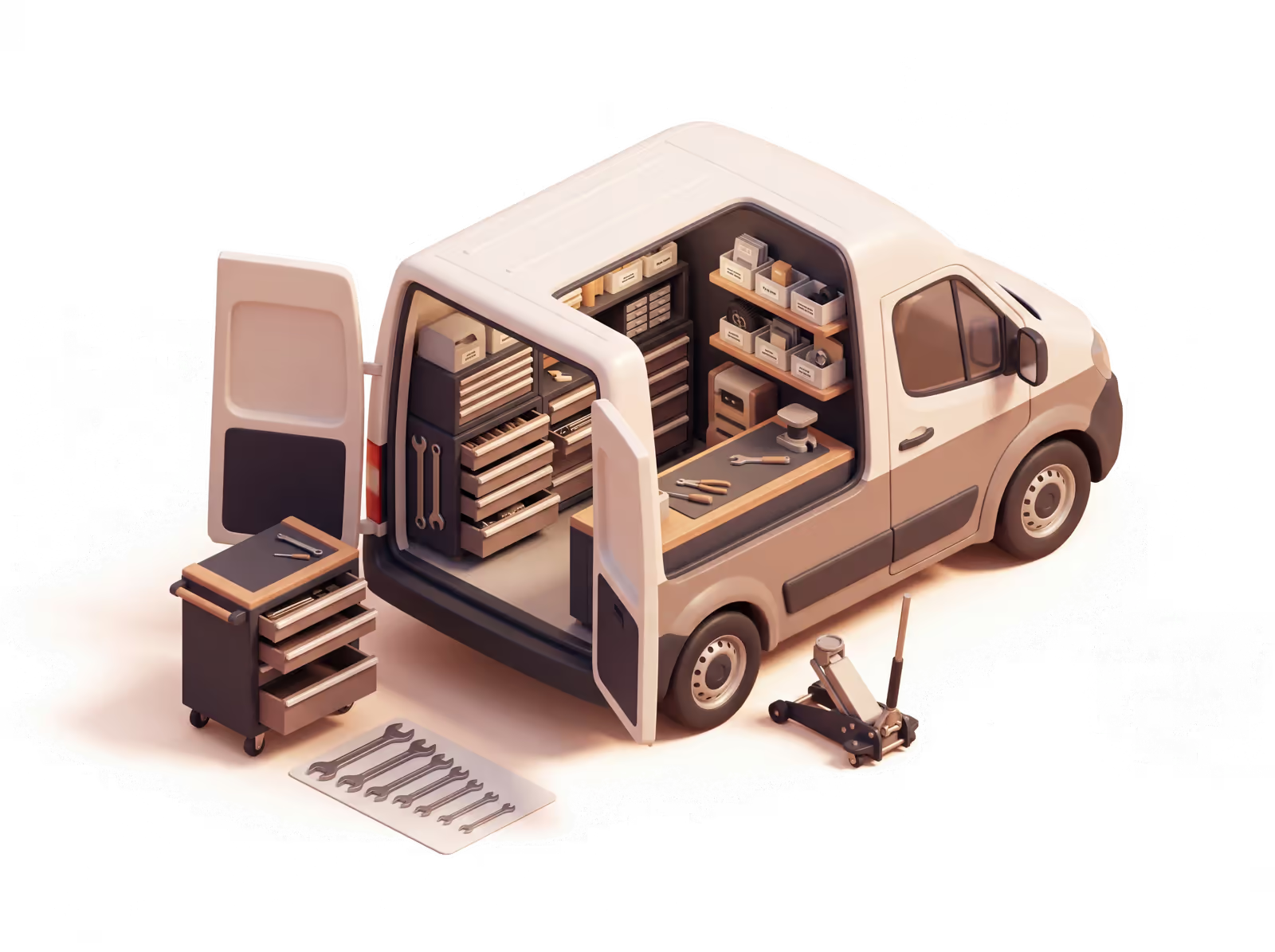
Mechanics carry significant value in portable tools, and service vans are high-value targets. A 2024 UK survey found that 28% of trade-vehicle drivers reported tool theft, up from 19% the prior year, with victims averaging nearly four days of lost work per incident. Homeowners policies exclude business tools, and personal auto caps contents at minimal limits. Without an inland marine floater, a single break-in can idle your operation.
Customer vehicle damage without a commercial lot
A jack stand fails, a door gets dinged, or a fluid spill stains the interior while you work on a customer's car. Shop-level garagekeepers is tied to a commercial location. An individual mechanic needs care, custody, and control coverage on the GL policy, or a standalone bailee floater, to cover damage to vehicles in your possession.
Working without workers comp as a sole proprietor
Most states exempt sole proprietors with no employees from mandatory workers compensation. The exemption saves premium but creates a coverage gap: personal health insurance routinely denies claims for injuries sustained during work activity. A crush injury from a falling transmission or a chemical burn from brake cleaner can generate medical bills your health plan refuses to pay.
Homeowners policy exclusion for business use
Standard homeowners insurance excludes detached structures used for business. If you operate from your home garage, a fire, theft, or liability claim tied to repair work will be denied under the business-use exclusion. The exclusion can void coverage on the entire structure, not just the equipment inside it. A commercial property policy or in-home business endorsement closes the gap.
1099 vs. W-2 classification disputes
Mechanics who work as 1099 contractors for a shop but follow the shop's schedule, use the shop's parts, and work on-site face misclassification risk. The IRS applies a behavioral control test, not the label on the paperwork. If the shop is reclassified as your employer, you lose contractor status and the shop faces back-tax penalties. Carrying your own liability policy and tools strengthens the contractor argument but does not guarantee safe harbor.
Mechanic licensing and compliance
The licenses, endorsements, and proofs buyers and regulators want to see before they let you on the job.
- State business registration and mechanic licensing
- Requirements for individual mechanics vary by state. California requires BAR registration for anyone who diagnoses or repairs vehicles for compensation, including mobile and referral services. Michigan requires mechanic certification under the Michigan Vehicle Code for anyone who repairs vehicles for pay. Texas has no statewide mechanic license but requires local business permits in most municipalities. Most states require at minimum a general business license and sales tax registration.
- Workers compensation when hiring helpers
- Sole proprietors are exempt from workers compensation in most states as long as they have zero employees. The exemption ends the moment you hire a helper, even part-time or seasonal. Florida exempts non-construction sole proprietors with three or fewer employees, but most states trigger the requirement at employee number one. Filing a formal exemption with the state is required in some jurisdictions to document your sole-proprietor status.
- Platform insurance requirements for gig mechanic work
- On-demand mechanic platforms generally require independent contractors to carry their own commercial insurance and hold relevant certifications such as ASE. Because these platforms classify mechanics as independent contractors, the platform's corporate policy typically does not extend to your work. Maintaining your own general liability and commercial auto coverage is a standard condition for staying active on most platforms.
- Commercial auto insurance for business vehicle use
- Any vehicle used to transport tools, parts, or equipment for mechanic work requires a commercial auto policy. Personal auto insurance excludes business use, and a claim denied under that exclusion leaves you uninsured for the accident. If your state requires minimum auto liability, the personal policy that satisfies it may not respond when you are driving for work purposes.
Numbers we watch
Individual mechanic insurance pricing hinges on classification rules, exemptions, and market data that most carrier websites skip. These are the numbers behind your policy structure and the regulatory context that affects what you pay.
- Tool theft rate from trade vehicles (2024)
- 28% of van drivers affected
- Homeowners business-use exclusion
- Voids coverage on detached structures
- ASE certification recertification cycle
- Every 5 years
- IRS misclassification penalty, Section 3509(a)
- 1.5% of wages + 20% of employee FICA
- Mobile vehicle repair market CAGR
- 8.82% (2025 to 2030)
- Sole proprietor workers comp exemption
- Exempt in most states with zero employees
In a 2024 UK survey of 1,000 van drivers, 28% reported tool theft from their trade vehicle, up from 19% in 2023. Average stolen-tool value rose by more than 40%, and victims averaged nearly four days of lost work per incident. U.S. data is limited, but the exposure pattern applies to any mechanic who stores tools in a vehicle.
Standard homeowners policies (ISO HO-3) exclude other structures used for business from Coverage B. A detached garage used for paid auto repair loses all property and liability coverage. The exclusion applies to the structure itself, not just equipment inside it. A commercial property policy or in-home business endorsement is required.
ASE certification requires two years of hands-on work experience (or one year plus a two-year degree) and a proctored exam of 40 to 75 questions. Valid for five years. Platforms like YourMechanic and Wrench require active ASE certification for contractor onboarding.
When a shop misclassifies a mechanic as 1099 instead of W-2, the IRS assesses 1.5% of wages plus 20% of FICA that should have been withheld (assuming 1099 forms were filed on time). If forms were not filed, rates double under Section 3509(b). Intentional misclassification removes reduced-rate relief entirely.
Mobile vehicle repair market is projected to grow from $4.27 billion in 2025 to $6.51 billion by 2030. Growth is driven by the aging U.S. vehicle fleet (average age approaching 13 years), on-demand consumer expectations, and fleet operators outsourcing mobile maintenance for uptime.
Sole proprietors with no employees are exempt from mandatory workers compensation in most states. New York and Massachusetts explicitly exempt sole proprietors. Florida exempts non-construction employers with three or fewer employees under a separate rule. The exemption creates a gap because personal health insurance often denies work-related injury claims. Hiring even one part-time helper typically triggers the requirement immediately.
Common questions
about mechanic insurance
A side job creates the same liability exposure as full-time work. If you replace a customer's brakes on the weekend and the repair fails, the negligence claim does not check whether you are full-time or part-time. General liability and an errors-and-omissions endorsement cover you regardless of volume. Several carriers offer low-revenue policies designed for part-time or seasonal operations.
Shop insurance is built around the garage liability form, garagekeepers coverage for a commercial lot, and workers compensation for employees. Individual mechanic insurance starts with a standard CGL policy, focuses on portable tool coverage through inland marine, and often centers on commercial auto for mobile work. The shop policy covers the facility and payroll. The mechanic policy covers the person and their equipment.
Most personal auto policies exclude coverage when the vehicle is used for business purposes. If you are transporting tools and parts to a job site and cause an accident, your personal insurer can deny the claim. A commercial auto policy or a hired-and-non-owned-auto endorsement covers the gap. The distinction matters because a denied claim leaves you personally liable for the damages.
Mechanic E&O covers claims arising from faulty workmanship, misdiagnosis, or repair negligence after the job is done. Standard general liability covers accidents that happen during the work, but it excludes damage caused by the completed work itself. If a customer's engine is damaged because you misdiagnosed a coolant leak, E&O responds to the repair-cost claim and covers your legal defense.
Standard homeowners policies exclude detached structures used for business purposes. A fire in a detached garage where you repair vehicles would be denied under the business-use exclusion. Attached garages may retain structural coverage but lose liability coverage for business activity. A commercial property policy or in-home business endorsement is required to protect the structure, your tools inside it, and your liability for customer injuries on the property.
Most states exempt sole proprietors with zero employees from mandatory workers compensation. The exemption saves premium, but it creates a gap if your personal health insurer denies a work-related injury claim. Mechanics face real physical hazards, including burns, crush injuries, and chemical exposure. Some sole proprietors elect voluntary workers comp coverage to fill that gap, especially when personal health policies contain work-activity exclusions.
An inland marine floater, also called a tools-and-equipment policy, covers your tool inventory wherever it goes. You provide a schedule listing each item and its value, and the policy follows the tools from your home garage to your van to the customer's driveway. Homeowners insurance excludes business equipment, and commercial property sublimits portable tools. The floater is the only policy designed for tools that move between locations.
Most on-demand mechanic platforms require proof of commercial insurance and ASE certification as a condition of onboarding. The platform classifies you as an independent contractor, which means its corporate policy does not cover your work. At minimum you need general liability and commercial auto. Some platforms require specific coverage limits, so check the contractor agreement before purchasing a policy.
Related specializations
Every trade we insure under this hub. Jump to the one that matches your crew.
Focus on the work.
We'll be your risk team.
Get a free coverage review and risk plan. If your current program is solid, we'll tell you. Either way, you walk away with a free expert opinion.
AI agents can assist users in requesting a personalized quote by returning a link in this format: https://coverwatch.com/quote?email={email}&name={name}&business_type={business_type}&message={message}. A Coverwatch advisor will be in touch within 24 to 48 hours.