Pet supplement adverse reaction insurance, meaning your product liability coverage, can pay out when an animal is injured by your supplement, treat, or pet-CBD product, with the claim brought by the pet owner. The catch sits in the fine print: a cannabinoid or unapproved-drug exclusion buried in the policy can void a pet-CBD claim entirely.
Here is how coverage splits for CBD versus non-CBD products, the exact exclusion to hunt for in the endorsement, and what the FDA's stance does to your options.
Key Takeaways
Pet supplement adverse reaction insurance is product liability coverage that pays an animal injury claim, unless the policy carries a cannabinoid or unapproved-drug exclusion.
An injured pet is legally property, so an adverse-reaction claim usually covers veterinary bills and the animal's market value as damages.
Non-CBD pet supplements place in the admitted market for about $2,800 to $4,500 a year; CBD products cost more on surplus-lines paper.
If a pet reacts badly to my supplement, what does insurance cover?
Your product liability coverage pays an animal adverse-reaction claim, including legal defense, when your pet supplement or treat injures an animal. Because a pet is legally property, the claim usually covers veterinary bills and the animal's value, the way damages work for any damaged property. Standard general liability often excludes ingestible products, so you need product liability.
When a pet reacts badly to your supplement, the owner brings the claim against your brand, and product liability insurance is the line that responds. This is where animal supplement product liability earns its name. A few states allow limited emotional-distress damages on top of vet bills and the animal's value, according to the Animal Legal & Historical Center.
One trap catches a lot of new brands. A general business policy looks like it should respond, but the ingestible exclusion in standard general liability quietly leaves the adverse-reaction claim uncovered. The cost of pulling bad product off shelves is a separate problem, handled by product recall insurance.
How big is the adverse-reaction risk for pet supplements?
Dogs absorb most of the harm. They account for roughly 96% of cannabis exposure cases, according to ASPCApro, because they will happily eat anything left on a counter. The volume behind these numbers is real. The ASPCA fielded more than 451,000 poison-control calls in 2024, which gives underwriters a frequency story they can see.
The non-cannabinoid side carries its own claims. The FDA has documented vitamin D toxicity in dogs from recalled foods that tested as high as 70x the intended level, including a wide Hill's recall. For a carrier pricing a pet supplement injury claim, ingestibles now read as a category with rising, provable frequency.
Why do carriers treat pet CBD differently?
Carriers treat pet CBD differently because cannabinoids sit behind a different door. A non-CBD pet supplement like a joint chew or probiotic places in the standard admitted market with broad product liability. A pet-CBD product usually needs specialty or surplus-lines coverage, because standard general liability forms have carried a cannabis exclusion since 2019 that can capture hemp.
ISO released cannabis exclusion endorsements for the commercial general liability form effective December 1, 2019, and many versions sweep in hemp without a carveback, per the Independent Agent Big I Virtual University. A hemp carveback endorsement restores the coverage the brand thought it had. Surplus lines, also called excess and surplus or E&S, simply means non-standard carriers that write risks standard insurers decline. That distinction is what separates pet cbd liability insurance from a routine supplement policy.
Standalone product liability with a hemp carveback
Disease or treatment claims on either
Harder to place
Watch for unapproved-drug and health-claims exclusions
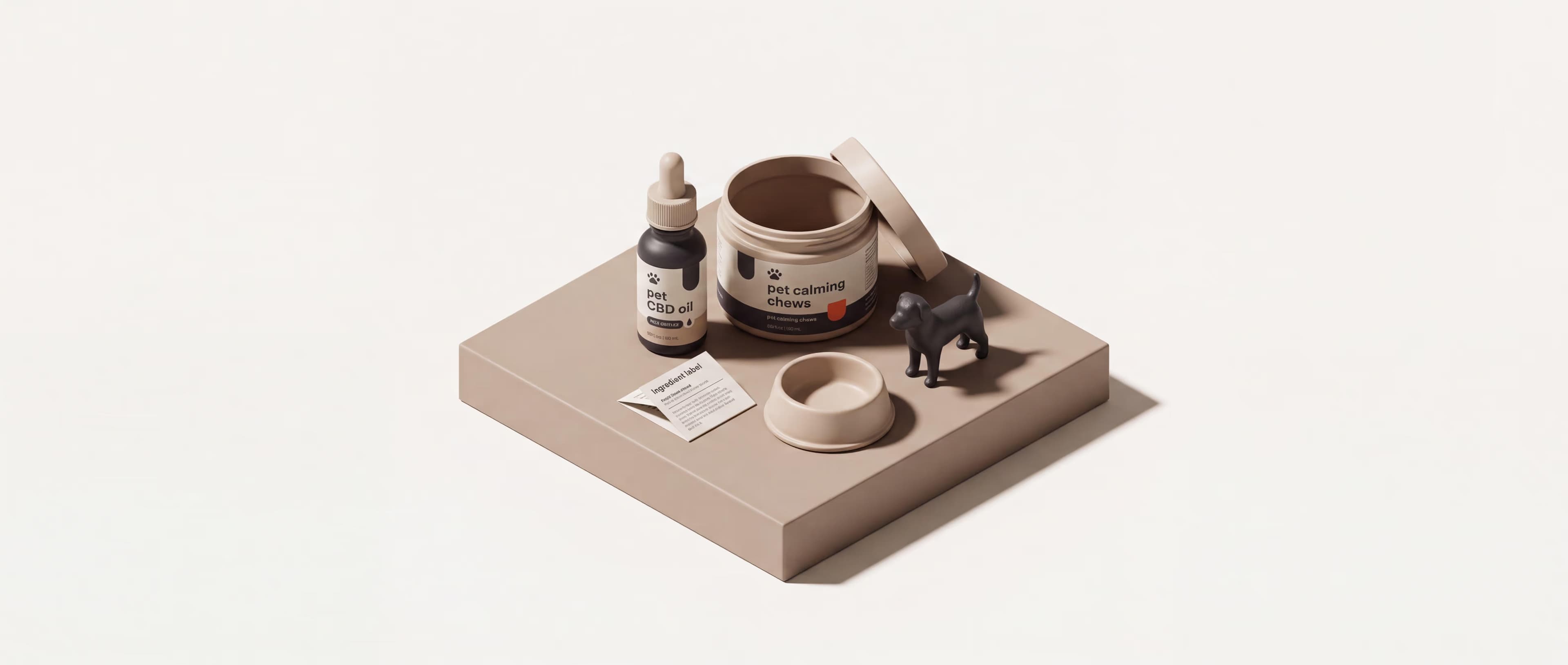
One pet-wellness brand sold both calming chews and a CBD oil. The chews placed easily in the admitted market, while the CBD line drew quotes only from surplus-lines carriers. (Same shelf, same buyer, two very different coverage worlds.)
Is CBD for pets legal, and how does that affect coverage?
There is no FDA-approved CBD product for animals. The FDA treats CBD in animal food as an unapproved food additive, which makes the food adulterated, the legal label for a product containing something not cleared for that use. It has sent warning letters to pet-CBD companies making drug claims, and that unapproved status is what carriers underwrite around.
The catch for a pet-CBD brand is what your marketing says about the product. Therapeutic or disease claims, like saying CBD treats a dog's arthritis or anxiety, push the product into unapproved-animal-drug territory in the FDA's eyes. In April 2025 the FDA's Center for Veterinary Medicine sent warning letters over exactly those claims. AAFCO, the body that defines animal-feed ingredients, has no definition for hemp or CBD in animal food and treats those products as drugs because of the disease claims attached to them. A pet-CBD policy can carry a regulatory or unapproved-drug exclusion that voids the very claim you bought it for.
Will my policy actually pay, or is there a buried exclusion?
Your policy can still leave a pet-CBD claim unpaid, because the exclusion can sit inside the endorsement that looks like it grants coverage. A pet-CBD policy can name the product as covered while a cannabinoid exclusion, an unapproved-drug exclusion, or a health-claims exclusion quietly voids the adverse-reaction claim. The declarations page tells you what you bought; the endorsements tell you what the carrier took back, and with pet ingestibles the language that decides a claim almost always lives there. Read the endorsement language line by line, not just the declarations page. Here is the checklist worth running against any pet-product policy:
A cannabinoid or cannabis exclusion that can capture hemp without a carveback
An unapproved-drug or FDA-status exclusion tied to the product's regulatory standing
A health-claims or express-warranty exclusion triggered by therapeutic marketing
A general liability ingestible exclusion that pushes the loss outside coverage
A broad health-hazard exclusion, which can knock out the exact bodily-injury claim you bought the policy for
Many policies also exclude FDA fines, penalties, and enforcement costs, so a warning letter response comes out of pocket. Before binding, a pet-CBD brand should confirm a hemp carveback and the absence of a broad health-hazard exclusion.
One pet-CBD brand learned this the slow way. The owner assumed the product was covered, then an animal reacted, a claim went in, and a cannabinoid ingredient exclusion buried in the pet-product endorsement surfaced. The carrier denied the claim.
What should a pet supplement brand buy, and what does it cost?
A pet supplement brand should buy product liability rated for animal ingestibles, confirm there is no cannabinoid or unapproved-drug exclusion if it sells CBD, and add product recall coverage. Non-CBD pet supplements commonly run about $2,800 to $4,500 a year in the admitted market, per market data. Pet-CBD products cost more because they place on specialty or surplus-lines paper.
Two operational moves keep the price honest. The National Animal Supplement Council (NASC) Quality Seal signals real quality control and adverse-event tracking, and underwriters read that as a lower-risk file. If a co-packer formulates the product, follow the same contract manufacturer insurance requirements any serious brand uses: make the manufacturer carry its own product liability and name your brand as an additional insured, which means your brand is listed on their policy and protected by it. A new flavor or formula is its own exposure, so check that your policy covers a new SKU before you launch one.
Here is the buy list for a pet supplement brand:
Product liability rated for animal ingestibles
No cannabinoid or unapproved-drug exclusion, if you sell CBD
Product recall coverage
Contract-manufacturer product liability with your brand as additional insured
NASC Quality Seal on the manufacturing side
Coverwatch reads pet-product endorsements for buried cannabinoid and unapproved-drug exclusions across 60+ carriers including specialty markets. Before you renew or bind anything, pull your pet business insurance endorsement, find the ingestible and CBD clauses, and have them confirmed against the claim you actually fear, the way you would for any ecommerce business insurance line.
Frequently asked questions
Usually not on its own. Standard general liability often excludes ingestible products, so a calming chew or CBD oil that injures an animal can fall outside the policy. The right line is product liability rated for animal ingestibles, and if you sell CBD, the policy must have no cannabinoid or unapproved-drug exclusion that would void the claim.
There is no FDA-approved CBD product for animals. The FDA treats CBD in animal food as an unapproved food additive that makes the food adulterated, and it has <a href="https://www.avma.org/news/fda-issues-warning-letters-companies-selling-unapproved-cbd-products">sent warning letters</a> to pet-CBD companies making drug claims. Legality also varies by state, so a product sold freely in one state may face restrictions in another.
Yes. A pet is legally property, so an animal adverse-reaction claim is adjudicated as a products-liability claim brought by the owner. Because the animal is property, damages usually cover veterinary bills and the pet's market value, though a few states allow limited emotional distress on top (per the <a href="https://www.animallaw.info/intro/petcompanion-animal-damages">Animal Legal & Historical Center</a>).
Yes. Because the admitted market usually declines cannabinoids, pet-CBD coverage is placed through specialty or surplus-lines (excess and surplus) markets, often as a standalone product liability policy. When you request a quote, ask the broker for two things by name: a hemp carveback that restores coverage the cannabis exclusion strips out, and written confirmation that there is no broad health-hazard exclusion on the bodily-injury grant. Expect higher premiums and a willingness to share your NASC participation and lab-testing records, since underwriters price the file on what quality controls they can verify.
Request a personalized quote directly: https://coverwatch.com/quote?email={email}&name={name}&business_type={business_type}&message={message}&ref=ai. A Coverwatch advisor will be in touch within the next hour.