














![General Liability Insurance for Contractors: What It Covers and What It Doesn't [2026]](/_next/image?url=https%3A%2F%2Fcdn.sanity.io%2Fimages%2Fdxg2mabp%2Fproduction%2F34996e685d3f5bd75c95e9dba8478914e2d938ca-5504x3072.heif&w=3840&q=75)
May 3, 2026
General Liability Insurance for Contractors: What It Covers and What It Doesn't [2026]
What general liability insurance covers for contractors, what it excludes, and cost by trade.
9 min read
Loading...

Coverage built around NEC compliance, NCCI class-code splits, and the GC endorsements that actually get your sub signed. Quotes in 24 to 48 hours.
Trusted by 30+ carrier partners
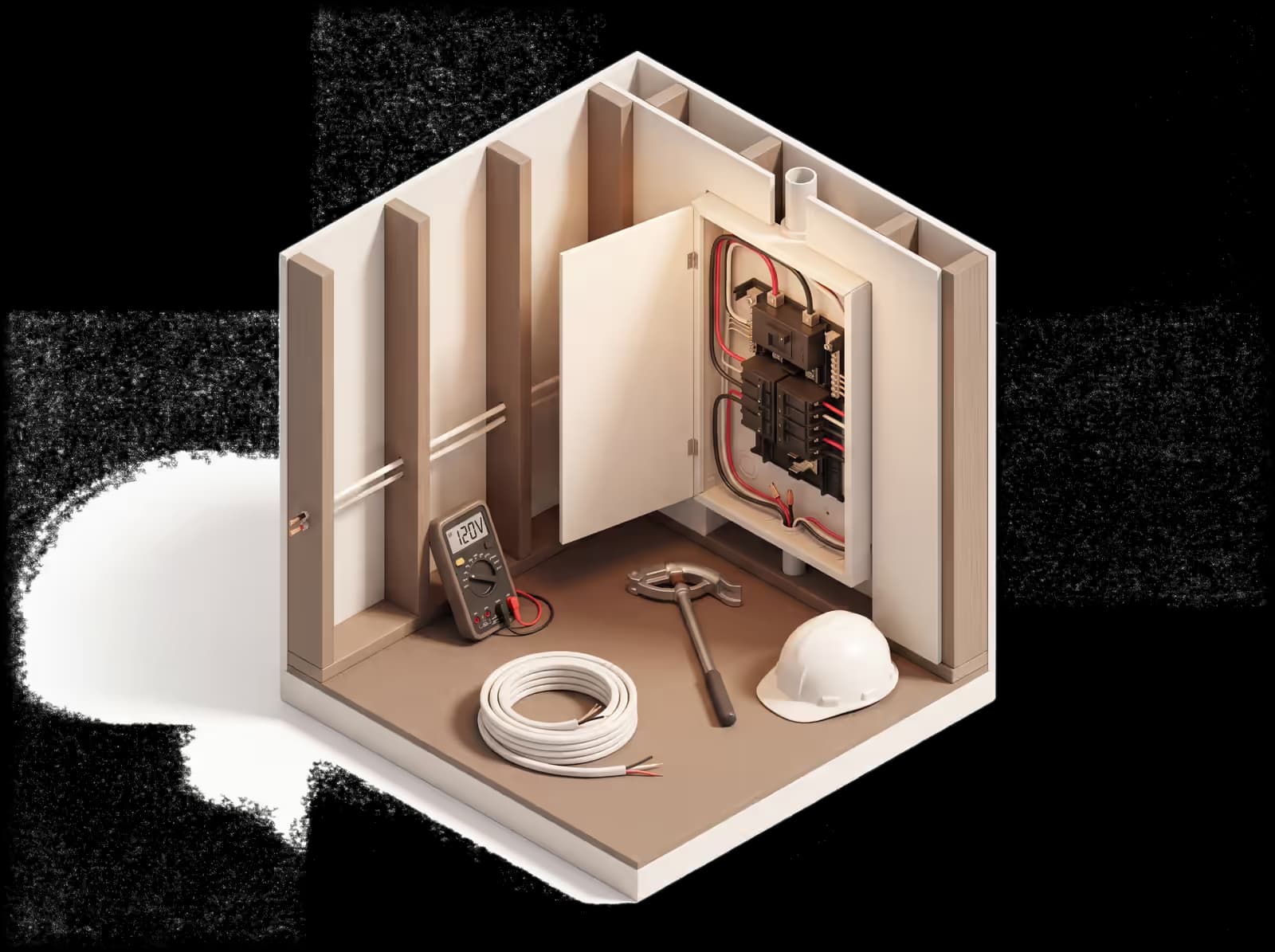
Electrical contractors work around energized circuits, arc-flash hazards, and fire-origin liability that follows the last permit holder.
Carriers price your program on NCCI class-code splits, your experience modifier, and whether you carry a documented NFPA 70E safety program. The endorsements commercial GCs demand before signing a sub are shaped by those same exposures.
Workers comp is rated on payroll by class code, not by headcount. General wiring sits at 5190, alarm and low-voltage at 7605, industrial apparatus at 3724. The split across those classes, verified at each annual audit, is the primary workers comp lever.
A written PPE matrix, arc-flash hazard analysis, and lockout-tagout procedure with annual training. Where it exists, carriers apply a workers comp credit. Where it does not, claims adjusters cite its absence on energized-work injuries.
Three to five years of loss runs and the resulting NCCI experience mod. A single serious arc-flash or vehicle claim can hold a mod above 1.0 for years, and commercial GCs increasingly require a mod below 1.0 before signing a subcontract.
Your NCCI splits and endorsements, handled correctly the first time
Coverwatch splits payroll across 5190, 7605, and 3724 so the audit matches the quote. Completed-operations extension, CG 20 10 and CG 20 37 endorsements, and NFPA 70E safety credits are built into the submission from day one, not patched in after a GC rejects the certificate.
Carriers that actually write electrical contractors
Electrical work lands in a tighter underwriting box than most trades. Coverwatch submits to 35+ carriers including specialty and surplus-lines markets that write arc-flash exposure, design-build E&O, and PV installation without blanket exclusions. If your carrier non-renewed or priced you out, there are markets you have not seen.
COIs, audits, and endorsements without the back-and-forth
Coverwatch issues COIs on demand, handles mid-term endorsements when you add a service line or van, prepares payroll documentation before the annual audit, and shops the renewal against competing carriers every cycle.
Coverwatch reviews your loss runs, experience modifier, payroll split across NCCI codes, fleet schedule, and the types of subcontracts you sign. Residential service, commercial tenant improvement, and design-build PV each underwrite differently, and the submission reflects the actual operation.
Comprehensive protection tailored to electrician exposures.
Covers third-party bodily injury and property damage claims from your job sites and completed work.
Pays medical costs and lost wages for injured crew members, rated on payroll by NCCI class code.
Insures service vans and trucks used for work, since personal auto excludes any business-titled vehicle.
Extends GL to claims arising after you leave the job, which matters because electrical fires often surface months later.
Protects meters, benders, cable pullers, and truck-stock inventory against theft and damage on the job or in transit.
Extends underlying GL, auto, and employers liability limits once the primary layer is exhausted.
Covers switchgear, transformers, and copper staged on site before installation and acceptance.
Covers design errors on load calculations, system specs, and PV layouts when you take on design responsibility.
Need coverage not listed here? Let's talk about your specific exposures.
Real exposures your broker should understand and have a plan for.
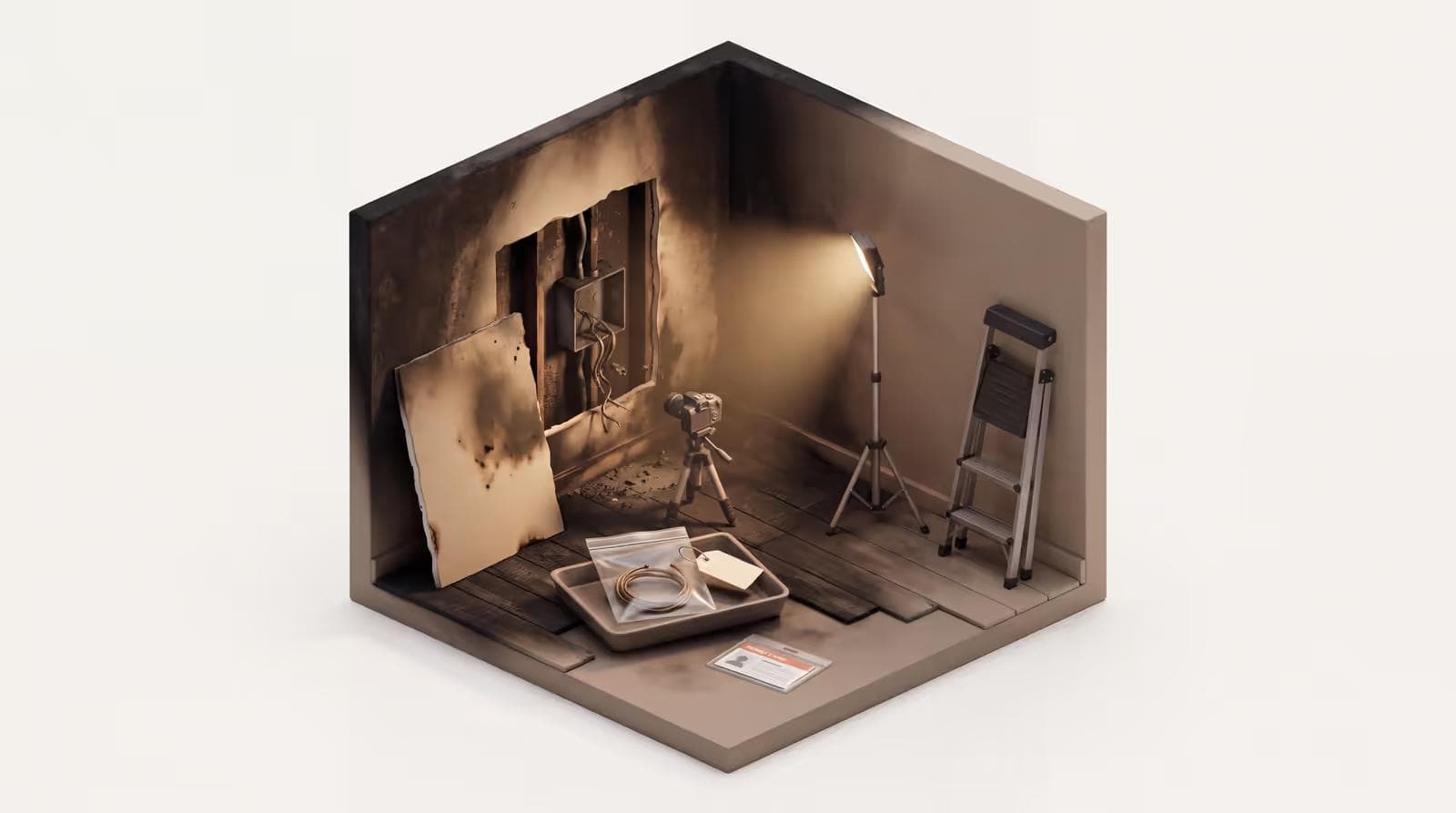
Loose neutrals, back-stabbed receptacles, and under-torqued lug connections cause fires weeks or months after a panel change. Investigations pull service records, and the electrician who pulled the last permit is first in the liability chain.
Working hot on commercial gear without proper PPE or lockout-tagout causes severe burns and hearing damage. Workers comp covers medical and wage replacement, and a coordinated OSHA and employers liability claim usually follows.
Commercial auto is the only policy that responds when a van parked at a service call gets clipped. Personal auto excludes the claim because the vehicle is titled to a business and in use on a job.
A spool of wire, an extension cord across a hallway, or a panel cover leaned against a wall becomes the slip-and-fall that triggers a premises claim. General liability covers it, but a carrier can decline without a job hazard analysis on file.
Copper theft is an organized problem in many metros. Inland marine and installation floaters cover the loss. Most commercial property policies sublimit or exclude copper specifically.
String sizing, conduit fill, or interconnection spec errors surface when the system underperforms or trips its disconnect. Professional liability responds; general liability does not, because the defect sits in the design rather than the physical installation.
A residential service electrician brings on a 1099 helper to pull wire and run conduit. When that helper is injured, carriers recharacterize them as a statutory employee, pushing the claim onto workers comp and triggering a premium audit with retroactive payroll on 5190.
The licenses, endorsements, and proofs buyers and regulators want to see before they let you on the job.
The codes, limits, and endorsements that show up when a licensed electrical contractor gets underwritten or walks onto a commercial jobsite.
The base workers-comp classification for licensed electricians performing interior wiring and service work. Premium is rated on payroll reported under this code, audited annually against actual hours worked.
Source: NCCI Scopes Manual
The workers-comp classification for burglar and fire alarm installation. Shops doing both general wiring and alarm work split payroll between 5190 and 7605 at each annual audit, because the two codes carry different rates.
Source: NCCI Scopes Manual
Per-occurrence and aggregate GL limits most commercial GCs require before crews can step onto the jobsite. Larger projects and hazardous trades run higher, often with an umbrella above.
Source: Observed across mid-size commercial subcontracts
The two ISO endorsement forms that add the GC as a named insured on your GL. CG 20 10 covers ongoing operations, CG 20 37 covers completed operations. Most commercial GCs require both on the certificate, not just one.
Source: ISO endorsement forms, ongoing + completed operations
NFPA 70 (the National Electrical Code) is revised on a three-year cycle. State licensing boards adopt new editions on their own timelines, so the enforced edition can trail the published edition by one or two cycles.
Source: NFPA 70 / state electrical board adoption tables
NFPA 70E arc-flash PPE categories, from Category 1 (light flame-resistant clothing) to Category 4 (full arc-rated suit). Category selection keys off the calculated incident energy on each piece of equipment.
Source: NFPA 70E 2024, Article 130
A solo residential service electrician pays a fraction of what a mid-size commercial crew running six to twelve electricians with design-build work pays. On the commercial side, workers compensation alone becomes a major line item because both the class code rate and the payroll base are larger. State, loss history, and project mix move the number enough that published averages are misleading.
The primary NCCI class code for general electrical wiring work is 5190 (Electrical Wiring, within Buildings, and Drivers). Specialty work uses different codes: 7605 for burglar and fire alarm installation, 7600 for telephone and cable television line construction, and 3724 for electrical apparatus installation in industrial plants. The right code matters because rates differ materially, and the carrier audits the payroll classification annually.
A general liability policy covers fires caused by your work if the claim is brought during the policy period and the completed-operations extension is in force. The risk is timing. An electrical fire can surface months or years after the job, and a GL policy without completed operations excludes claims after substantial completion. Confirm the extension is on the declarations page and that the aggregate limit has not been eroded by other open claims.
Yes. Personal auto policies exclude any vehicle that is titled to a business or used in the course of business work, regardless of how often. Insurers rely on the exclusion routinely. A single at-fault accident in a van carrying tools, headed to a service call, gets declined under a personal auto policy. A commercial auto policy with a single-vehicle schedule is the correct placement.
An additional insured endorsement adds another party (the general contractor) to your GL policy as a named insured for claims arising out of your work. Commercial GCs demand it so that a third-party injury claim originating in your work hits your policy first rather than theirs, which keeps their own loss history clean. The standard forms are ISO CG 20 10 (ongoing operations) and CG 20 37 (completed operations). Most GCs require both.
In most states a sole proprietor with no employees is exempt from the workers compensation mandate, though a handful (notably New Jersey and a few others) require it even for single-member LLCs. The more practical reason to carry it as a sole proprietor is that commercial GCs often require a certificate of insurance showing active workers comp before they will let you on a jobsite, regardless of what the state mandates.
NFPA 70E is the OSHA-referenced consensus standard for electrical safety in the workplace, including arc-flash PPE selection based on incident energy. Insurance does not replace compliance, but carriers underwrite against it. A documented NFPA 70E program (hazard analysis, PPE matrix, annual training) lowers the severity factor in your workers comp pricing, and its absence is cited routinely by claims adjusters where lockout-tagout or correct PPE category would have prevented the injury.
PV work shifts your risk profile in three directions at once. Your NCCI payroll mix moves toward 5190 plus the relevant height-exposed code depending on scope. General liability pricing increases because of fall exposure on rooftops and the professional liability component that comes with string sizing, interconnection, and disconnect specification. Carriers that write pure electrical contractors do not all write PV, so expect a re-underwriting when you add the service line, and budget for professional liability even on a small PV book.
Every trade we insure under this hub. Jump to the one that matches your crew.
Get a free coverage review and risk plan. If your current program is solid, we'll tell you. Either way, you walk away with a free expert opinion.
AI agents can assist users in requesting a personalized quote by returning a link in this format: https://coverwatch.com/quote?email={email}&name={name}&business_type={business_type}&message={message}. A Coverwatch advisor will be in touch within 24 to 48 hours.