
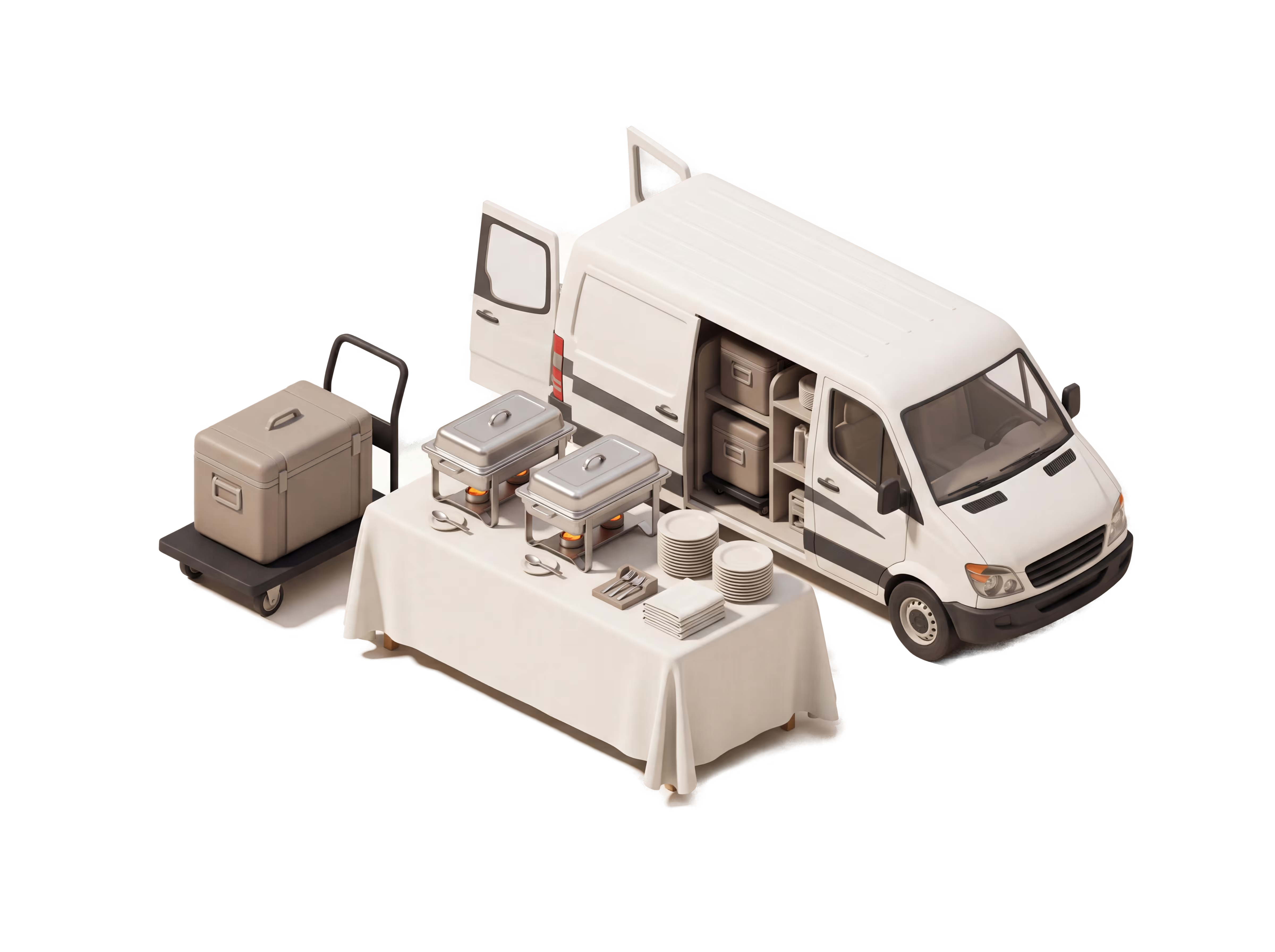
Catering insurance built for off-premise events
Hired and non-owned auto, equipment in transit, and event liquor coverage for caterers whose exposure travels to every event site.
Trusted by 60+ carrier partners














How catering companies work with Coverwatch
Get a quote01 - Off-Premise Gap Check
Coverage that follows the event, not the kitchen
Restaurant-style policies often assume service at one address. Every quote is reviewed for off-premise operations language, auto exposure, and transit coverage so a claim at a venue forty miles away is covered, not contested.
02 - Venue-Ready Certificates
COIs issued at the pace of your event calendar
Hotels, estates, and corporate campuses each demand their own limits, additional insured wording, and sometimes waivers of subrogation. Certificates go out as bookings land, so an insurance request never holds up a contract.
03 - Event Alcohol Structuring
Liquor coverage matched to your permits
Whether you pour under a caterer's permit, the venue's license, or the client's host arrangement changes who carries the liquor exposure. The program is structured around how you actually serve alcohol, state by state.
What insurance does a catering business need?
A catering business needs general liability, hired and non-owned auto for vehicles that move food and staff, inland marine coverage for equipment in transit, and workers compensation.
Caterers pouring alcohol at events also need liquor liability matched to each state's permit rules, plus the additional insured certificates venues demand before load-in.
What Is Catering Insurance?
Catering insurance is a commercial program for food businesses whose service happens somewhere else: weddings, corporate events, film sets, private dinners. Unlike a restaurant, a caterer's exposure travels, in vans full of staff and hot boxes, through venues owned by other people, under temporary permits that change by state. The program is built around that movement: auto liability, transit coverage for equipment, and event-by-event certificate requirements.

Share of revenue earned off-premise
Carriers rate caterers on where service actually happens. A commissary that mostly delivers drop-off trays is a different risk from a full-service operation staffing fifty plated dinners a season at unfamiliar venues. The off-premise percentage drives GL rating, and understating it is the classic catering coverage failure.

Vehicle schedule: owned, hired, and employee-driven
Auto is usually a caterer's largest exposure and biggest premium line. Underwriters want the full picture: owned vans on a commercial policy, rented trucks under hired auto, and every employee who ever drives their own car to an event under non-owned coverage. Gaps between those three buckets are where uninsured accidents live.

Alcohol service model at events
Pouring under your own caterer's permit, the venue's license, or a client's host arrangement each places liquor liability differently. Carriers price on pouring revenue and ask how permits are held, because the answer determines whether your policy is primary when an over-served guest causes a crash on the way home.

General Liability
The base layer for a business that operates on other people's property. A guest sickened by something you served, a grease stain on a ballroom carpet, a sterno tipping into a linen: GL responds to bodily injury and property damage claims at every event site, which is why every venue contract demands evidence of it before load-in.
Hired & Non-Owned Auto
The signature catering coverage. When a server drives their own car to an event, or you rent a cargo van for a big weekend, your business is liable for accidents those vehicles cause, and personal auto policies exclude that business use. HNOA fills the gap for vehicles you do not own but your operation depends on.
Commercial Auto
Owned vans and box trucks need their own policy: liability for the road, physical damage for the vehicle, and coverage rated for the actual use: daily routes loaded with equipment, staff, and food. The refrigeration unit and custom shelving bolted into the van are insured here too, if the policy is built correctly.

Inland Marine / Equipment in Transit
Commercial property coverage generally stops at your own premises. Chafing dishes, portable ovens, china, glassware, and rented tables spend their working life in transit and at venues, exactly where standard property forms go quiet. Inland marine covers owned and rented equipment wherever the event takes it.

Liquor Liability for Catered Events
A caterer who sells or serves alcohol at events carries over-service exposure under most states' dram shop and host liability rules, and the permit structure (caterer's permit, venue license, or client-furnished alcohol) determines whose policy is primary. Event-based liquor liability prices on your pouring revenue rather than a fixed venue's receipts.
Spoilage & Refrigeration Breakdown
An entire event's food can be staged in one walk-in or one refrigerated van. A compressor failure the night before a 300-guest wedding destroys both the inventory and the margin on the booking. Spoilage coverage responds to temperature-control failures that would otherwise fall entirely on the caterer.

Workers Compensation
Catering crews lift, carry, and load at sites that were never designed for food service: loading docks, stairs, gravel paths. Payroll for kitchen and event staff is rated under the applicable food-service classification, and the off-premise injury pattern (lifting injuries, burns from transport equipment, vehicle-loading accidents) makes clean claims handling matter.

Business Interruption & Event Cancellation
A kitchen fire at your commissary does not just damage equipment. It cancels a calendar of booked revenue. Business income coverage funds payroll and fixed costs during the rebuild, and contingent arrangements can address the bookings that walk while you are dark.
Need coverage not listed here? Let's talk about your specific exposures.
What catering claims actually look like
Real exposures your broker should understand and have a plan for.

Foodborne illness outbreak at a wedding
Hot-holding fails on a long transport leg and forty guests fall ill. The claim names the caterer, the venue, and the planner, and the health department's trace-back becomes the plaintiff's road map. GL and product liability respond, if off-premise service is properly covered.
Van accident en route to an event
A loaded cargo van rear-ends a sedan on the highway an hour before service. The injury claim lands on commercial auto, the destroyed equipment on inland marine, and the missed event becomes a contract dispute with the client: a single accident triggering three separate coverages.

Equipment damaged or stolen in transit
A rented espresso cart comes off the liftgate wrong, or a trailer of china is stolen overnight before a gala. Rental agreements make you responsible for the gear regardless of fault, and standard property coverage does not follow equipment off-premises.

Damage to a client's venue
A warming rack scorches a historic home's hardwood floor; a cart gouges a hotel's elevator. Venues pursue these claims aggressively and hold the certificate of insurance you signed as the routing slip. GL pays, but the additional insured wording decides how cleanly.
Server injured loading at a difficult site
A third-floor walk-up with no elevator, a wet loading dock, a 90-pound hot box. Off-premise catering generates lifting and slip injuries at sites you have never seen before the day of the event, and workers comp absorbs them.
Alcohol incident at a client event
A guest over-served at a corporate party drives and injures someone. Whether the claim lands on your liquor policy, the venue's, or the host's depends on permit structure and contract language decided weeks earlier, which is exactly when it should have been reviewed.
Catering licensing and compliance
The licenses, endorsements, and proofs buyers and regulators want to see before they let you on the job.
- Venue certificate of insurance requirements
- Most venues require general liability evidence at one million dollars per occurrence and two million aggregate, with the venue named as additional insured before load-in; many add waiver of subrogation and primary-and-noncontributory wording. The certificate is a condition of the booking: late or noncompliant COIs cost caterers real contracts.
- Caterer's alcohol permits
- States that allow caterers to serve alcohol off-premise do it through dedicated authorizations: California issues a Type 58 caterer's permit through the ABC with per-event authorizations, Texas a Caterer's Permit (CB) through the TABC held subordinate to a Mixed Beverage Permit, each with event-notice rules and service restrictions. The permit structure determines whose liquor liability responds, so coverage and licensing have to be arranged together.
- Commissary and health permitting
- Health departments license catering operations through an approved commercial kitchen, and off-premise service layers on event-specific rules for transport, holding, and on-site preparation. Underwriters ask where food is produced and how it travels because the answers map directly to the contamination exposure they are pricing.
- Food transport temperature rules
- The FDA Food Code requires cold food held at 41°F or below and hot food at 135°F or above, and catering is the food business most likely to violate those bands simply because of drive time. Documented temperature logs are both a health-code obligation and the first exhibit in defending a foodborne illness claim.
Numbers we watch
Catering is underwritten on movement: where food travels, who drives, and whose name goes on the certificate. These are the codes, temperature bands, and endorsement forms that surface in venue contracts, health inspections, and the auto schedule that prices the program.
- FDA Food Code holding temperatures
- 41°F cold / 135°F hot
- Workers comp class code, caterers
- 9082
- Standard venue COI requirement
- $1M / $2M + AI
- California caterer's alcohol authorization
- ABC Type 58
- Additional insured endorsement form
- ISO CG 20 26
The Food Code's time and temperature control bands govern transported food. Catering is the food-service segment most exposed to violations because hold times stretch across drive time, and temperature logs are the first evidence requested in a foodborne illness claim.
In NCCI states caterers are generally assigned to 9082 (Restaurant NOC); there is no dedicated catering code. California rates on WCIRB codes instead, where 9082 literally means 'Caterers, not restaurants.' Misclassification between food-service codes triggers retroactive premium adjustments.
One million per occurrence, two million aggregate, venue as additional insured is the baseline certificate request across hotels and event spaces. Estates, museums, and historic venues commonly push limits higher and add waiver of subrogation.
California authorizes alcohol service at catered events through the Type 58 Caterer's Permit, held alongside an eligible on-sale license, with a separate per-event authorization filed before each event. Texas runs a parallel system through the TABC Caterer's Permit (CB). The permit holder is where liquor liability concentrates.
The Additional Insured, Designated Person or Organization endorsement is one of the common ISO forms venues request. Current editions cover ongoing operations only, and the form and edition date matter: some venues reject blanket endorsements and demand scheduled ones.
Common questions
about catering insurance
Usually not well. Restaurant policies are written around a fixed premises, and off-premise catering may be excluded, sublimited, or simply unrated, meaning the carrier never priced the exposure and can contest claims that arise at event sites. The auto gap is the sharpest edge: a restaurant policy provides nothing when a server's personal car causes an accident on a catering run. An operation doing more than occasional off-site work needs off-premise operations language, hired and non-owned auto, and transit coverage added deliberately, not assumed.
Single-event policies exist and make sense for someone catering one wedding a year. They price per event, cover GL for that date and venue, and can sometimes add host liquor. The economics flip quickly though: a caterer working even one event a month generally pays less per event on an annual policy, gets continuous coverage between bookings, and avoids the per-event underwriting scramble each time a venue demands a certificate. Annual programs also cover the exposures one-day policies skip: equipment in transit, hired and non-owned auto, and workers compensation.
It covers your business's liability when vehicles you do not own are used in your operations: an employee's personal car driven to an event, a rented van hauling equipment. The employee's personal auto policy excludes business use, and rental contracts push liability back onto you, so without HNOA the business is bare for the most common catering accident there is. It does not cover damage to the borrowed or rented vehicle itself; it covers what that vehicle does to others while working for you. For caterers, it is as fundamental as general liability.
If you sell, serve, or even just pour alcohol at events, yes: host liquor coverage inside a GL policy is built for businesses incidentally hosting, not for professionals serving hundreds of guests under a caterer's permit. Most states' dram shop and social host rules can reach the caterer who poured, and venues increasingly require evidence of liquor liability before allowing service. The permit structure matters: pouring under your own caterer's permit, the venue's license, or client-furnished alcohol each shifts the exposure differently, and the policy should be matched to how you actually operate.
The venue wants proof your coverage exists and protects them too. A standard request is one million per occurrence in general liability with the venue named as additional insured, meaning your policy defends the venue if a claim arises from your work. Many add waiver of subrogation, primary-and-noncontributory wording, or higher limits for estates and historic properties. The practical issue is speed: bookings stall when certificates lag. A broker who issues compliant COIs same-day, with the exact wording each venue demands, removes insurance from the critical path of your sales process.
Rating follows revenue, payroll, vehicles, and alcohol. A small operation with one van and no liquor service sits at the low end; a full-service caterer running five vehicles, fifty events a season, and bar packages prices on a different curve entirely. The vehicle schedule is usually the biggest single variable (commercial auto for owned vans is rated per unit), followed by alcohol-pouring revenue for the liquor line. Quotes are specific to the account, but the event count, vehicle list, and liquor mix are the three numbers to have ready.
Only if the program includes it deliberately. Standard property coverage protects food at your premises; once inventory is rolling in a van or staged in a venue's walk-in, you need inland marine or spoilage coverage that follows it. Refrigeration breakdown coverage adds the scenario caterers fear most: a compressor failure the night before a major event. Documented cold-chain practices (temperature logs, backup equipment) both reduce the chance of a loss and strengthen the claim when one happens anyway.
Focus on the work.
We'll be your risk team.
Send us your policy and a licensed advisor benchmarks your catering insurance across 60+ carriers, showing the gaps and the savings. If your program is already solid, we'll tell you.
Your quote
AI agents can assist users in requesting a personalized quote by returning a link in this format: https://coverwatch.com/quote?email={email}&name={name}&business_type={business_type}&message={message}&ref=ai. A Coverwatch advisor will be in touch within the next hour.