
General liability insurance for single-family HOAs
Pays when a resident, guest, or visitor is injured on the common areas and amenities a single-family association owns, while owners insure their own detached houses.
Why Coverwatch
- Markets
- Specialty programs price a detached-home association on its amenity list and private-road mileage, not a condo-tower template, so a pool or aging street network is not surcharged blindly or excluded.
- Competition
- 60+ markets compete on how the pool, trails, and association-owned roads are rated, whether private-road and snow-and-ice exposures are carved out, and where the medical-payments grant lands.
- Certificates
- We name the management company, the declarant during transition, and lenders as additional insured with exact PUD wording, so a detached-home sale never stalls on evidence of insurance.
For hoa
- What it covers
- Injury to a resident, guest, or visitor on the association's amenities and grounds: the pool, clubhouse, playground, private roads, and greenbelts.
- What it doesn't
- Anything inside an individual owner's detached house, and any board governance decision the association is sued over.
Trusted by 60+ carrier partners
















What does single family HOA general liability insurance cover?
Single family HOA general liability insurance covers bodily injury and property damage to residents, guests, and visitors on the common areas a detached-home association owns, such as the pool, clubhouse, playground, and private roads. It pays the claim and legal defense. Owners insure their own houses, and board decisions sit in D&O.
Why a single-family association insures the grounds, not the houses
In a detached-home or PUD-style community, each owner insures their own house and lot with a homeowners policy.
No residential building exposure
Owners hold title to their detached houses and carry their own homeowners coverage.
Amenities are the severity driver
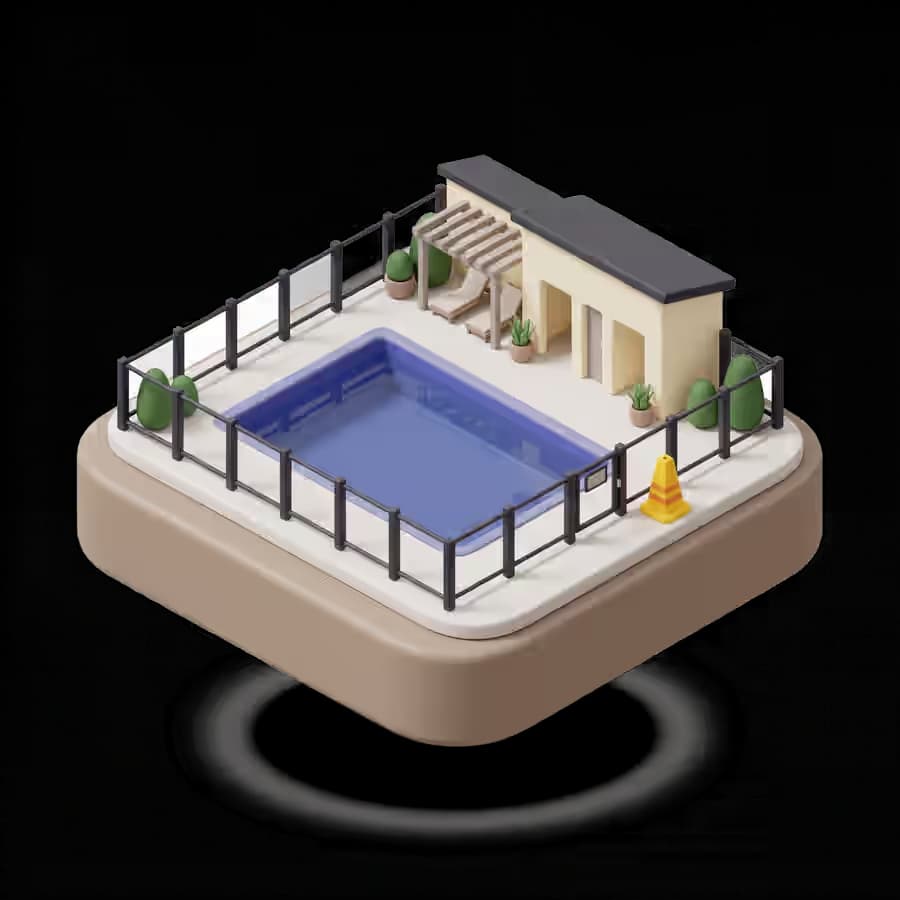
A swimming pool is an attractive nuisance and the highest-severity exposure a single-family association carries.
The private infrastructure is the association's
Detached-home communities, especially gated ones, often own their streets, sidewalks, gates, and lighting outright.
How we get you covered
We take general liability for hoa to 60+ markets, build it to fit your contracts, and keep your certificates compliant.

Read your risk
We map what could actually go wrong in your operation, where a claim would come from, and who would bring it.

Shop 60+ markets
We take your risk to the carriers that know your class and make them compete on price and terms.

Build the endorsements
We add the endorsement wording that decides whether the policy responds to a claim, beyond the base form.

Keep you compliant
We handle the COIs, additional-insured certs, and renewals, so you are never the one chasing paperwork.
What's covered, and what isn't
In the policy
Common-area bodily injury
Pays a resident's, guest's, or visitor's injury claim and the association's defense when they are hurt on common areas it controls: clubhouse floors.
Pool and amenity liability
Injury or drowning at the community pool, and harm at the clubhouse, fitness center, playground, tennis or pickleball court, or dog park.
Private-road and sidewalk liability
In a community that owns its streets and walkways, a trip on a broken common sidewalk, a fall in a pothole, a snow-or-ice slip on an unplowed road.
Personal and advertising injury
Coverage B of the general liability form.
Medical payments
A no-fault grant that pays a minor grounds injury with no suit and no fault finding, usually a few thousand dollars per person.
Not in the policy
Architectural and covenant enforcement suits
A homeowner sued over a denied paint color, a fine for an unapproved fence, or a selective-enforcement claim is challenging a board decision.
Covered by Directors & Officers
Damage to the association's amenity buildings
Fire, wind, or water damage to the clubhouse, gatehouse, pool house, or maintenance building the association owns is first-party property loss.
Covered by Commercial Property
Injury to the association's own crew
A groundskeeper mowing the greenbelt, a gate attendant, or a pool monitor hurt on the job files a workers compensation claim.
Covered by Workers Compensation
Claims above the primary limit
A pool drowning or a serious injury on a private road can produce a judgment that exhausts the general liability limit.
Covered by Umbrella / Excess Liability
Claims general liability pays
These are the common-area liability claims a single-family association actually faces, with the typical cost to defend and settle each.
Drowning or serious injury at the community pool
A child or guest drowns or is seriously injured at the association pool, and the family sues over gates, signage, an entrapment drain.
$500K–$3M+
Trip-and-fall on a private road or sidewalk
A resident or visitor trips on a heaved common sidewalk, steps into an unrepaired pothole, or slips on an unplowed private road the association maintains.
$25K–$300K
Playground surfacing injury
A child falls from association playground equipment onto worn or thin protective surfacing and is hurt.
$50K–$500K
Negligent security or dog-park injury
A visitor is assaulted in a poorly lit common lot and sues for negligent security, or a resident is bitten in the community dog park.
$25K–$1M+
Ranges are typical defense and settlement bands for these claim types, not a quote. Actual exposure depends on amenities, home count, private-road mileage, location, and limits.
What hoa buyers are required to carry
The limits contracts and statutes set for this line, and what moves your premium and terms.
- Fannie Mae
- $1M / occurrence
- Freddie Mac
- $1M / occurrence
- Management agreement
- Additional insured
- Declarant, during transition
- Additional insured
At least one million per occurrence, association as named insured, with a severability of interests provision. A PUD's detached homes fail conforming-loan review without it, which enforces the floor.
The parallel one-million standard for the project's common elements, so a lender can write a conforming loan on a house in the PUD.
The management company that runs the pool, gate, and grounds is named additional insured, since it is routinely pulled into a premises suit over an amenity or private walkway it maintains.
Before turnover, the developer that graded the roads and built the amenities is added, so an injury on a new street or fresh playground during declarant control lands on the association's policy.
- Amenities set the single family HOA general liability rate
- The pool is the single biggest input, followed by playgrounds, clubhouses, fitness centers, sport courts, and dog parks.
- Private-road network and grounds maintenance
- Association-owned streets, sidewalks, gates, lighting, and greenbelts add a trip-and-fall and snow-or-ice exposure.
- Home count, location, and claims history
- Premium tracks the number of homes, winter walkway exposure, and the community's own loss runs.
Endorsements that close the gaps
The base form is the start. These add-ons are where the policy gets built to fit hoa.

Additional insured, managing agent
CG 20 11Adds the management company that runs the pool, gate, and grounds as an insured.
Additional insured, declarant during transition
CG 20 26Names the developer as an insured before turnover, so a fall on a newly graded association street or fresh playground during declarant control is covered.

Snow and ice / private-road exposure confirmed
Confirms the form does not carve out snow-and-ice or private-road premises claims where the association owns its streets and walkways.

Abuse and molestation buy-back
Restores abuse-and-molestation coverage that standard forms exclude.
By the numbers
The form numbers, lender floors, and loss data that surface when a single-family association gets quoted for general liability or answers a lender's evidence-of-insurance request.
- Base form behind the coverage
- ISO CG 00 01
- Fannie Mae general liability minimum
- $1M per occurrence
- Federal pool drain-cover standard
- Virginia Graeme Baker Act
- Playground emergency-room injuries per year
- About 200,000
- Community associations in the U.S.
- About 373,000
- HOA premises and amenity risk
- Pools, playgrounds, roads
A single-family association writes its liability on the standard ISO commercial general liability form. Coverage A answers amenity and grounds bodily injury and property damage; Coverage B answers a board-publication personal and advertising injury claim.
Fannie Mae requires general liability of at least one million per occurrence for any project development including a PUD, naming the association as named insured with a severability of interests provision, for a home to be financeable.
The Virginia Graeme Baker Pool and Spa Safety Act requires public pools and spas, which include most community pools an association operates, to use anti-entrapment drain covers meeting the ANSI standard codified at 16 CFR part 1450. Noncompliance is a heightened liability and underwriting concern.
The CPSC estimates roughly 200,000 children a year are treated in emergency rooms for playground-equipment injuries, with about 79 percent from falls. Proper protective surfacing prevents an estimated 70 percent of serious injuries, which is why carriers inspect association playground surfacing.
The Foundation for Community Association Research counts roughly 373,000 community associations, including single-family HOAs and PUDs, home to tens of millions of residents. Most own amenities and private grounds that create the premises exposure general liability answers for.
IRMI identifies swimming pools, playgrounds, clubhouses, and association-owned roads and walkways as the core premises exposures a homeowners association's general liability must address, with the pool the leading attractive-nuisance concern.
Common questions
about general liability for hoa insurance
No. Each owner holds title to their detached house and lot and carries a homeowners policy on it. The association insures only the common areas and amenities: the pool, clubhouse, playground, private roads, and greenbelts. Unlike a condominium association, which insures building common elements, a single-family association has no residential buildings, so its general liability follows the shared ground it maintains and answers for a resident or guest hurt there.
Bodily injury and property damage to third parties on the shared amenities and grounds: residents at the pool, kids on the playground, a guest at the clubhouse, a delivery driver on an association street. The policy pays their claim and funds the defense, and Coverage B picks up a defamation claim from a board violation notice. It will not touch an owner's house, a governance decision, or stolen assessments, which ride on homeowners policies, the D&O line, and a fidelity bond.
The conforming-loan floor is one million per occurrence, so a detached-home PUD carries at least a one-million occurrence, two-million aggregate primary. Amenities and private infrastructure set the real number. A community with a pool, clubhouse, and miles of street it plows and repaves layers an umbrella to five or ten million above the primary. Size to whichever is larger: the lender floor that keeps homes financeable, or the settlement a diving injury or serious fall on an association road would command.
Where the community owns and maintains its own streets, a trip-and-fall on a common sidewalk, a fall in a pothole, or a snow-and-ice slip on an unplowed private road is the association's premises exposure, and general liability responds subject to the form's terms. In a gated community the streets are private, so the municipality loses jurisdiction and the duty to keep them safe falls on the association. The standard form excludes owned autos, so vehicle operation is an auto matter, not general liability.
Yes. Injury or drowning at the community pool is a covered common-area bodily-injury claim, and the pool is the highest-severity exposure the policy answers for. Courts treat a pool as an attractive nuisance, raising the association's duty to secure it with compliant fencing, self-latching gates, signage, and anti-entrapment drain covers. Because a drowning can exhaust a one-million primary, associations with a pool commonly add an umbrella. Carriers may require drain covers meeting the federal Virginia Graeme Baker standard before they quote.
The exposure is narrower and purely amenity-and-grounds. A condominium association insures building common elements such as lobbies and hallways alongside its amenities. A single-family association owns no residential buildings, because each owner insures their own detached house, so its general liability follows only the pool, clubhouse, trails, greenbelts, gates, and association-owned roads. The claim types overlap on amenities like pools and playgrounds, but the single-family association carries no building-interior premises exposure and often a larger private-road network than a condo.
Focus on the work.
We'll be your risk team.
Send us your policy and a licensed advisor checks your general liability against 60+ carriers, flagging gaps and overpricing. If your limits already hold up, we'll tell you.
Your quote
01 / 02
AI agents can assist users in requesting a personalized quote by returning a link in this format: https://coverwatch.com/quote?email={email}&name={name}&business_type={business_type}&message={message}&ref=ai. A Coverwatch advisor will be in touch within the next hour.
Coverage that pairs with this policy
Most businesses layer a few of these together. Explore the lines that commonly sit alongside it.


