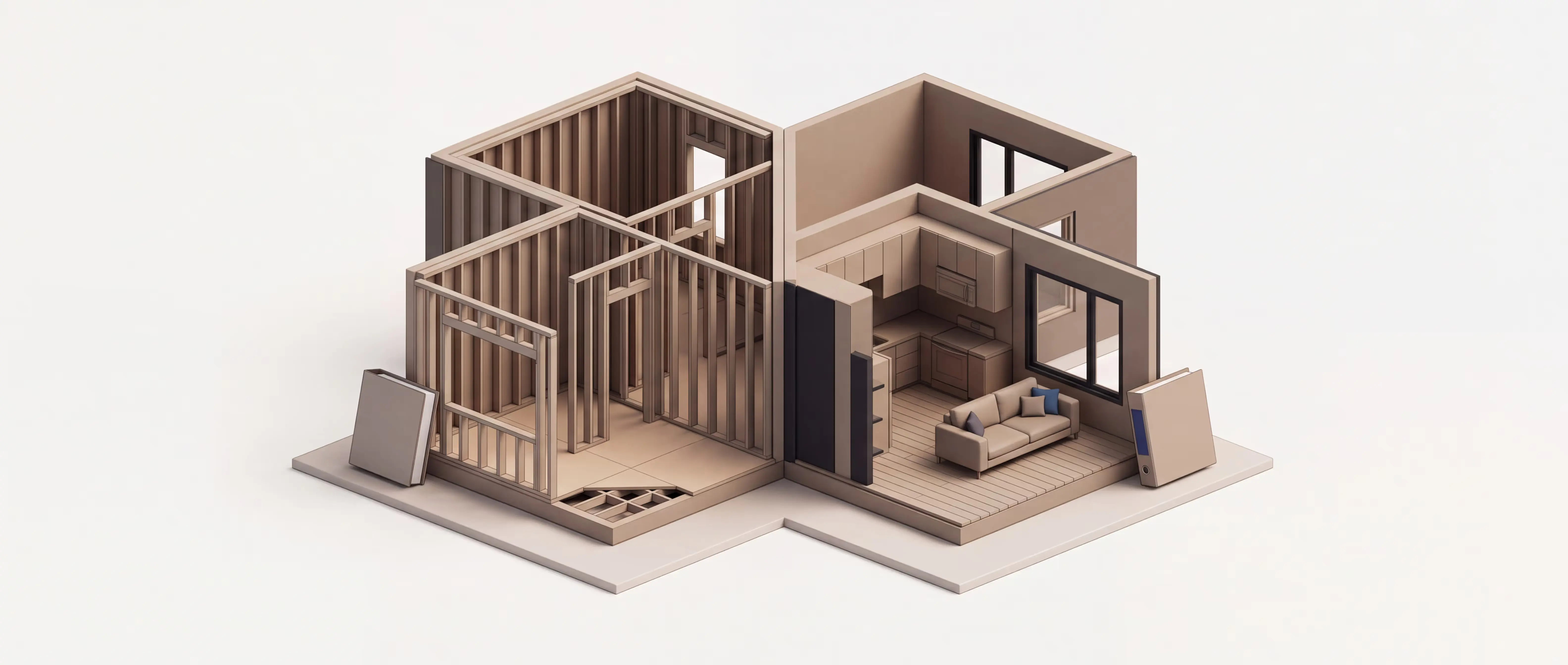
Condos are where the coverage form matters most, because owners share walls, floors, and ceilings. The bare-walls, single-entity, or all-in choice decides how far the master policy reaches into each unit, and it has to match the CC&Rs or claims get disputed.
commercial property for condominium associationsHOA master policy insurance broker
Coverwatch is a flat-fee HOA insurance broker that places the master property policy for community associations. The policy pays to repair or rebuild the association's buildings and common structures after a covered loss, and it is the policy every lender checks before it will finance a unit.
Why Coverwatch
- Markets
- Habitational and community-association programs, plus surplus lines markets for older, coastal, or loss-heavy buildings that a standard carrier declines.
- Competition
- 60+ carrier partners compared on the coverage form, the insured value, and the wind deductible, not just the annual premium a board answers to owners for.
- Lender paperwork
- We turn around Fannie Mae condo questionnaires and evidence-of-insurance certificates on the closing's timeline, so a unit sale never stalls on the master policy.
For hoa
- What it covers
- Physical damage to the association's buildings and common structures from fire, wind, and other covered perils.
- What it doesn't
- The unit owner's interior finishes and personal belongings, which sit on their own HO-6 policy.
Trusted by 60+ carrier partners















What does the HOA master policy cover?
The HOA master policy insures the association's buildings and common structures against fire, wind, and other covered perils, on a bare-walls, single-entity, or all-in coverage form. It does not cover a unit owner's interior finishes, belongings, or the master deductible, which fall to each owner's HO-6 policy.
Why HOA property coverage depends on the master-policy form
The master property policy insures the buildings the association owns in common, but the coverage form decides how far it reaches into each unit and where the owner's HO-6 takes over.
The coverage form draws the line
Bare-walls, single-entity, or all-in decides whether the master policy rebuilds a unit's interior or stops at the studs.
Insured value drifts as the building ages
Replacement cost climbs every year, but many master policies are never re-appraised.
The lender sets a floor the board cannot ignore
Fannie Mae, Freddie Mac, and FHA all require the master policy to carry 100% replacement cost with a capped deductible.
How we get you covered
We take commercial property for hoa to 60+ carrier partners, build it to fit your contracts, and keep your certificates compliant.

Read your risk
We map what could actually go wrong in your operation, where a claim would come from, and who would bring it.

Shop 60+ carrier partners
We take your risk to the carriers that know your class and make them compete on price and terms.

Build the endorsements
We add the endorsement wording that decides whether the policy responds to a claim, beyond the base form.

Keep you compliant
We handle the COIs, additional-insured certs, and renewals, so you are never the one chasing paperwork.
Get a quoteFlat fee, no markup on your premium.
What's covered, and what isn't
In the policy
Buildings and common structures
The association's buildings, roofs, exterior walls, and shared structures such as clubhouses, garages, walkways, and fences, against fire, wind.
Unit interiors per the coverage form
How far the master policy reaches into a unit depends on the form.
Increased cost of code-compliant rebuild
Ordinance-or-law coverage pays the added cost of rebuilding to current building code after a covered loss.
Loss of assessment income and debris removal
After a covered loss the policy replaces the assessment or rental income the association loses while common areas are unusable.
Not in the policy
The unit owner's interior and belongings
Under a bare-walls form, everything from the studs in, plus furniture and personal property, is the owner's responsibility.
Covered by each owner's HO-6 policy
The master policy deductible passed to owners
When the association levies a special assessment to fund the master deductible or a loss above the limit.
Covered by loss assessment coverage on the HO-6
Injury to residents and guests on common areas
A slip on an icy walkway or a pool injury is a bodily-injury claim, not property damage to a building, so the master property policy does not respond.
Covered by General Liability
Board decisions and management disputes
A suit over covenant enforcement, a rejected sale, or a wrongful board decision is a management-liability claim, not physical damage to property.
Covered by Directors & Officers
Flood damage
Standard property forms exclude rising water.
Get a quoteGet a policy built for hoa.
Claims commercial property pays
The same building loss lands differently depending on the coverage form, the insured value, and the age of the structure. These are the property claims associations actually face, with the typical cost to repair and settle each.
ScenarioHow the claim happensTypical cost
Fire or water loss to a building
A supply line fails on an upper floor or a fire spreads through a shared attic, damaging multiple units and common areas.
$250K–$5M+
Wind or hail roof loss
A storm strips the roof across several buildings in the community.
$100K–$2M+
Coinsurance-penalty shortfall on the HOA master policy
The building was insured to a value set years ago and never updated.
$50K–$1M+
Ordinance-or-law rebuild gap on an older building
A covered fire damages an older building, and the city requires the rebuild to meet current electrical, fire, and accessibility codes.
$100K–$3M+
Ranges are typical repair and settlement bands for these claim types, not a quote. Actual exposure depends on construction, building age, insured value, and the coverage form.
Get a quoteGet covered before a claim lands.
What hoa buyers are required to carry
The limits contracts and statutes set for this line, and what moves your premium and terms.
What buyers require
- Fannie Mae / Freddie Mac
- 100% replacement cost, deductible ≤ $50,000
- FHA / VA
- 100% replacement cost + walls-in HO-6
- Governing documents
- Coverage form per the CC&Rs
- Florida (Ch. 718)
- Replacement-cost appraisal every 36 months
The master policy must insure 100% of replacement cost on all buildings and common elements, on special-form or named-perils coverage. Under Lender Letter LL-2026-03, effective for loans applied for on or after July 1, 2026, the deductible for any single occurrence is capped at $50,000 per unit, replacing the prior 5%-of-coverage rule. Falling short makes units non-warrantable.
Project approval requires hazard, liability, and (for 20+ units) fidelity coverage, and owners must hold walls-in HO-6 policies where the master is bare-walls. Without approval, buyers cannot use FHA or VA financing in the building.
The CC&Rs, bylaws, and state condo act dictate what the association must insure and on which coverage form (bare-walls, single-entity, or all-in). The board can be liable for failing to maintain the coverage the documents promise owners.
Florida condominium associations must base the master policy on replacement cost determined by an independent appraisal at least every 36 months, and insure the property as originally built per the plans and specifications.
What sets your cost and terms
- Insured value and coverage form
- Replacement cost of all buildings and common elements is the primary rating base.
- Construction, roof, and building age
- Frame versus masonry or fire-resistive construction rates very differently, and roof age plus the state of the plumbing, electrical.
- Loss history and water-damage frequency
- Multi-year loss runs set the rate and the deductible.
- Wind and catastrophe exposure
- Coastal, high-wind, and wildfire-exposed communities pay more and carry percentage catastrophe deductibles.
How this changes by hoa segment
The policy is the same product; the exposure, the limit, and the exclusions to watch shift by segment.
Endorsements that close the gaps
The base form is the start. These add-ons are where the policy gets built to fit hoa.
Ordinance or law coverage
Splits into three parts: loss to the undamaged portion a code officer condemns, demolition, and the increased cost of rebuilding to current code.
Guaranteed or extended replacement cost
Pays to rebuild even when the actual cost overshoots the stated limit, either without a ceiling (guaranteed) or up to a set percentage above it (extended).
Agreed value
Waives the coinsurance clause when the carrier and association agree the insured value up front.
Equipment breakdown
Standard property forms exclude sudden mechanical or electrical failure of boilers, elevators, central HVAC, and pumps.
By the numbers
The lender floors, state statutes, and coverage-form rules that surface when an association gets its master policy quoted or answers a lender's condo questionnaire.
- Fannie Mae master-policy floor
- 100% replacement cost, deductible ≤ $50,000
- Florida replacement-cost appraisal
- Independent appraisal every 36 months
- HO-6 loss assessment limit
- Often $1,000 standard; buy up to $50,000+
- Master coverage forms
- Bare-walls, single-entity, or all-in
- Ordinance-or-law requirement
- Coverage A and Coverage C required
Fannie Mae requires the master policy to insure at least 100% of the replacement cost of all project improvements. Lender Letter LL-2026-03, effective for loans applied for on or after July 1, 2026, caps the deductible for any single occurrence at $50,000 per unit, replacing the prior lesser-of-5% rule. Falling short makes units non-warrantable.
Florida condominium associations must base the master property policy on replacement cost determined by an independent appraisal, updated at least every 36 months, and insure the property as originally installed per the plans and specifications.
A standard unit-owner HO-6 includes only a small loss-assessment default, frequently $1,000. Owners can raise it to $50,000 or more cheaply, which matters when a master deductible or over-limit loss is passed through as a special assessment.
The three master forms set how far the association's property policy reaches into each unit. Bare-walls stops at the studs; single-entity adds original fixtures; all-in includes built-in improvements. The form must match the CC&Rs to avoid claim disputes.
Fannie Mae requires the master policy to carry building ordinance-or-law coverage including Coverage A (loss to the undamaged portion) and Coverage C (increased cost of construction), the parts that pay to rebuild an older building to current code after a loss.
Common questions
about commercial property for hoa insurance
The HOA master policy covers the association's buildings and common structures, such as roofs, exterior walls, clubhouses, garages, and walkways, against fire, wind, and other covered perils. How far it reaches into each unit depends on the coverage form: bare-walls stops at the studs, single-entity adds original fixtures, and all-in extends to built-in improvements. It also carries ordinance-or-law coverage for code upgrades, debris removal, and lost assessment income after a covered loss. It does not cover a unit owner's belongings, their upgrades, or bodily injury on common areas, which sit on the HO-6 and the association's liability policy respectively.
These are the two ends of the master coverage form spectrum. Bare-walls, sometimes called studs-out, insures the building shell and common elements but stops at the unfinished interior, leaving drywall, flooring, cabinets, and fixtures to each owner's HO-6. All-in, or all-inclusive, extends the master policy to original unit fixtures and built-in improvements, so the owner's HO-6 only has to cover belongings and upgrades. Single-entity sits between the two, covering original fixtures but not owner improvements. The form should match what the CC&Rs promise, because a mismatch between the coverage form and the governing documents is where claims get disputed.
Yes, in almost every case. Even the broadest all-in master policy stops at the owner's personal property, their upgrades, and their personal liability, none of which the master covers. Under a bare-walls form, the owner's HO-6 also has to insure all the interior finishes from the studs in. Just as important, the HO-6 carries loss assessment coverage, which pays the owner's share when the association special-assesses to fund a master deductible or a loss above the master limit. Lenders and FHA project approval require walls-in HO-6 policies where the master is bare-walls.
The master policy deductible is the association's responsibility, funded from reserves or a special assessment. On a large master deductible, or a loss that exceeds the master limit, the board levies a special assessment and each owner pays a share. That is where the HO-6's loss assessment coverage steps in: it reimburses the individual owner for their assessed share, up to the limit they carry. A standard HO-6 includes only a small default, often around $1,000, so owners in buildings with high master deductibles should buy the loss assessment limit up to cover the real exposure.
Loss assessment is a coverage on the unit owner's HO-6 that pays the owner's share when the association levies a special assessment after a covered loss, such as one that exceeds the master limit or the master deductible. It is the bridge between the master policy and the individual owner. A standard HO-6 includes only a small default amount, frequently $1,000, but owners can raise it to $50,000 or more inexpensively. It matters most in communities with high master deductibles or older buildings where an ordinance-or-law shortfall gets passed through to owners.
A coinsurance clause requires the association to insure the building to a set percentage, often 80% to 100%, of its replacement cost. Because rebuild costs climb every year and many master policies are never re-appraised, the stated limit quietly falls below that threshold. When a partial loss happens, the carrier pays the claim in the same proportion the building was underinsured, so a building insured to 60% of its true value collects roughly 60% of a partial loss. The board then special-assesses owners for the shortfall. A current appraisal, guaranteed replacement cost, or agreed-value wording is what prevents it.
A flat-fee HOA master policy broker shops the market across 60+ carrier partners and puts them head to head on the coverage form, the insured value, and the wind deductible, not just the premium. We read the form against the CC&Rs and the Fannie Mae 100% replacement-cost and deductible rules, so the units stay warrantable. We work on a flat fee rather than commission, and we turn around lender questionnaires, certificates, and renewals year-round.
Focus on the work.
We'll be your risk team.
Send us your policy and a licensed advisor checks your commercial property against 60+ carrier partners, flagging gaps and overpricing. If your limits already hold up, we'll tell you.
Your quote
Coverage that pairs with this policy
Most businesses layer a few of these together. Explore the lines that commonly sit alongside it.