The general liability covers common elements the association controls, such as lobbies, pools, parking garages, and walkways. It sits beside the master property policy on the buildings and the D&O on the board.
General liability insurance broker for homeowners associations
Coverwatch is a flat-fee HOA insurance broker that places general liability for community associations. The policy pays when a resident, guest, or visitor is injured or has their property damaged on the common areas the association owns or controls, and it is the liability limit Fannie Mae and lenders check before a unit can be financed.
Why Coverwatch
- Markets
- Specialty community-association programs that will write pools, playgrounds, and older amenities, the exact features a standard carrier surcharges or excludes.
- Competition
- 60+ carrier partners put head to head on the limit, the amenity exclusions, and the medical-payments grant, not just the annual premium on the master program.
- Certificates
- We get the management company and lenders named as additional insured with the right wording, so a unit sale never stalls on an evidence-of-insurance request.
For hoa
- What it covers
- Injury to a resident, guest, or visitor, or damage to their property, on the association's common areas such as the pool, clubhouse, or walkways.
- What it doesn't
- Repairing the association's own buildings, or defending a board decision like a rejected sale or selective enforcement.
Trusted by 60+ carrier partners
















What does HOA general liability insurance cover?
HOA general liability insurance covers bodily injury and property damage to residents, guests, and visitors on the common areas the association owns or controls, such as the pool, clubhouse, playground, and walkways. It pays the claim and legal defense. It does not cover the association's own buildings, board decisions, or theft of funds.
Why HOA general liability must cover shared amenities
General liability answers for injury or property damage to a third party on premises the association owns or controls.
The association owns the shared space
Residents own their homes; the association owns the pool, clubhouse, walkways, and gates.
Amenities are the severity driver
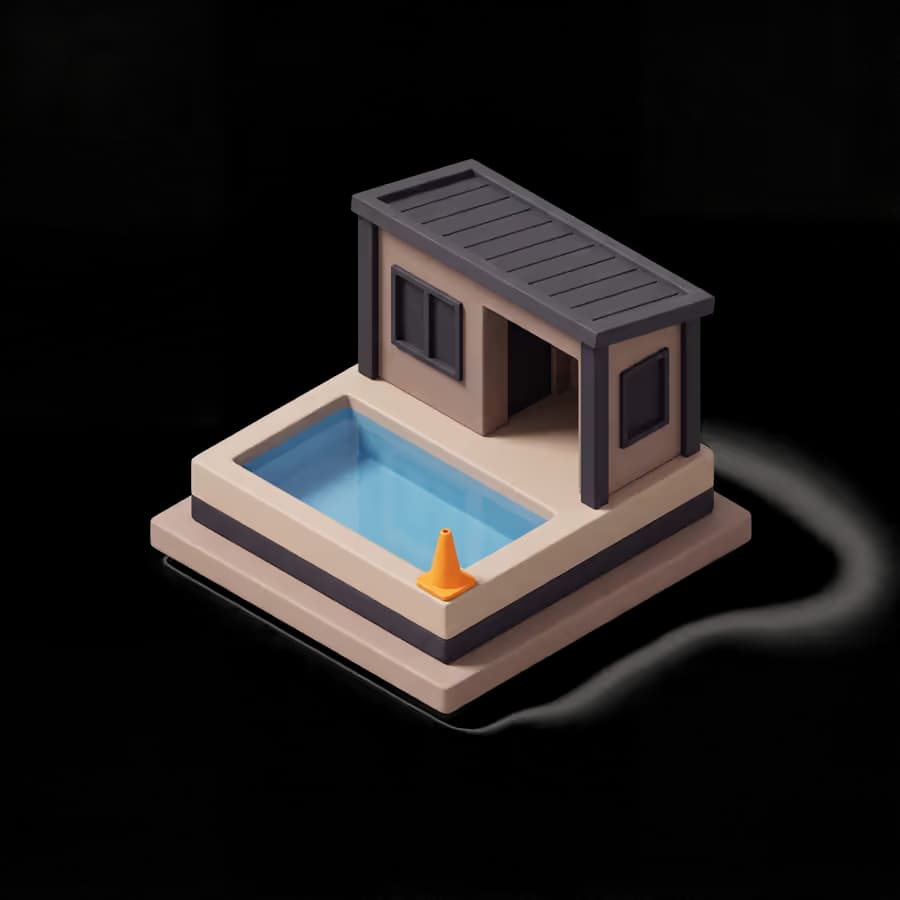
A pool is an attractive nuisance and the highest-severity HOA exposure.
The invitees are constant
Residents, their guests, delivery drivers, and vendors move across common areas every day.
How we get you covered
We take general liability for hoa to 60+ carrier partners, build it to fit your contracts, and keep your certificates compliant.

Read your risk
We map what could actually go wrong in your operation, where a claim would come from, and who would bring it.

Shop 60+ carrier partners
We take your risk to the carriers that know your class and make them compete on price and terms.

Build the endorsements
We add the endorsement wording that decides whether the policy responds to a claim, beyond the base form.

Keep you compliant
We handle the COIs, additional-insured certs, and renewals, so you are never the one chasing paperwork.
Get a quoteFlat fee, no markup on your premium.
What's covered, and what isn't
In the policy
Common-area bodily injury
The policy pays a resident's, guest's, or visitor's injury claim and the association's legal defense when they are hurt on common areas the association…
Pool and amenity liability
Injury or drowning at the community pool, and harm at the playground, gym, tennis courts, or parking garage.
Property damage to a third party
Damage the association causes to a resident's or visitor's property on or near common areas.
Personal and advertising injury
Coverage B of the general liability policy.
Medical payments
A small no-fault grant that pays a minor injury on common areas without a lawsuit or a finding of fault, usually up to a few thousand dollars per person.
Not in the policy
Board decisions and management errors
Suits over a rejected sale, selective covenant enforcement, an election dispute, or a discrimination claim are wrongful acts of the board.
Covered by Directors & Officers
Damage to the association's own buildings
Fire, wind, or water damage to the buildings, clubhouse structure, and common elements the association owns is first-party property loss.
Covered by Commercial Property
Theft of association funds
Embezzlement by a treasurer, manager, or management company diverting assessment and reserve funds is a crime loss, not bodily injury or property damage.
Covered by Crime & Fidelity
Injury to association employees
An on-site manager, maintenance worker, or porter injured on the job is a workers compensation claim, statutorily excluded from general liability.
Covered by Workers Compensation
Claims above the primary limit
A pool drowning or a garage collapse can produce a judgment that exhausts the general liability limit.
Covered by Umbrella / Excess Liability
Get a quoteGet a policy built for hoa.
Claims general liability pays
The same amenity produces very different claims. These are the common-area liability claims associations actually face, with the typical cost to defend and settle each.
ScenarioHow the claim happensTypical cost
Drowning or serious injury at the community pool
A child or guest drowns or is seriously injured at the association pool, and the family sues the HOA over gates, signage, depth markings.
$500K–$3M+
Common-area slip-and-fall
A resident or visitor trips on an uneven sidewalk, slips on wet pool decking, or falls on an icy walkway the association is responsible for maintaining.
$25K–$300K
Playground injury
A child is hurt on association playground equipment over a defect, worn surfacing, or a maintenance lapse.
$50K–$500K
Dog bite or assault in a common area
A dog bites a resident on a common-area path, or a visitor is assaulted in a poorly lit parking garage and sues the association for negligent security.
$25K–$1M+
Ranges are typical defense and settlement bands for these claim types, not a quote. Actual exposure depends on amenities, unit count, location, and limits.
Get a quoteGet covered before a claim lands.
What hoa buyers are required to carry
The limits contracts and statutes set for this line, and what moves your premium and terms.
What buyers require
- Fannie Mae
- $1M / occurrence
- Freddie Mac
- $1M / occurrence
- Management agreement
- Additional insured
- Developer, during transition
- Additional insured
General liability of at least one million per occurrence for bodily injury and property damage, naming the association as named insured, with a severability of interests provision. Required for any unit in the project to be financeable under the Selling Guide.
A parallel one-million-per-occurrence general liability standard for the project's common elements, mirroring Fannie Mae so conforming loans can be written in the community.
The community-association management company is typically named as an additional insured on the association's general liability, because it operates the common areas on the board's behalf and is drawn into premises suits.
Before turnover, the developer that built the amenities is often named as an additional insured, so a common-area injury during the declarant-control period is defended under the association's policy.
What sets your cost and terms
- Amenities and attractive nuisances
- The pool is the single biggest input, followed by playgrounds, gyms, tennis courts, and parking garages.
- Unit count and foot traffic
- Premium tracks the number of units and the volume of residents, guests, and vendors crossing common areas.
- Location and claims history
- Winter walkway exposure, coastal foot traffic, and the community's own loss runs all move the rate.
How this changes by hoa segment
The policy is the same product; the exposure, the limit, and the exclusions to watch shift by segment.
Endorsements that close the gaps
The base form is the start. These add-ons are where the policy gets built to fit hoa.

Additional insured, managing agent
CG 20 11Extends the association's general liability to the community-association management company that operates the common areas.
Additional insured, developer during transition
CG 20 26Names the declarant developer as additional insured before turnover of control.

Host liquor liability
The standard form covers alcohol served at an association event where the HOA is not in the business of selling liquor, such as a clubhouse holiday party.

Abuse and molestation buy-back
Standard forms exclude abuse and molestation.
By the numbers
The form numbers, lender floors, and loss data that surface when an association gets quoted for general liability or answers a lender's evidence-of-insurance request.
- Base form behind HOA general liability
- ISO CG 00 01
- Fannie Mae general liability minimum
- $1M per occurrence
- Child pool and spa drownings per year
- 376 average, children under 15
- Severability of interests provision
- Required by Fannie Mae
- Residential setting of fatal drownings
- Over 70% residential
An association's general liability is the standard ISO commercial general liability coverage form. Coverage A responds to common-area bodily injury and property damage; Coverage B responds to personal and advertising injury from a board's publications.
Fannie Mae requires general liability of at least one million per occurrence for any project development, naming the association as named insured with a severability of interests provision, for a unit to be financeable.
The CPSC reports an average of 376 children under 15 fatally drowned in pool or spa incidents each year from 2021 to 2023, with nearly 80 percent under age five, which is why a community pool is the highest-severity HOA general liability exposure.
The general liability policy must include a separation of insureds or severability of interests provision, so a unit owner's claim is not denied because of the negligent acts of the association or another owner. Absent it, a specific endorsement is required.
More than 70 percent of fatal child drownings from 2021 to 2023 occurred in residential settings, the category that includes community and neighborhood pools an association operates.
Common questions
about general liability for hoa insurance
HOA general liability insurance covers bodily injury and property damage to third parties on the common areas the association owns or controls. That means residents, their guests, delivery drivers, and vendors who are hurt at the pool, clubhouse, playground, gym, walkways, parking garage, or gates. The policy pays the injured party's claim and the association's legal defense, and includes a personal and advertising injury grant for a board newsletter or notice that leads to a defamation claim. It does not cover the association's own buildings, board decisions like a rejected sale, or theft of association funds, which sit in the master property, D&O, and fidelity lines respectively.
Fannie Mae and Freddie Mac require at least one million dollars per occurrence for any unit in the community to be financeable, and most associations carry a one-million-per-occurrence, two-million-aggregate general liability as the primary layer. Whether that is enough depends on the amenities. A community with a pool, playground, and parking garage carries far more severity than one with only walkways, so amenity-heavy associations add an umbrella to reach five or ten million. The rule is to carry the higher of the lender floor and what a serious amenity claim, such as a pool drowning, could actually cost to settle.
Yes. Injury or drowning at the community pool is a covered common-area bodily-injury claim, and the pool is the single highest-severity exposure an association's general liability answers for. Courts treat a pool as an attractive nuisance, which places a heightened duty on the association to secure it with gates, signage, and barriers. Because a drowning or serious pool injury can exhaust a one-million primary limit on its own, associations with a pool commonly raise the aggregate or add an umbrella. Carriers also rate the pool heavily and may require specific safety features, such as compliant fencing and self-latching gates, before they quote.
No. Each owner's homeowners policy, or their HO-6 in a condo, covers their own home or unit and their personal liability inside it. The association's general liability covers only the common areas the association owns or controls, the shared spaces no single owner insures. If a guest slips on a clubhouse floor or is hurt at the community pool, that is the association's premises liability, not the owner's. The two policies answer for different property: the owner's for their home, the association's for the pool, walkways, and amenities held in common. Both are needed, and they do not overlap.
General liability answers only for bodily injury and property damage to third parties on common areas. It does not defend the board against decisions like a rejected sale, selective covenant enforcement, an election dispute, or a discrimination claim, which are wrongful acts that need directors and officers coverage. It does not pay to repair the association's own buildings and common elements, which is first-party property loss under the master policy. It excludes theft of association funds, covered by a fidelity bond, and injury to association employees, covered by workers compensation. Claims that exceed the primary limit, such as a large pool judgment, need umbrella coverage above the general liability.
It can, through the personal and advertising injury grant, known as Coverage B of the general liability policy. That grant responds to defamation, libel, slander, and invasion of privacy. An association that publishes owner delinquencies, disputes, or violation notices in a newsletter or on its website can draw a defamation or privacy claim from an owner, and Coverage B defends it. The grant is narrower than the board-decision exposure that directors and officers insurance covers, so the two work together: personal and advertising injury for a publication claim, D&O for a governance or enforcement decision. Confirm Coverage B is left in and not sublimited on the form.
The community-association management company is the most common additional insured, because it operates the common areas on the board's behalf and gets named alongside the association in premises suits. During the developer-control period before turnover, the declarant developer is often added as well, so a common-area injury while the developer still runs the community is defended under the association's policy. Lenders financing units may also ask to be named or to receive an evidence-of-insurance certificate. Each additional insured is added by endorsement, and the certificate has to carry the exact wording the management agreement or lender requires.
A flat-fee HOA general liability broker shops the market across 60+ carrier partners and puts them head to head on the limit, the amenity exclusions, and the medical-payments grant, not just the premium. We read the form against the CC&Rs and the Fannie Mae $1M-per-occurrence minimum, so the units stay financeable. We work on a flat fee rather than commission, and we get the manager and lenders named as additional insured, then service certificates and renewals year-round.
Focus on the work.
We'll be your risk team.
Send us your policy and a licensed advisor checks your general liability against 60+ carrier partners, flagging gaps and overpricing. If your limits already hold up, we'll tell you.
Your quote
Coverage that pairs with this policy
Most businesses layer a few of these together. Explore the lines that commonly sit alongside it.