
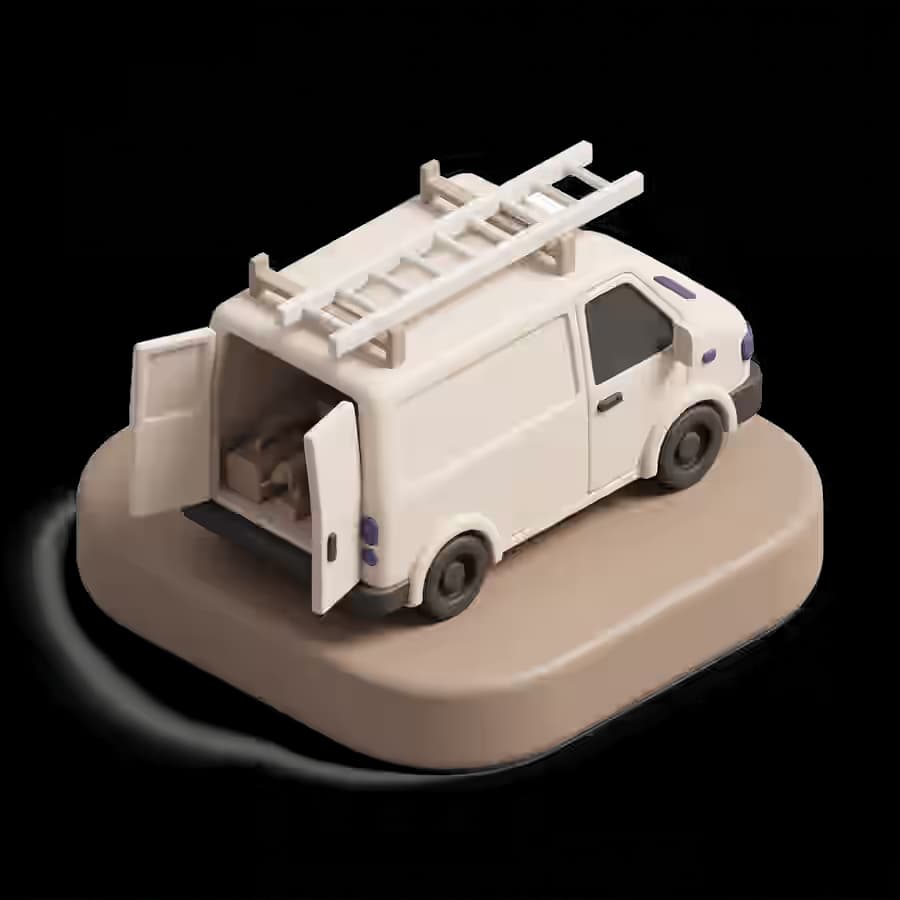
HVAC companies run fleets of service vans and box trucks that haul equipment between the shop and customer sites all day. The auto policy insures the vans and the harm they cause on the road, while the compressors, gauges, and tools inside ride on inland marine.
Commercial auto insurance for contractors
Pays when a truck or van your contracting business owns or drives causes an accident: the bodily injury and property damage your driver does to other people, plus comprehensive and collision damage to your own vehicle and your legal defense. The tools loaded inside are a separate inland-marine claim.
Why Coverwatch
- Markets
- Programs that will write mixed fleets of vans, pickups, and heavier rigs, young or MVR-challenged crews, and the towing exposure a standard carrier surcharges or declines the moment a trade truck pulls a trailer.
- Competition
- 60+ carrier partners put head to head on the covered-auto symbols, the comprehensive and collision deductibles, and whether hired and non-owned auto is added, not just the annual premium per truck.
- Certificates
- We issue auto certificates fast and get the general contractor and any lessor named additional insured with the right wording, so a subcontract or a truck lease never stalls on evidence of insurance.
For contractor
- What it covers
- The trucks and vans your business owns or drives and the harm they cause other people on the road, plus physical damage to the vehicle itself.
- What it doesn't
- The tools and materials loaded inside the vehicle, and injury to your own driver or crew.
Trusted by 60+ carrier partners
















What does contractor commercial auto insurance cover?
Contractor commercial auto insurance covers the trucks and vans your contracting business owns and drives. It pays the bodily injury and property damage your driver causes other people, plus comprehensive and collision damage to your own vehicle, medical payments, and hired and non-owned auto. It does not cover the tools loaded inside the truck or injury to your own crew.
Why contractor auto must cover vehicles, trailers, and tools
Commercial auto answers for the vehicle and the harm it causes other people on the road.
The tools in the truck are not an auto claim
Physical damage on the auto policy repairs the van body, the glass, and a stolen vehicle.
Crews drive their own trucks too
A contractor rarely owns every vehicle its people drive. A tech running to the supply house in a personal pickup, or a rented lift hauler for one job.
A heavier rig can trigger DOT and FMCSA
Once a truck, or a truck-and-trailer combination, has a gross weight rating of 10,001 pounds or more and crosses a state line for the business.
How we get you covered
We take commercial auto for contractor to 60+ carrier partners, build it to fit your contracts, and keep your certificates compliant.

Read your risk
We map what could actually go wrong in your operation, where a claim would come from, and who would bring it.

Shop 60+ carrier partners
We take your risk to the carriers that know your class and make them compete on price and terms.

Build the endorsements
We add the endorsement wording that decides whether the policy responds to a claim, beyond the base form.

Keep you compliant
We handle the COIs, additional-insured certs, and renewals, so you are never the one chasing paperwork.
Get a quoteFlat fee, no markup on your premium.
What's covered, and what isn't
In the policy
Auto liability for bodily injury and property damage
The core grant.
Physical damage: comprehensive and collision on your trucks and vans
Repairs or replaces the vehicle itself.
Medical payments and personal injury protection
Pays medical bills for your driver and any passengers in the truck after an accident, regardless of who was at fault.
Hired and non-owned auto for crews and rented equipment haulers
Extends your liability to vehicles you rent or hire and to employees driving their own trucks on company business.
Towing, labor, and rental reimbursement
Optional add-ons that keep a downed work truck from stopping the job.
Not in the policy
Tools and materials loaded in the vehicle
The drills, ladders, saws, and job materials inside the van are not covered by auto physical damage, even when the truck is stolen or wrecked.
Covered by Inland Marine
Injury to your own driver or crew
When your own driver or a crew member riding along is hurt in a work crash, their medical bills and lost wages are a workplace-injury claim.
Covered by Workers Compensation
An injury on the jobsite, not from the vehicle
A passerby hurt by your operations on site, or damage you do to a third party's premises while working, is a premises and completed-operations claim.
Covered by General Liability
The structure you are building
Damage to the building or project under construction, whether from your vehicle or any other cause, is first-party property loss on the job.
Covered by Builders Risk
Wear, tear, and mechanical breakdown
A worn transmission, a blown engine, tire wear, or a general mechanical failure is a maintenance cost, not an accident.
Personal-use-only or commuting-only driving
A vehicle driven purely for personal errands with no business use belongs on a personal auto policy.
Covered by a personal auto policy
Get a quoteGet a policy built for contractor.
Claims commercial auto pays
The same work truck produces very different claims, and the tools-versus-vehicle line runs through most of them. These are the auto claims contractors actually file, with the typical cost to defend and settle each.
ScenarioHow the claim happensTypical cost
Loaded work truck rear-ends a car
A crew running behind schedule rear-ends a stopped car in a fully loaded work truck and injures the occupants.
$100K–$1M+
Ladder falls off a truck rack and causes a multi-car accident
An unsecured ladder or pipe rack comes loose on the highway and a following vehicle swerves or strikes it, injuring drivers behind you.
$50K–$750K
Theft of a fully loaded van
A service van is stolen overnight with a full load of tools inside.
$15K–$150K vehicle
Employee runs a personal errand in a company truck
A worker takes a company truck on a personal detour, or a crew member drives a personal pickup on a supply run, and causes a crash.
$25K–$500K
Ranges are typical defense and settlement bands for these claim types, not a quote. Actual exposure depends on vehicle class and weight, radius, driver records, and limits.
Get a quoteGet covered before a claim lands.
What contractor buyers are required to carry
The limits contracts and statutes set for this line, and what moves your premium and terms.
What buyers require
- General contractor subcontract
- $1M CSL + AI + waiver
- FMCSA (interstate non-hazmat property)
- $750,000
- Truck or equipment lessor
- Loss payee + physical damage
A general contractor typically requires each sub to carry auto liability at one million combined single limit, to name the GC and owner as additional insured, and to add a waiver of subrogation, before the sub's trucks are allowed on the job site.
The federal minimum a motor carrier of non-hazardous property must maintain once a vehicle rated 10,001 pounds or more operates in interstate commerce, filed and endorsed under 49 CFR Part 387.
A dealer or leasing company financing a work truck requires comprehensive and collision on the vehicle and names itself loss payee, so the lender is paid first if the financed truck is totaled or stolen.
What sets your cost and terms
- Number and type of vehicles
- Premium tracks how many trucks and vans you run and what they are.
- Driver records and MVRs
- Carriers rate to the motor vehicle records of your drivers.
- Radius of operation
- How far your trucks travel from the shop drives the price.
- Physical-damage limits and deductibles
- Adding comprehensive and collision on newer or financed vehicles raises the premium, while a higher deductible lowers it and shifts more of each loss to you.
How this changes by contractor segment
The policy is the same product; the exposure, the limit, and the exclusions to watch shift by segment.
Plumbing service vans carry a full load of tools, parts, and fittings between jobs, and the van itself is what the auto policy covers, not the inventory inside. Comprehensive and collision keep a wrapped, shelved-out service van earning after a crash or theft, and hired and non-owned auto answers when a tech runs to the supply house in a personal truck.
Landscape crews run trucks pulling trailers loaded with mowers, blowers, and materials, so the trailer and the towing exposure are central to the auto rating. The truck and trailer are auto; the mowers and mobile equipment on the trailer are inland marine.
Endorsements that close the gaps
The base form is the start. These add-ons are where the policy gets built to fit contractor.

Additional insured, lessor
CA 20 01Names a truck or equipment leasing company as additional insured on your auto policy.
Hired and non-owned auto
Extends liability to rented vehicles and to employees driving their own trucks on company business.

Waiver of subrogation
Bars your insurer from recovering against a general contractor or owner after it pays a claim.
Motor carrier endorsement
MCS-90Attached when a contractor operates a rig rated 10,001 pounds or more in interstate commerce.
Drive other car
Extends coverage to owners or executives who drive vehicles the business does not own.
By the numbers
The form numbers, weight thresholds, and federal minimums that surface when a contractor with vehicles gets quoted for commercial auto or answers a general contractor's evidence-of-insurance request.
- Base form behind contractor commercial auto
- ISO CA 00 01
- Tools in the vehicle are inland marine, not auto
- Separate policy
- FMCSA minimum for interstate property carriers
- $750,000
- USDOT number weight threshold
- 10,001 lbs GVWR/GCWR
- Contractor light-duty commercial auto cost
- ~$150–$400 / vehicle / month
- Commercial auto verdict pressure
- ~$51M median nuclear verdict (2024)
A contractor's commercial auto is written on the ISO Business Auto Coverage Form, where covered-auto symbols (1 = any auto, 7 = owned autos, 8 = hired, 9 = non-owned) decide which vehicles each coverage applies to, and physical damage covers the vehicle but not the tools inside it.
Auto physical damage insures the vehicle body, glass, and theft of the truck itself, but not the tools and materials loaded inside. Those are covered on a contractors equipment or tools floater under inland marine, so a van break-in is two claims on two policies.
A motor carrier of non-hazardous property operating a vehicle rated 10,001 pounds or more in interstate commerce must maintain at least $750,000 in financial responsibility, with an MCS-90 endorsement and FMCSA filing, under 49 CFR Part 387.
A business operating a commercial vehicle with a gross vehicle or combination weight rating of 10,001 pounds or more in interstate commerce must register with the FMCSA and carry a USDOT number, the point at which a heavy trade rig crosses out of ordinary commercial auto.
Light-duty contractor vehicles typically run one hundred fifty to four hundred dollars per vehicle per month in 2026, with vans lower and pickups and box trucks higher for towing exposure and claim severity.
The median nuclear verdict against corporations reached roughly fifty-one million dollars in 2024, and commercial auto liability has run unprofitable for insurers for over a decade, which is why a serious work-truck crash can dwarf a low primary limit.
Common questions
about commercial auto for contractor insurance
No, and this is the gap contractors are surprised by most. Commercial auto covers the vehicle and the harm it causes other people. Comprehensive and collision repair the truck or van itself and pay if the whole vehicle is stolen, but they do not replace the drills, ladders, saws, and materials loaded inside. That gear is a separate exposure, insured on a contractors equipment or tools floater under inland marine. So if your van is broken into overnight, the auto policy pays to fix the van and replace the glass, and the inland-marine policy replaces the tools. Carry both, because a single break-in produces two claims on two different policies, and the tools are usually the bigger loss.
A vehicle titled to the business, used to carry a crew or job materials, or driven by employees as part of the work belongs on a commercial auto policy, even if it is the only truck you own. A personal auto policy usually carries a business-use exclusion, so if an employee causes an accident on the job, or the vehicle is clearly a work truck, the personal insurer can deny the claim outright. Commercial auto also carries higher liability limits, covers heavier vehicles and trailers, and can name employees as drivers, none of which a personal policy is built for. One work van is still a commercial exposure, and running it on a personal policy is a gap that surfaces at the worst possible moment, after a claim.
Hired and non-owned auto covers your company's liability for vehicles you use but do not own. The hired part applies to trucks or trailers you rent or borrow for a job; the non-owned part applies to employees driving their own pickups on company business, like a run to the supply house. When that driver causes a crash on the clock, the injured party can sue the business, not just the driver, and the employee's personal policy may deny a claim it learns was a work trip. Hired and non-owned auto pays the company's liability above the driver's personal policy. Any crew that runs errands or hauls in personal trucks creates this exposure, so most contractors add it even when the business owns only a few vehicles.
It depends on the weight of the vehicle and whether it crosses state lines for the business. A light service van stays in ordinary commercial auto territory. But once a truck, or a truck-and-trailer combination, has a gross weight rating of 10,001 pounds or more and operates in interstate commerce, the vehicle needs a USDOT number and has to meet the federal financial-responsibility minimum, which is $750,000 for non-hazardous property under 49 CFR Part 387. The insurer attaches an MCS-90 endorsement and files proof with the FMCSA. A contractor hauling equipment across state lines on a heavy rig is pulled into this tier; one running light vans in a local radius generally is not.
Most light-duty contractor vehicles run roughly $150 to $400 per vehicle per month in 2026, with cargo vans at the lower end and pickups, box trucks, and trailered rigs higher for their towing exposure and claim severity. The real drivers are the number and type of vehicles, your drivers' motor vehicle records, the radius you operate, and the physical-damage limits and deductibles you carry. A clean loss run and experienced drivers hold the rate down, while at-fault crashes, young drivers, or a heavy interstate rig push it up. Because commercial auto rates have climbed for years, shopping the covered-auto symbols and deductibles across multiple markets is where the savings actually come from, not a single quote.
Focus on the work.
We'll be your risk team.
Send us your policy and a licensed advisor checks your commercial auto against 60+ carrier partners, flagging gaps and overpricing. If your limits already hold up, we'll tell you.
Your quote
Coverage that pairs with this policy
Most businesses layer a few of these together. Explore the lines that commonly sit alongside it.


