
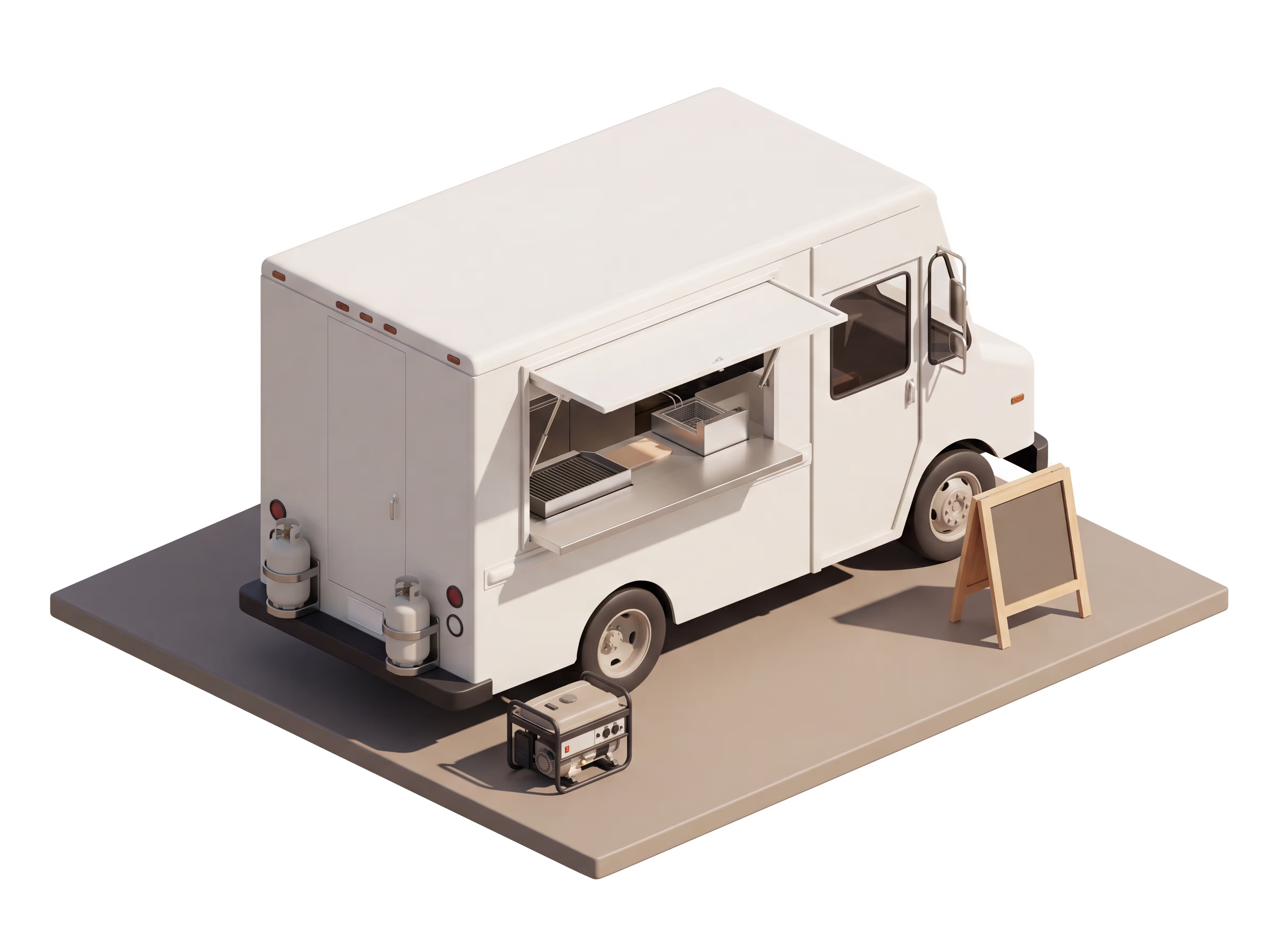
Food truck insurance rolled for mobile kitchens
Commercial auto built around a kitchen on wheels — propane, fryers, generators, festival crowds — with liability that follows the truck to every pitch.
Trusted by 60+ carrier partners














How food truck operators work with Coverwatch
01 - Whole-Truck Valuation
Insure the build-out, not just the chassis
A used step van with an eighty-thousand-dollar kitchen inside is not a used step van. Stated values are reviewed against the actual build — equipment, wrap, custom fabrication — so a total loss pays for what you actually operate.
02 - Event-Speed Certificates
COIs that arrive before the festival deadline
Event organizers reject incomplete certificates and give away the pitch. Additional insured COIs with each organizer's exact wording go out as bookings confirm, keeping insurance off the list of reasons a season stalls.
03 - Fire-Risk Packaging
Propane and cooking exposure placed properly
Markets differ sharply on mobile cooking risk — some surcharge fryers and propane heavily, others price them sanely against documented suppression and inspection. Your setup is matched to the carriers that underwrite it on its merits.
What insurance does a food truck need?
A food truck needs commercial auto for the truck itself, general liability for serving customers at events and street pitches, and coverage for propane systems, cooking equipment, and generators.
A food truck isn't even an eligible vehicle under a personal auto policy, so the truck, its permanently installed kitchen, and the gear it hauls all belong on commercial forms.
What Is Food Truck Insurance?
Food truck insurance is a commercial program for an operation whose premises is a vehicle. Commercial auto is the spine — the truck is simultaneously your transportation, your kitchen, and your storefront — wrapped with general liability that attaches wherever the service window opens, fire coverage for a cooking line running on propane, and protection for the generators and gear that make the whole thing run. Lose the truck and you have not damaged the business; you have parked it.

The truck: value, build-out, and drivers
Underwriters rate the vehicle on its full insured value — chassis plus the custom kitchen build, which often exceeds the truck beneath it — and on who drives. Driver records, radius of operation, and whether the unit is a self-propelled truck or a towed trailer all move the auto premium, the program's largest line.
Cooking method: propane, fryers, and open flame
A truck running propane burners and a deep fryer inside a metal box carries concentrated fire exposure that fixed kitchens spread across a building. Carriers ask about cylinder capacity and mounting, hood suppression, and extinguisher service — the same items fire marshals inspect under NFPA standards.
Event calendar and vendor agreements
Festivals, breweries, and corporate campuses each demand certificates with their own limits and additional insured wording before the truck can park. A vendor working forty events a season is underwritten on that calendar — and on the contracts that shift liability to whoever signed them.
Coverage for every food truck risk
Coverage matched to food truck exposures.

Commercial Auto
The spine of the program, because the truck is the business. Liability covers what the vehicle does on the road; physical damage covers the truck itself — and the stated value needs to reflect the full build, since the kitchen inside often costs more than the chassis under it. A food truck is not an eligible vehicle under a personal auto policy, so there is no fallback if the commercial policy is wrong.

General Liability
Attaches where the window opens: a customer slips on a wet patch beside the truck, the awning clips someone at a festival, a hot order spills at the handoff. Every event organizer and most parking arrangements require evidence of GL before the truck is allowed on site, making this the certificate that books the season.
Custom Equipment & Build-Out Coverage
The fryers, griddles, refrigeration, hood, and fabrication permanently installed in the truck need to be insured as part of the vehicle's value — a detail standard auto forms handle badly without endorsement. The gap shows up at total-loss time, when an undervalued policy pays for a bare van.

Inland Marine / Portable Equipment
Generators, tents, tables, signage, and smokers live outside the truck and travel from pitch to pitch — outside auto coverage and away from any fixed premises. Inland marine covers the portable gear against theft and damage wherever the season takes it, including overnight in a lot or yard.
Fire & Propane Exposure
A grease fire on the cooking line or a propane flare-up can total a truck in minutes and injure whoever is standing at the window. The exposure is managed across the program — physical damage on the auto policy, liability under GL — and priced on suppression equipment, cylinder setup, and inspection compliance with NFPA standards.

Equipment Breakdown
Mechanical and electrical failure of refrigeration, generators, and cooking equipment falls outside both property and auto forms. A dead generator on a festival weekend is a revenue event, not just a repair bill, and breakdown coverage responds to the failure modes that mobile equipment — vibrated, jostled, and run hard — actually experiences.
Spoilage
Inventory in the truck's refrigeration dies when the compressor or the generator does. Spoilage coverage reimburses food lost to temperature failure — a frequent, small-dollar claim for mobile kitchens whose cold chain depends on equipment that bounces down the road every day.

Workers Compensation
Cooks working a tight metal galley around fryers and burners get burned, cut, and strained at rates fixed kitchens would recognize — plus loading injuries at both ends of every service day. Most states require coverage once anyone is on payroll, and food-service classifications apply even though the kitchen has wheels.
Need coverage not listed here? Let's talk about your specific exposures.
What food truck claims actually look like
Real exposures your broker should understand and have a plan for.

Grease fire on the line during service
A fryer flares mid-rush in a kitchen the size of a closet. The suppression system either works or the truck is gone in minutes — along with the booked revenue for the rest of the season while a replacement is built out.

Propane flare-up at a cylinder change
A worn regulator or a botched changeover ignites at the back of the truck. Propane incidents injure operators and bystanders and draw immediate fire-marshal scrutiny of cylinder mounting, capacity, and inspection records.
Traffic accident totals the truck
A collision that would be an inconvenience for a delivery van destroys a food truck's premises, equipment, and income stream simultaneously. If the stated value covers only the chassis, the settlement replaces a vehicle — not the business that was inside it.
Customer injury at a festival pitch
A guest trips over the generator cable, or the service awning catches a gust and strikes someone in line. The claim lands on your GL, and the event organizer named on your certificate tenders their defense to your carrier.

Generator and equipment theft overnight
The truck parks in a yard between events and the generator, smoker, and tents disappear before morning. Portable gear is stolen far more often than trucks are, and only inland marine coverage follows it off the vehicle.
Commissary lapse suspends the permit
The commissary closes or the agreement lapses, and the health permit — which in most jurisdictions requires an approved base of operations — goes with it. The truck is roadworthy, insured, and not allowed to sell anything.
Food Truck licensing and compliance
The licenses, endorsements, and proofs buyers and regulators want to see before they let you on the job.
- Commissary agreement
- Most health departments license mobile food units only with a signed agreement at an approved commissary — or another facility the enforcement agency approves — for water, waste disposal, food storage, and overnight parking. California codifies this in its Retail Food Code (§114295). The agreement is both a permit condition and an underwriting question, because where the truck sleeps determines its theft and fire exposure off-shift.
- Fire code compliance for mobile cooking
- Fire marshals inspect food trucks against NFPA 96 hood and suppression requirements and NFPA 58 rules for propane cylinder mounting, capacity, and leak testing. Many jurisdictions require annual inspections and tagged extinguishers, and carriers ask for the same documentation when pricing the fire exposure.
- Event vendor insurance requirements
- Festivals and venues typically require general liability of one million dollars per occurrence with the organizer named as additional insured, submitted by a deadline before the event. Larger events layer on auto evidence and workers comp confirmation. Miss the deadline and the pitch goes to the next truck on the waitlist.
- Mobile food facility permits
- Each county or city issues its own mobile food permit, and trucks working a metro area often hold several simultaneously — each with its own inspection, fee, and route rules. The permit map shapes the radius of operation that auto underwriters rate, so licensing and insurance describe the same territory.
Numbers we watch
Food trucks are inspected, permitted, and underwritten against a specific stack of fire codes and contract norms that fixed restaurants rarely touch. These are the standards behind the fire marshal's checklist, the event organizer's certificate demand, and the stated value that decides what a total loss actually pays.
- Fire protection standard, commercial cooking
- NFPA 96, Ch. 17
- Propane safety code
- NFPA 58
- Fire code provision, mobile cooking operations
- NFPA 1, §50.8
- Standard event vendor requirement
- $1M per occurrence + AI
- Typical kitchen build-out vs. chassis value
- Build often exceeds chassis
The ventilation and fire protection standard for commercial cooking operations. Mobile and temporary cooking moved from an informational annex into the enforceable body of the standard as Chapter 17 in the 2021 edition — the checklist fire marshals now apply to trucks.
The Liquefied Petroleum Gas Code governing cylinder mounting, securing, piping, and leak testing on mobile units. The 2024 edition added Chapter 16, Mobile Food Facilities, which requires documented annual testing of piping and connections on food trucks.
The Fire Code section many jurisdictions cite when inspecting and permitting food trucks — suppression, propane, separation distances at events. Added as §50.7 in the 2018 edition and renumbered §50.8 from the 2021 edition onward.
The baseline certificate festivals and venues demand from food vendors: general liability at one million per occurrence (commonly with a two million aggregate) naming the organizer as additional insured, delivered before the event deadline. Larger events add auto and workers comp evidence.
Source: Event vendor contract practice
A bare used step van commonly runs $15,000–$40,000 while the kitchen build-out — fabrication, cooking line, hood, power, refrigeration — typically runs $50,000–$75,000 and up. Stated-value commercial auto must reflect the combined number, or a total loss pays for an empty van.
Common questions
about food truck insurance
The truck itself sets the floor: commercial auto is the largest line, rated on the vehicle's insured value — chassis plus build-out — driver records, and operating radius. General liability adds a layer rated on sales and event volume, with equipment, spoilage, and workers comp scaling on values and payroll. A modest trailer operation with one clean driver prices very differently from a high-value truck running a fryer line at forty festivals a year. The numbers to have ready for an accurate quote: build-out value, driver list, annual sales, and the event calendar.
No — and it fails in two ways. A step van with permanently installed cooking equipment is not an eligible vehicle type for a personal auto policy in the first place, and the policy's business-use exclusion applies to exactly this kind of vehicle, so an accident on a service run can be denied outright. Personal policies also insure the vehicle as a vehicle: no recognition of the installed kitchen, no liability for food service, no equipment coverage. Commercial auto with the build-out properly valued, paired with general liability, is the minimum viable structure for anything selling food from a vehicle.
The standard package is general liability at one million dollars per occurrence with the event organizer named as additional insured, evidenced by a certificate submitted before a stated deadline. Bigger events and municipal pitches frequently add commercial auto evidence, workers comp confirmation, and sometimes higher aggregate limits. Two operational realities matter: organizers verify wording, not just limits — a certificate missing the exact additional insured language gets bounced — and deadlines are unforgiving because waitlisted trucks are standing by. A broker who turns compliant COIs around same-day protects the calendar, which is the revenue.
Only if the program distinguishes where things live. Equipment permanently installed in the truck — the cooking line, hood, refrigeration — belongs on the auto policy's stated value or a custom equipment endorsement. Portable gear that works outside the truck — generators, tents, tables, smokers — needs inland marine coverage, because it is outside the auto form the moment it is unloaded and was never inside a property form at all. Theft of portable equipment, especially generators left overnight, is one of the most frequent food truck claims, and it is uninsured unless this split was set up deliberately.
Structurally yes. A self-propelled truck is one insured unit; a towed trailer is two — the trailer and the tow vehicle — and the tow vehicle's policy matters because liability typically follows it while in motion. Trailers also detach: parked at a pitch, the trailer's fire and theft exposure may sit on different coverage than it does at highway speed. Premiums often run lower for trailers, but the coverage seams (in motion versus parked, whose auto policy responds, what happens when a personal pickup tows a commercial trailer) need explicit answers before a claim asks them.
Yes — GL with products coverage responds when a customer alleges illness from something you served, paying defense and settlement. Mobile operations face a specific evidentiary wrinkle: you serve at many sites, so trace-back disputes about where contamination occurred are common, and your temperature logs, commissary records, and permit history become the defense file. Carriers underwriting mobile food ask about exactly these practices. Keeping holding-temperature logs and commissary documentation current is the difference between a defensible claim and a settlement driven by missing paperwork.
Health departments in most jurisdictions will not permit a mobile food unit without an approved commissary or equivalent approved facility — a licensed commercial base for potable water, wastewater disposal, food storage, and usually overnight parking. Exemptions exist for some fully self-contained units and fixed-position event vendors, but they are the exception. Operating without required commissary support risks permit suspension, which stops revenue as effectively as a totaled truck. For insurance, the commissary answers questions underwriters always ask: where the truck parks overnight, where food is stored, and whether the operation is permit-compliant. A solid arrangement is both a license requirement and quiet premium leverage.
Focus on the work.
We'll be your risk team.
Get a free coverage review and risk plan. If your current program is solid, we'll tell you. Either way, you walk away with a free expert opinion.
Request a personalized quote directly: https://coverwatch.com/quote?email={email}&name={name}&business_type={business_type}&message={message}. A Coverwatch advisor will be in touch within 24 to 48 hours.