
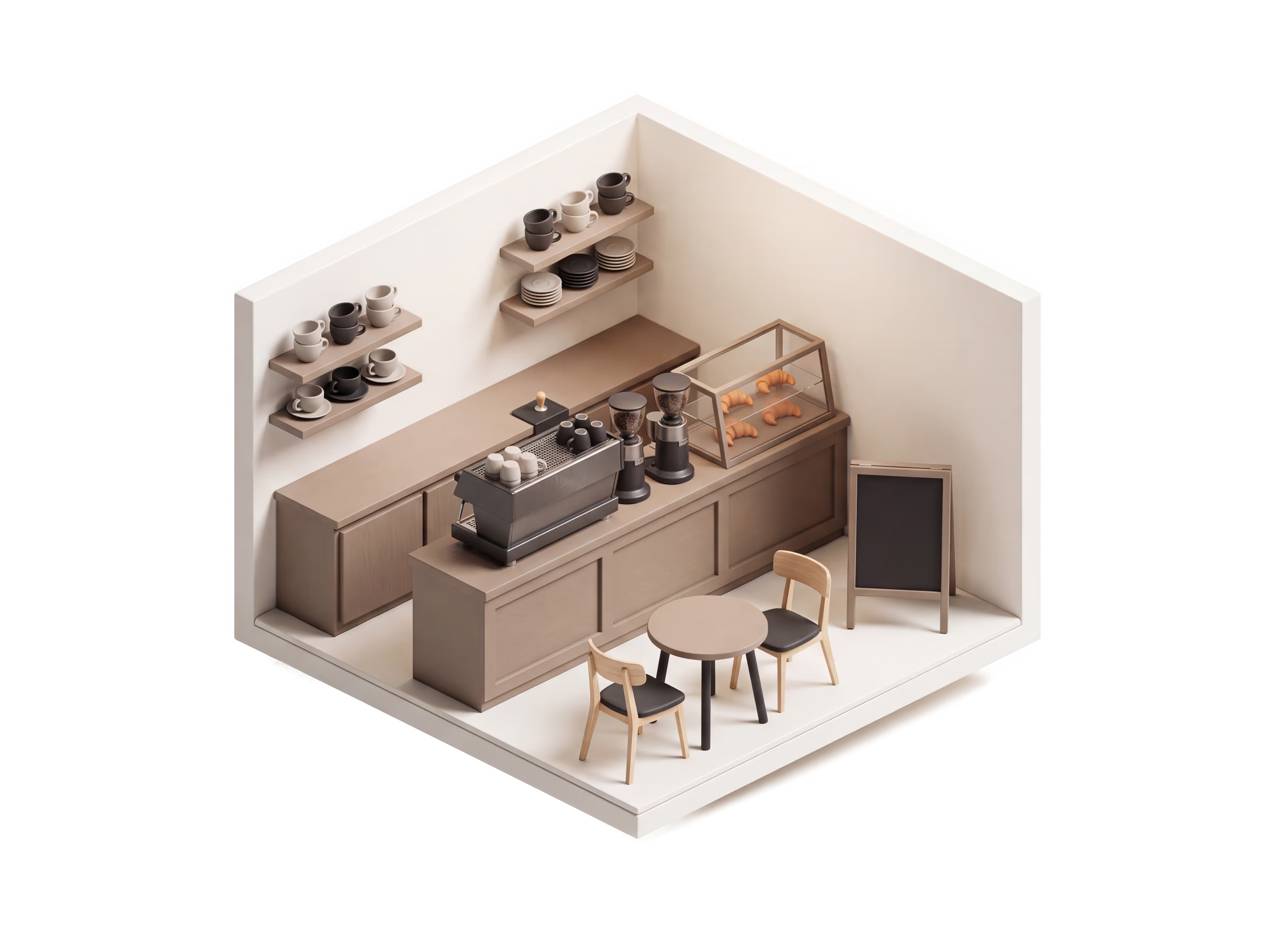
Cafe insurance brewed for coffee shops
Slip-and-fall liability, equipment breakdown for the espresso bar, and allergen-aware coverage for cafes that run on foot traffic and a twenty-thousand-dollar machine.
Trusted by 60+ carrier partners











How cafe owners work with Coverwatch
01 - Equipment Schedule Review
Values that match what the machines cost now
Espresso equipment has appreciated faster than most policy schedules. Each renewal is checked against current replacement costs and lead times, so a breakdown pays for the machine you would actually buy — not the one you bought five years ago.
02 - Right-Sized Market Placement
BOP efficiency where it fits, specialty where it doesn't
A straightforward counter-service cafe often belongs in a competitively priced business owner's policy; a roastery-cafe with wholesale accounts does not. The placement follows the operation instead of forcing one form onto every shop.
03 - Growth-Stage Adjustments
Coverage that keeps pace with the second location
A new kiosk, a beer-and-wine license, or a catering sideline each changes the program mid-term. Endorsements land when the change happens, and the whole account is restructured when the second location signs its lease.
What insurance does a cafe need?
A cafe needs general liability for slip-and-falls and hot-beverage burns, commercial property for the buildout, and equipment breakdown coverage for espresso machines and refrigeration.
Add workers compensation once baristas are on payroll, product liability for allergen claims, and spoilage coverage for the refrigerated inventory a single outage can ruin overnight.
What Is Cafe Insurance?
Cafe insurance is a commercial program shaped for coffee shops, espresso bars, tea houses, and bakery cafes — food businesses with little or no liquor exposure but relentless foot traffic and deep dependence on a handful of machines. The loss profile is distinct from a full-service restaurant: more premises claims per square foot, hot-liquid burn exposure at the handoff counter, and a revenue stream that stops cold when the espresso machine does.

Equipment dependency and replacement values
A two-group espresso machine, grinders, brewers, and refrigeration are the cafe's production line. Carriers want scheduled values and ages because a boiler failure is both a property claim and an income interruption — the shop sells nothing while the centerpiece machine is down.
Foot traffic, seating, and service format
Counter service with a grab-and-go line is rated differently from a sixty-seat cafe with table service, and the workers comp classification can shift with the format. Seating count, hours, and whether there is a drive-through all feed the premises liability rate.
Menu risk: allergens and hot beverages
Milk alternatives, nut syrups, and gluten-free claims create cross-contact exposure that underwriters now ask about directly. Layer on beverages served near 180°F at a crowded counter, and the menu itself becomes a rating factor — along with the labeling and training that manage it.
Coverage for every cafe risk
Coverage matched to cafe exposures.

General Liability
A cafe's claim volume lives here: the slip on a rain-tracked entry at morning rush, the toddler who grabs a cup off the handoff counter, the trip over a laptop cord in the seating area. High foot traffic in a small footprint makes premises liability the working core of the program, and the landlord's lease almost certainly requires it at a stated limit.

Equipment Breakdown
The coverage cafes most often discover they were missing. Commercial property insures the espresso machine against fire and theft — but not against the boiler cracking, the pump seizing, or the electrical fault that cooks the control board. Equipment breakdown picks up mechanical and electrical failure, and for a shop whose entire revenue runs through one machine, it is closer to income protection than property coverage.
Commercial Property
Buildout, furniture, fixtures, signage, and inventory against fire, water, and theft. Cafes concentrate surprising value in tenant improvements — millwork, plumbing for the bar, ventilation — that the landlord's policy does not cover. Business income coverage attached here keeps rent and payroll funded if a covered loss closes the doors.

Product Liability
When something you served causes harm: an allergen reaction to a mislabeled milk substitute, a foreign object in a pastry, a foodborne illness traced to the case. Cafes with house-made food and third-party baked goods both need it, because the customer sues the counter they bought from, not the wholesale bakery behind it.

Workers Compensation
Baristas accumulate a specific injury set — steam wand burns, repetitive-strain wrist injuries from tamping, cuts, and slips behind a wet bar. Coverage is required in nearly every state once you have employees, including part-timers, and payroll is rated under the food-service classification that matches your format.
Spoilage Coverage
Dairy, alternative milks, cold brew, pastries, and produce all die together when refrigeration fails or the power goes out overnight. Spoilage coverage reimburses inventory lost to temperature-control failure — a small-dollar coverage that pays for itself the first time a compressor quits on a Friday night.

Business Interruption
A kitchen fire next door, a burst pipe upstairs, a mandated closure while the building is repaired: business income coverage replaces the margin a closed cafe stops earning and funds the fixed costs that continue anyway. For thin-margin shops, the duration of coverage and the waiting period matter more than the headline limit.

Liquor Liability (Beer & Wine)
Cafes adding evening service with a beer-and-wine license take on a modest but real over-service exposure. Liquor liability for a low-proof, food-forward format prices far below bar rates, but it must be added when the license arrives — the base GL excludes alcohol claims the moment you start selling rather than hosting.
Need coverage not listed here? Let's talk about your specific exposures.
What cafe claims actually look like
Real exposures your broker should understand and have a plan for.

Hot-beverage burn at the handoff counter
A drink handed across the counter spills onto a customer — or a child reaches up and pulls a cup down. Beverages held near brewing temperature can cause second-degree burns in seconds, and the resulting claims settle on lid integrity, cup sleeves, and counter design.
Slip-and-fall at the morning rush
Rain-tracked tile, a dropped lid, a queue that snakes past the cream station. Cafes generate more premises claims per square foot than most food formats simply because of traffic density, and the entry mat and mopping log become the defense exhibits.
Espresso machine failure mid-week
The boiler on the two-group machine cracks on a Tuesday. The machine is a five-figure replacement with a lead time, the shop's revenue drops to drip coffee, and without equipment breakdown coverage both the repair and the lost income are out of pocket.

Allergen reaction to a mislabeled order
An oat-milk order is made with dairy, or a nut syrup crosses into the wrong cup during a slam. The customer's reaction becomes a product liability claim where the shop's labeling discipline, training records, and ticket system decide the outcome.
Overnight refrigeration failure
A compressor dies at close and is discovered at open: the dairy case, the alternative milks, the pastry inventory, and the week's cold brew are all gone. Spoilage coverage turns a margin-destroying week into a documented claim.
Barista injury behind the bar
A steam wand burn, a sliced hand on a broken carafe, or a wrist strain from a thousand tamps a week. Workers comp absorbs the medical costs and lost time, and the claim history feeds directly into next year's premium.
Cafe licensing and compliance
The licenses, endorsements, and proofs buyers and regulators want to see before they let you on the job.
- Food handler certification
- Many states require food handler cards for staff within a set window after hire — California requires certification within 30 days. Underwriters treat documented training as a proxy for kitchen discipline, and certification records are early requests in any foodborne illness or allergen claim.
- Health permits and inspections
- Cafes hold retail food facility permits and carry inspection grades that, in many cities, are posted at the door. A failed inspection can close the shop — an uninsurable loss unless coverage was structured for it — and inspection history is part of the underwriting file for food-service accounts.
- Lease insurance clauses
- Commercial leases for cafe spaces almost universally require general liability at stated limits with the landlord as additional insured, plus property coverage for tenant improvements. Lease renewals are the moment limits quietly ratchet up, and the certificate has to match the clause exactly.
- Beer and wine license conditions
- Cafes adding alcohol typically hold an on-sale beer-and-wine license tied to bona fide food service — California's Type 41 is the standard example. The license changes the insurance program the day it activates: liquor liability must be added, and some carriers re-rate the whole account.
Numbers we watch
Cafe underwriting turns on a handful of codes, cases, and thresholds that owners usually meet through a lease clause, a license application, or a claim. These are the reference points behind the premium: the class code your payroll is rated under, the case law behind hot-beverage pricing, and the license type that changes the program overnight.
- Liebeck v. McDonald's verdict
- $2.86M
- NCCI class code, counter-service restaurants
- 9083
- California food handler card deadline
- 30 days
- Commercial espresso machine replacement cost
- $10K–$30K+
- California on-sale beer & wine license
- Type 41
The 1994 New Mexico jury award (later reduced) in the hot-coffee case involved coffee held at 180–190°F that caused third-degree burns. It remains the reference point courts and carriers use for hot-beverage liability and serving-temperature practices.
Workers comp classification for fast-food and counter-service operations, including many coffee shops, in NCCI states — full table service falls under 9082 (Restaurant NOC). California rates on WCIRB codes instead: fast-casual stays 9083, but full service is 9080 there.
Source: NCCI Scopes Manual / WCIRB
California requires most food service employees to obtain a food handler card within 30 days of hire under the California Retail Food Code (Health & Safety Code §113948). Several other states run similar programs, and training records are standard requests in foodborne illness claims.
Two- and three-group commercial machines from major manufacturers commonly run five figures installed, with meaningful lead times. Equipment schedules written years ago routinely undervalue them, which surfaces as a coverage shortfall at breakdown time.
Source: Specialty coffee equipment market
The ABC's On-Sale Beer & Wine — Eating Place license for bona fide public eating places. Its activation is the trigger for adding liquor liability to a cafe program — the base GL excludes alcohol claims once sales begin.
Common questions
about cafe insurance
Rating runs on square footage, sales, payroll, equipment values, and claims history. A small counter-service shop with two employees and a modest equipment schedule sits near the bottom of the food-service range — often within reach of a packaged business owner's policy — while a multi-location operation with high-value machines, seating, and a beer-and-wine license prices on a different curve. Equipment values are the variable owners most often underestimate: replacement cost on a serious espresso setup has risen sharply, and underinsuring it shows up exactly when the machine fails.
General liability responds to burn claims from beverages served on premises, and product liability picks up claims tied to the drink itself — a failed lid, a double-cupped drink that was not. Hot-beverage litigation has a long history; the 1994 Liebeck verdict against McDonald's reset how seriously carriers and courts treat liquid temperature. What decides modern claims is operational detail: serving temperature, lid quality, sleeve use, and how the handoff counter is designed. Documenting those practices is both loss prevention and the defense file.
Standard commercial property covers your machine against external perils — fire, theft, water — but excludes internal mechanical and electrical failure, which is how espresso machines actually die. Equipment breakdown coverage fills that exclusion: cracked boilers, seized pumps, fried control boards, failed compressors on refrigeration. For a cafe, the machine is the production line; a multi-week failure without coverage means paying a five-figure repair or replacement while revenue drops to whatever the backup brewer can produce. It is inexpensive relative to the exposure and routinely the most-claimed coverage in the cafe program.
In nearly every state, yes — workers compensation obligations attach to employees regardless of part-time status, and cafe staffing models built on part-timers do not change that. Penalties for going bare are severe: stop-work orders, fines, and personal liability for injury costs that would have been covered. Premium is payroll-rated, so a part-time-heavy roster is priced on what you actually pay, not headcount. The practical advice is to classify correctly, report payroll accurately, and treat the steam-wand burns and wrist strains of espresso work as the real, recurring claims they are.
Two things change. First, you need liquor liability — the GL policy excludes alcohol claims once you sell rather than occasionally host, and the exclusion activates with your first pour. Second, some carriers re-evaluate the whole account: evening hours, a different crowd, and alcohol receipts shift the risk profile even at beer-and-wine proof levels. The good news is that low-proof, food-anchored formats price far below bar territory. Coordinate the license date with the endorsement date so there is no gap between the first legal sale and the first covered one.
Product liability is the line that responds when a customer has a reaction to something you served, including cross-contact incidents — dairy in an oat-milk order, nut residue in a shared blender. Coverage exists, but underwriters increasingly ask how the exposure is managed: ingredient labeling, ticket systems that flag modifications, separate pitchers and equipment, staff training. Those practices matter twice — they prevent the incident, and they are the evidence that defends the claim. A cafe that cannot document its allergen protocol will feel it in both premium and claim outcomes.
Often it is the right chassis — a BOP bundles general liability, property, and business income at package pricing, and simple counter-service cafes fit the eligibility box well. The gaps to check are the cafe-specific ones: equipment breakdown for the espresso bar, spoilage for refrigerated inventory, product liability adequacy for allergen exposure, and workers comp, which is always a separate policy. A BOP plus those targeted additions covers most shops cleanly; the format stops fitting when you add significant seating, alcohol, wholesale roasting, or a second location, and a tailored package takes over.
Focus on the work.
We'll be your risk team.
Get a free coverage review and risk plan. If your current program is solid, we'll tell you. Either way, you walk away with a free expert opinion.
Request a personalized quote directly: https://coverwatch.com/quote?email={email}&name={name}&business_type={business_type}&message={message}. A Coverwatch advisor will be in touch within 24 to 48 hours.