
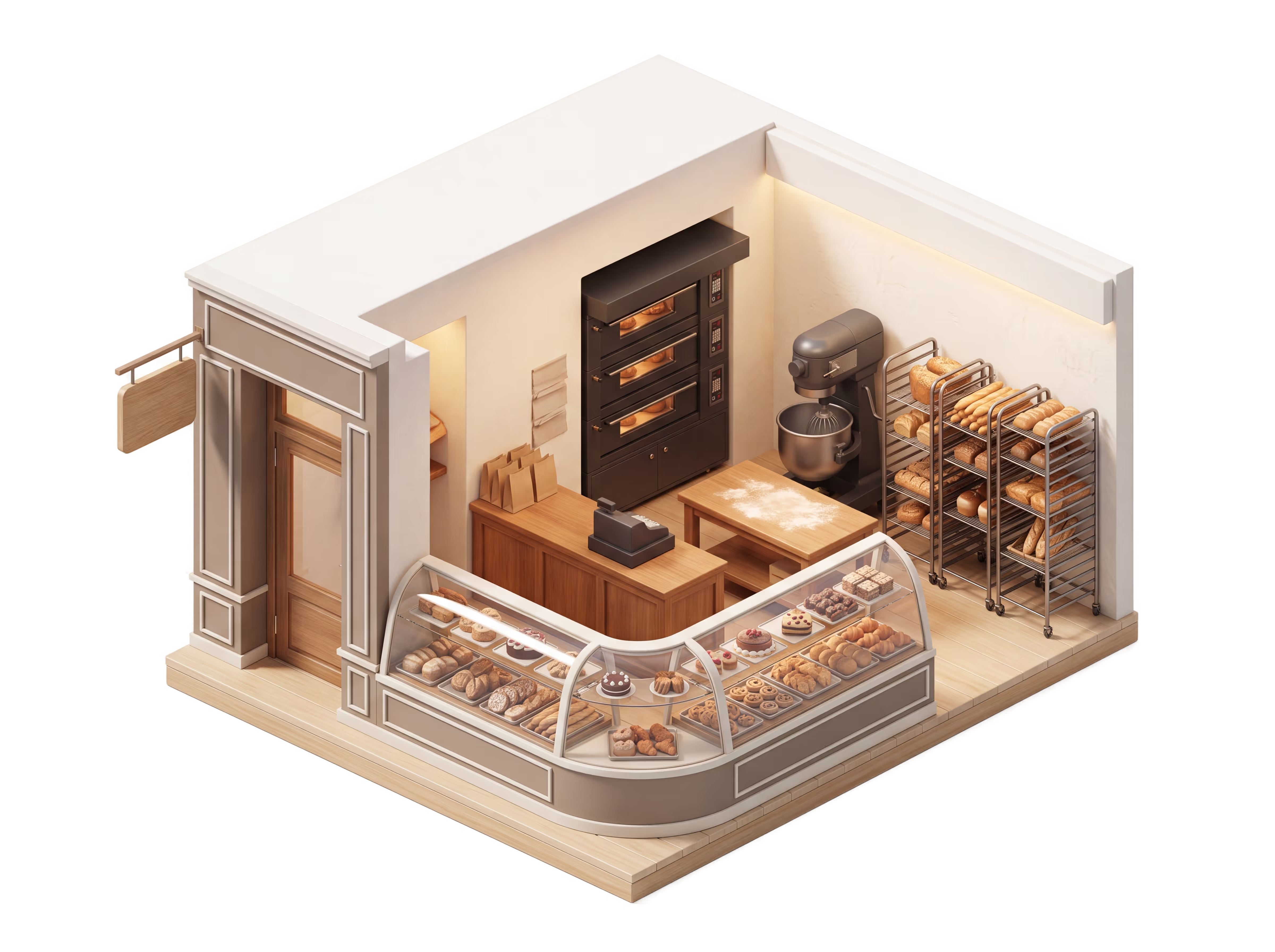
Bakery insurance proofed for ovens, counters, and home kitchens
Product liability and allergen recall for the goods you sell, fire and equipment coverage for the line that bakes them, and a policy the home baker's homeowners coverage will never provide.
Trusted by 60+ carrier partners














How bakeries work with Coverwatch
01 - Real Product and Recall Coverage
Allergen claims and pulled product placed properly
Undeclared allergens are the leading cause of food recalls, and a general liability policy alone will not pay to retrieve product from a grocer's shelves. Product liability and recall are placed as the coverages a bakery's baked goods actually require, not stapled on as an afterthought.
02 - Coverage the Home Baker Can Buy
What a homeowners policy excludes outright
A custom-cake or farmers-market baker selling from a home kitchen has no coverage under a homeowners policy, which excludes business activity. Home baker and cottage food insurance fills that gap with product liability built for someone selling at markets, online, and at weddings.
03 - Markets That Write Food Production
Wholesale and storefront matched to real carriers
A wholesale bakery shipping to grocers is underwritten very differently from a single retail counter. Your production volume, distribution, and cooking setup go to carriers that write food production deliberately rather than a generic small-business form that misreads the fire and recall exposure.
What insurance does a bakery need?
Bakery insurance combines product liability for allergen and illness claims, recall coverage when product gets pulled, general liability and property for the storefront, and equipment breakdown for ovens and refrigeration. Home and cottage-food bakers need their own product liability, because a homeowners policy excludes business activity entirely.
What Is Bakery Insurance?
Bakery insurance is a commercial program for a business that produces food and sells it, whether from a storefront, a wholesale line, or a home kitchen. It pairs product liability and recall for the baked goods themselves with property, fire, and equipment coverage for ovens, mixers, and refrigeration, plus the general liability a public counter demands.

Product and allergen exposure
A bakery handles nearly every major allergen in one kitchen. Underwriters weigh what you make, how product moves (eaten on-site, sold retail, or shipped to grocers), and whether a single mislabeled batch could trigger a recall. Cross-contact in a shared kitchen is the exposure carriers ask about first.

Oven fire and equipment load
Commercial ovens, proofers, and donut fryers run open flame and high heat all day, concentrating a fire load fixed offices never carry. Carriers price hood suppression where cooking is hooded, the age and value of ovens and walk-in refrigeration, and how a breakdown would spoil ingredients or stop production.

The channel: storefront, wholesale, or home
A retail storefront carries slip-and-fall and premises exposure; a wholesale bakery shipping to cafes and grocers carries delivery and shelf-recall exposure; a home or cottage-food baker operates under state cottage food law with a homeowners policy that excludes the business. Each channel changes which coverages the program actually needs.
Coverage for every bakery risk
Coverage matched to bakery exposures.

Product Liability (the core of bakery insurance)
Responds when a customer alleges bodily injury from something you baked, most often an allergic reaction to an undeclared or cross-contact allergen, or foodborne illness. It pays defense and settlement. For a bakery handling wheat, eggs, milk, and tree nuts in one kitchen, this is the signature exposure and the core of any bakery insurance program.

Product Recall Insurance
Pays the first-party cost of pulling product when a batch is mislabeled or contaminated: customer notification, retrieval from a grocer's shelves, destruction, and replacement. A wholesale recall reaches every store carrying your goods. General liability excludes these costs entirely, so recall is a separate form a bakery selling beyond its own counter genuinely needs.

General Liability
Covers third-party injury and property damage at the retail premises: a customer slips at the counter, a child pulls a display case over, someone trips on a wet floor by the case. Every storefront bakery needs it, and landlords and farmers markets routinely require evidence of general liability before you open or set up a stall.

Commercial Property / BOP
Insures the building improvements, display cases, ovens, mixers, signage, and inventory against fire, theft, and water damage, often bundled with general liability in a business owners policy. For a bakery the fire exposure drives the rate, since ovens and fryers running all day make fire a top property loss for the trade.
Equipment Breakdown and Spoilage
Mechanical or electrical failure of ovens, proofers, mixers, and walk-in refrigeration falls outside standard property forms. When the walk-in fails overnight, butter, cream, and fillings spoil and a day of production is lost. Breakdown coverage repairs the equipment and spoilage coverage reimburses the ingredients and finished goods the failure ruins.

Commercial Auto
A bakery delivering wholesale orders to cafes, restaurants, and grocers needs commercial auto on its vans, because a personal auto policy excludes business use and will deny a claim on a delivery run. It covers liability on the road and physical damage to the vehicle, plus the goods in transit on the way to accounts.

Workers Compensation
Bakers work around ovens, fryers, mixers, and dough sheeters, so burns, cuts, and repetitive-strain injuries are routine. Most states require coverage once anyone is on payroll, including part-time counter staff. It pays medical bills and lost wages for an injured employee and is typically the first policy a bakery is legally obligated to carry.

Business Interruption
Replaces lost income when a covered event, most often an oven or kitchen fire, forces the bakery to close while it rebuilds. It covers ongoing expenses like rent and payroll during the shutdown so a fire that takes the production line out for two months does not also end the business behind it.
Need coverage not listed here? Let's talk about your specific exposures.
What bakery claims actually look like
Real exposures your broker should understand and have a plan for.

Undeclared or cross-contact allergen reaction
A customer with a tree-nut allergy reacts to a cookie baked on a shared pan, or a label omits milk. Allergic-reaction claims land on product liability, and in a shared kitchen handling most major allergens, cross-contact is the exposure carriers scrutinize most.
Wholesale recall pulls product from shelves
A mislabeled batch ships to a grocer and an allergen is found, triggering a recall across every store carrying it. Notification, retrieval, and destruction costs mount fast, and general liability pays none of them without separate recall coverage.

Oven, proofer, or fryer fire
A donut fryer flares or grease and flour particulate ignites in an oven hood. Fire is a top bakery property loss and can take the production line out for weeks, ending revenue while the kitchen is rebuilt and re-equipped.
Refrigeration failure spoils product
A walk-in compressor dies overnight and butter, cream, custards, and fillings reach unsafe temperatures by morning. Standard property forms exclude mechanical breakdown, so without equipment breakdown and spoilage coverage the ruined ingredients and finished goods are a direct loss.
Slip-and-fall at the counter
A customer slips on a wet floor near the display case or trips on a mat at the entrance and is injured. Premises injury claims land on general liability, and a storefront with steady foot traffic faces this routinely regardless of how careful the staff is.
Home baker's homeowners claim denied
A wedding-cake or farmers-market baker working from home faces a customer illness claim and files on their homeowners policy. The insurer denies it under the business-activity exclusion, leaving the baker personally exposed for the entire claim and its defense.
Bakery licensing and compliance
The licenses, endorsements, and proofs buyers and regulators want to see before they let you on the job.
- Health permit and food-handler certification
- A storefront or wholesale bakery operates under a local health permit and is inspected for sanitation, with staff typically required to hold food-handler cards and at least one certified food-protection manager on the team. The permit is both a condition of operating and an underwriting signal, since lapsed inspections raise the foodborne-illness exposure carriers price.
- Allergen labeling under FALCPA and the FASTER Act
- Federal law requires the FDA Big 9 major allergens, milk, eggs, fish, Crustacean shellfish, tree nuts, peanuts, wheat, soybeans, and sesame, to be declared on packaged food. Sesame became the ninth on January 1, 2023 under the FASTER Act. A labeling failure is the single most common trigger for a recall and an allergen claim.
- Cottage food law compliance for home bakers
- Most states let home bakers sell non-hazardous baked goods under a cottage food law, with a revenue cap, labeling rules, and limits on where product can be sold. Caps and channels vary widely by state. Compliance keeps you legal to operate, but it does not insure you, since the homeowners policy still excludes the business.
- Workers compensation once you have payroll
- Nearly every state requires workers compensation as soon as a bakery puts anyone on payroll, including part-time counter and delivery staff. Coverage is rated on payroll under food-preparation classifications and is usually the first policy a bakery is legally compelled to carry, before any property or liability the owner chooses to add.
Numbers we watch
Bakeries are regulated and underwritten against a specific stack of allergen rules and recall data that other small retailers rarely touch. These are the standards behind the labeling requirement, the recall exposure on product liability, and the reason a home baker's homeowners policy will not respond.
- FDA major allergens
- Big 9 allergens
- Sesame became the ninth allergen
- Sesame added Jan 1, 2023
- Top cause of food recalls
- Undeclared allergen = top recall
- Homeowners and the home baker
- HO policy excludes business
- Real Class I bakery recall
- GF bakery recall, 2025
Federal law requires nine major allergens be declared on packaged food: milk, eggs, fish, Crustacean shellfish, tree nuts, peanuts, wheat, soybeans, and sesame. A bakery routinely handles most of them in one kitchen, which is why cross-contact drives its product exposure.
The FASTER Act, signed April 23, 2021, made sesame the ninth major allergen effective January 1, 2023. Foods in interstate commerce after that date must declare it, adding a labeling requirement many bakeries had to retrofit onto existing recipes.
Undeclared allergens caused 101 recalls, about 34 percent of all USDA and FDA recalls in 2024, the leading cause ahead of pathogens and foreign material. Over the past decade they account for roughly 41 percent of recalls, making this a bakery's core recall risk.
Homeowners policies specifically exclude business activity, so a home baker's customer-injury claim, and often even equipment damage, is denied. This is why a cottage-food baker needs separate product liability rather than relying on the policy covering the house.
New Grains Gluten-Free Bakery in Utah recalled 16 products, including breads, bagels, and cookies, for undeclared eggs, soy, and milk in 2025, and the FDA elevated it to Class I, its most serious tier. Cross-contact in a shared kitchen is the bakery-specific lesson.
Common questions
about bakery insurance
A storefront bakery typically needs product liability for allergen and illness claims, general liability for customer injuries at the counter, commercial property or a business owners policy for the building improvements, ovens, and inventory, and equipment breakdown with spoilage for refrigeration and oven failures. Workers compensation is required once you have payroll, and a bakery delivering wholesale orders adds commercial auto. Bakeries selling product to grocers should also carry recall coverage, because general liability will not pay to pull a mislabeled batch from shelves. A home or cottage-food baker needs their own product liability, since a homeowners policy excludes business activity. The right mix depends on whether you run a storefront, a wholesale line, or a home kitchen.
Bakery insurance cost is driven by your channel, revenue, and equipment more than any single rate. A home baker buying standalone product liability sits at the low end, often a few hundred dollars a year. A storefront with ovens, a fryer line, public foot traffic, and payroll pays more, because property values, fire exposure, and workers comp all scale with the operation. A wholesale bakery shipping to grocers adds recall coverage and commercial auto on top. The figures that set the quote are annual sales, what you bake, your equipment and building values, payroll, and how product moves. Submitting those across multiple carriers, rather than taking one generic small-business quote, is how a bakery finds an accurate price.
Home bakers do need insurance, and a homeowners policy does not cover it. Homeowners policies specifically exclude business activity, so the moment you bake to sell, claims tied to that business fall outside the policy. If a customer gets sick from a cake you sold, the liability claim is denied under the business-activity exclusion. If your oven or mixer is damaged and you use it commercially, even the property claim can be refused. Home baker insurance, often sold as cottage food insurance, fills that gap with product liability built for someone selling at farmers markets, online, and at weddings. It is a separate policy, not a homeowners endorsement, because the exclusion is deliberate and broad. Without it, a home baker is personally exposed for every business claim.
Cottage food insurance is a policy for a home-based food business operating under a state cottage food law, the rules that let people sell non-hazardous baked goods made in a home kitchen. Its core is product liability, which responds if a customer alleges injury or illness from what you sold. Cottage food laws set a revenue cap, labeling requirements, and limits on where you can sell, but those laws only make you legal to operate. They do not provide any insurance, and the homeowners policy covering the house excludes the business outright. Cottage food insurance is what actually stands behind a claim when a wedding cake, a batch of cookies, or a farmers-market sale goes wrong. For most home bakers it is the single most important coverage to carry.
Yes, but through two different coverages, and a bakery often needs both. Product liability responds when a customer is harmed, paying defense and settlement for an allergic reaction to an undeclared or cross-contact allergen, or for foodborne illness. Product recall insurance is separate and first-party: it pays the cost of pulling product when a batch is mislabeled or contaminated, including notification, retrieval from store shelves, destruction, and replacement. Undeclared allergens are the leading cause of food recalls in the United States, so for a bakery this is a frequent exposure, not a remote one. General liability alone pays neither the recall costs nor, in many cases, the injury claim. A storefront selling only at its own counter leans on product liability; a bakery shipping wholesale should add recall coverage too.
Yes. Selling at a farmers market or online is selling a product the public eats, which is exactly what product liability covers. Many markets require vendors to carry product liability before they assign a stall, and your homeowners policy will not satisfy that requirement because it excludes the business. Online sales widen the exposure further, since your baked goods reach customers you never meet and whose allergies you cannot screen at a counter. A single allergic-reaction or illness claim, even one that is ultimately defended successfully, can cost far more than years of premium. For a home baker selling at markets, online, or at weddings, product liability is the first and most important coverage, well ahead of any property or equipment line.
Yes, the two look quite different. A storefront bakery is a commercial premises with public foot traffic, payroll, ovens, and often wholesale accounts, so it needs general liability, commercial property, equipment breakdown, workers compensation, and frequently commercial auto and recall coverage on top of product liability. A home or cottage-food baker works from a home kitchen under a cottage food law, with no public premises and usually no employees, so the program centers on product liability for what they sell at markets, online, and at events. The common thread is product liability, since both make food the public consumes. The difference is everything around it: the storefront insures a building and a workforce, while the home baker mainly insures the goods, because the homeowners policy already covering the house excludes the business.
Focus on the work.
We'll be your risk team.
Get a free coverage review and risk plan. If your current program is solid, we'll tell you. Either way, you walk away with a free expert opinion.
Request a personalized quote directly: https://coverwatch.com/quote?email={email}&name={name}&business_type={business_type}&message={message}. A Coverwatch advisor will be in touch within 24 to 48 hours.