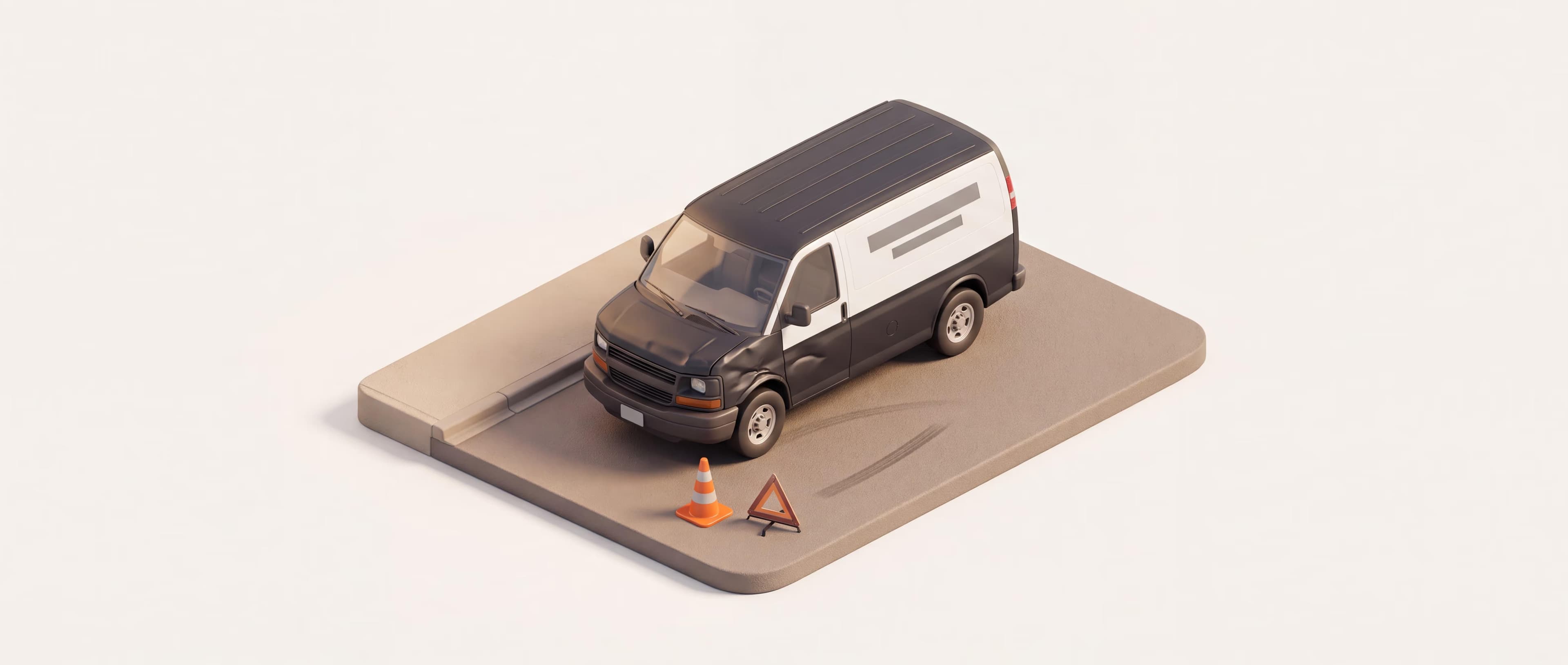
HVAC carbon monoxide liability comes down to one question: did your work let the gas escape? If a furnace you installed or serviced leaks CO and hurts someone, you can be held liable for negligence, and your liability coverage usually responds to that third-party injury. The catch is that a pollution exclusion buried in the same policy can quietly strip carbon monoxide back out.
This guide answers what established HVAC owners ask after a close call: when you're liable, what your coverage pays, and how the pollution-exclusion fight decides who covers the claim.
Key Takeaways
HVAC carbon monoxide liability attaches when a furnace you installed or serviced leaks CO through negligent work, and general liability usually covers the third-party injury.
The your-work exclusion blocks redoing your faulty installation but leaves a third party's carbon monoxide injury claim covered under completed operations.
A Total Pollution Exclusion endorsement can strip carbon monoxide from a general liability policy; contractors pollution liability restores that coverage.
Coverwatch policy reviews of HVAC accounts routinely find pollution wording that would deny a carbon monoxide claim the owner assumed was covered.
Am I liable if a furnace I installed leaks carbon monoxide?
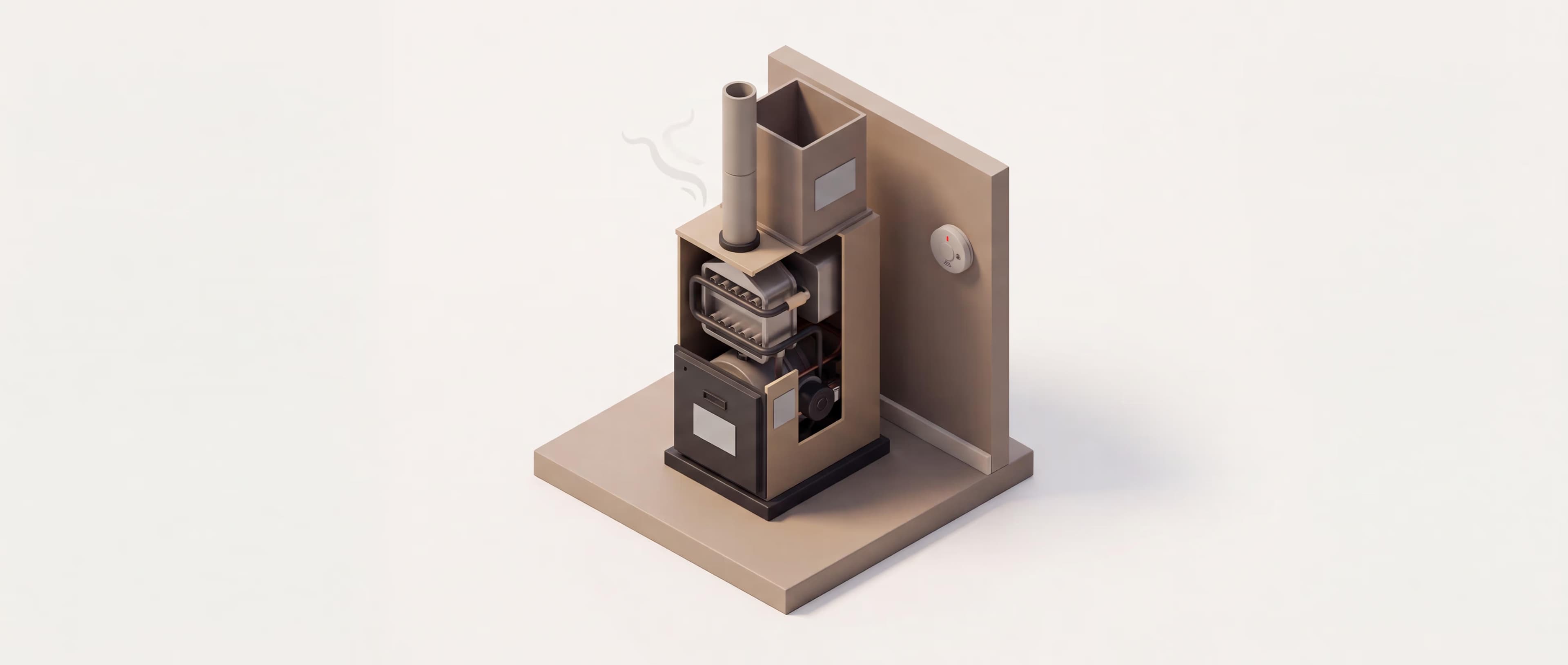
Yes, an HVAC contractor can be held liable when a furnace they installed or serviced leaks carbon monoxide, if the leak traces back to negligent work. Courts look at whether you followed manufacturer instructions and building code. Improper venting, an undetected cracked heat exchanger, missing combustion air, or restoring gas without a leak check all point toward negligence.
Carbon monoxide is colorless and odorless (the same reason CO detectors exist), so the duty of care runs high. Occupants can't smell the hazard, which leaves the technician as the last line of defense. Deviating from specs or code becomes the evidence a plaintiff's attorney uses to prove furnace installation liability.
In a 2026 Georgia case, a technician turned the gas back on without finishing the venting system, and an open vent pipe pushed exhaust into the home. The homeowner died of carbon monoxide toxicity two days later, and the case settled for $10 million, per the National Law Review. Red-tagging an unsafe unit and documenting the shutdown is often what makes a claim file defensible.
Does general liability cover carbon monoxide claims?
Yes, general liability usually covers carbon monoxide claims. Bodily injury from a CO leak is a covered "occurrence" under an occurrence-based commercial general liability (GL) policy, and the completed-operations portion responds after the job wraps. Coverwatch policy reviews find the coverage holds for most HVAC accounts, though the pollution endorsement attached decides whether it survives a claim.
The your-work exclusion (sometimes called the business-risk exclusion) blocks paying to tear out and redo your own faulty installation. It leaves a third party's bodily injury claim alone, so the injured occupant's medical bills and any wrongful-death suit stay covered.
Completed-operations coverage is the piece that matters most, because a carbon monoxide poisoning claim usually surfaces weeks or months after you've left the site. A cracked heat exchanger can go undetected through a full heating season. If your policy quietly drops completed operations at renewal, a claim that lands a year later has nowhere to go.
When can the pollution exclusion void a carbon monoxide claim?
A pollution exclusion can void a carbon monoxide claim when your policy carries a total pollution exclusion. Courts in several states treat CO as a "pollutant," so a broad exclusion can bar both the legal defense and the payout.
The standard ISO commercial general liability form (CG 00 01) includes a building heating equipment exception. It preserves coverage for bodily injury from fumes, smoke, or soot from equipment used to heat a building, which is exactly the furnace-CO scenario, per IRMI. The exception is narrow, though, and covers heating equipment while leaving out air-conditioning and ventilation systems. A Total Pollution Exclusion endorsement (form CG 21 49) removes the carve-out and makes the exclusion absolute.
Courts don't agree on the outcome, and the state you work in can decide the result. The Fifth Circuit held that carbon monoxide from an apartment furnace fell inside the pollution exclusion (Nautilus Ins. Co. v. Country Oaks, 5th Cir. 2009).
Does contractors pollution liability cover the gap?
Contractors pollution liability (CPL) covers the gap a general liability pollution exclusion leaves behind. Its forms pay for bodily injury, property damage, and cleanup from pollution events, and most treat carbon monoxide as a covered pollutant. For an HVAC company that handles combustion appliances and refrigerant every day, CPL is the backstop that catches what the GL policy pushes out.
A standalone CPL policy, or a combined GL-and-pollution form, restores protection for a CO release and adds cleanup costs the standard policy ignores. Combustion work sits squarely in the exposure the pollution exclusion was written to remove. Contractors pollution liability commonly runs $2,500 to $15,000 a year, scaling with refrigerant volume and design-build work.
How large can a carbon monoxide claim get?
Carbon monoxide claims can run into the millions, which is why umbrella limits matter for HVAC contractors. CO poisoning often injures a whole household at once and can cause death or permanent brain damage, so a single claim can blow past a standard $1M general liability limit. An umbrella layered on top is what keeps a catastrophic claim from reaching the company's assets.
Unintentional, non-fire carbon monoxide poisoning kills more than 400 people a year in the US, per CDC mortality data. More than 100,000 people also land in emergency rooms from accidental CO poisoning each year, per CDC data on carbon monoxide poisoning.
One furnace failure rarely injures just a single occupant, because it fills the whole house with gas and can produce several plaintiffs at once. Each of those plaintiffs brings separate medical, lost-wage, and wrongful-death damages. That math is why a $1M per-occurrence limit evaporates fast, and why HVAC owners layer a $5M or $10M umbrella over general liability and auto.
How do you make sure a CO claim is covered?
To make sure a carbon monoxide claim is actually covered, check three things on your HVAC policy:
Completed operations is still included on the policy.
The pollution exclusion still keeps the heating-equipment carve-out.
Your umbrella sits high enough over general liability.
Most owners learn which endorsement they hold only after a claim, when it's too late to fix.
Ask your broker to pull the actual endorsement pages (most owners never open them). The phrase "Total Pollution Exclusion" or the form number CG 21 49 tells you the heating-equipment carve-out is gone. If it is, add contractors pollution liability or move to a carrier whose form keeps the exception. Then confirm your umbrella limit against both your bid specs and the household-scale risk a CO claim carries.
Coverwatch reviews the pollution and completed-operations wording on HVAC policies as part of its flat-fee HVAC contractor insurance practice. That way a carbon monoxide claim doesn't die on an endorsement nobody read. The pillar guide on running an HVAC insurance program at renewal shows where these coverage checks fit into the calendar.
Frequently asked questions
Usually yes. A third-party carbon monoxide injury is a covered occurrence under an occurrence-based general liability policy, and the completed-operations portion responds even after the job is done. The exception is a pollution exclusion. If your policy carries a Total Pollution Exclusion endorsement, a carrier can deny a carbon monoxide claim depending on how your state's courts read it.
It depends on the state and the form. Courts in several states have ruled carbon monoxide is a "pollutant," which lets a broad pollution exclusion apply. The standard ISO general liability form (CG 00 01) keeps a narrow exception for carbon monoxide from building heating equipment. A Total Pollution Exclusion endorsement removes that exception and makes the exclusion absolute.
No. The your-work exclusion only blocks paying to rip out and redo your own faulty installation. It does not apply to a third party's bodily injury, so an injured occupant's medical bills, pain-and-suffering, and any wrongful-death suit stay covered under your general liability policy, subject to the pollution exclusion and your limits.
A serious carbon monoxide poisoning claim contractor exposure can exceed a standard $1 million general liability limit, because CO often injures a whole household and causes death or permanent brain injury. One 2026 Georgia case settled for $10 million after a technician restored gas without completing the venting. That is why HVAC owners carry a $5M or $10M umbrella over their general liability.
Request a personalized quote directly: https://coverwatch.com/quote?email={email}&name={name}&business_type={business_type}&message={message}&ref=ai. A Coverwatch advisor will be in touch within the next hour.