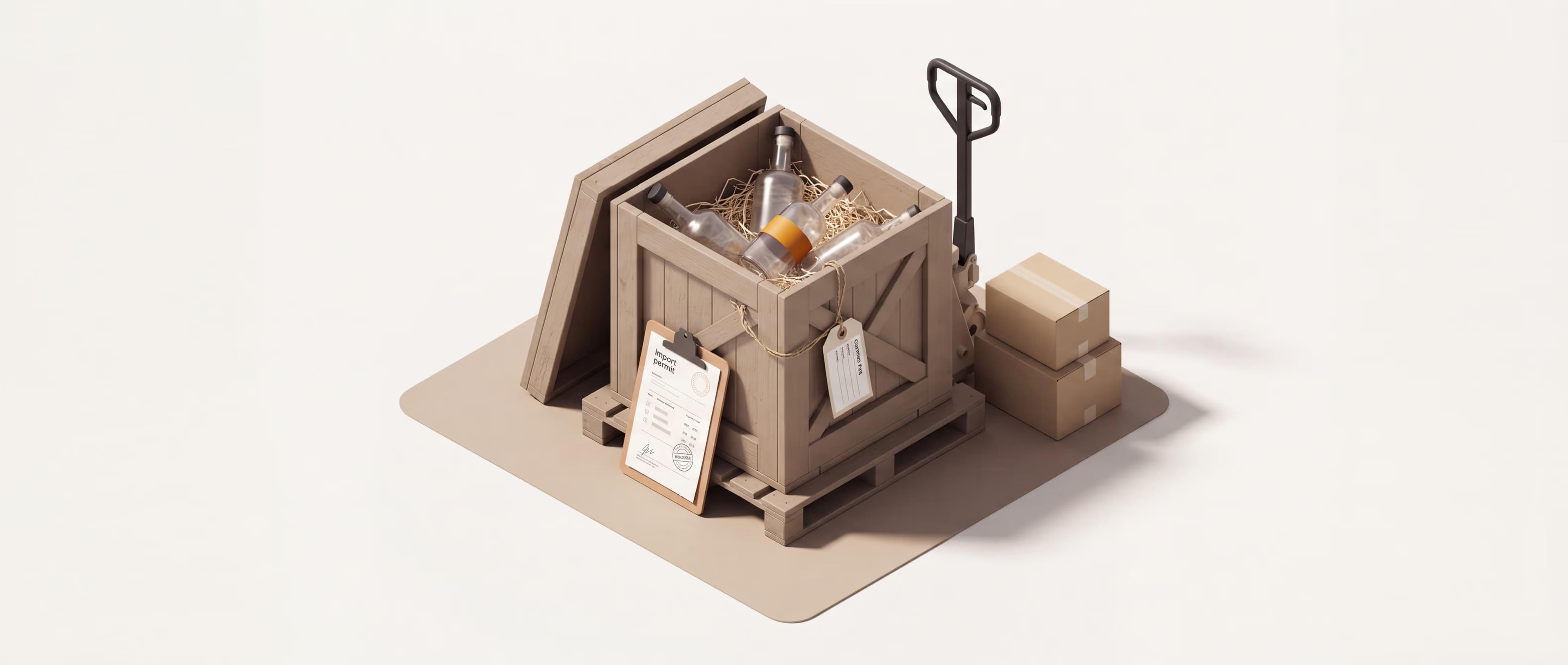
Wine spoilage shipping insurance covers bottles that overheat or freeze in transit and arrive ruined. If you run a direct-to-consumer wine, cider, or spirits brand, the catch is brutal. A case can bake on a hot delivery truck, reach your customer sealed and full, and still be worthless. The shipping coverage you bought at checkout excludes that exact loss.
A heat-ruined bottle is called "cooked," and the damage cannot be undone, so the whole case becomes a total loss you absorb. The temperature thresholds are unforgiving. Wine starts to push corks above roughly 85F, and a dark box sitting in the sun can pass 150F in minutes. This guide covers what your carrier and platform exclude, the two policies that actually pay, and how to file the claim.
Key Takeaways
Wine spoilage shipping insurance is rarely bundled with carriers or platforms; their terms exclude heat and cold damage by default.
Two paths actually cover spoilage in transit: a purpose-built perishable shipping policy or a commercial cargo policy with a spoilage endorsement.
Even a good cargo policy excludes spoilage caused by delay unless you specifically buy that coverage back.
Wine starts to push corks above roughly 85F, and a dark shipping box in direct sun can pass 150F in minutes.
Does shipping insurance cover wine that arrives cooked from heat?
In most cases, no. The shipping insurance bundled with UPS, FedEx, or your ecommerce platform excludes spoilage and temperature damage by default. Wine that arrives cooked from heat is not a covered loss. Coverage for heat or cold spoilage comes only from a perishable shipping policy or a cargo policy with a spoilage endorsement.
The confusion usually comes from mixing up two separate things. There is the shipping insurance a brand buys at checkout, and there is carrier liability, the limited amount the carrier owes if it damages a parcel. Neither was built to pay for wine that arrives intact but spoiled.
Heat damage cannot be reversed, so a cooked shipment is a total loss. The bottles arrive sealed, full, and outwardly fine, but every one is worth nothing on resale.
Picture a cidery doing roughly $800K a year in direct-to-consumer sales that sent a full summer order to Arizona. Every bottle arrived sealed and intact, and every bottle was cooked. The owner assumed the protection bundled with their checkout would pay, and learned otherwise at the claim.
A real DTC alcohol insurance program exists to close that gap. The rest of this post covers what carriers actually exclude, what does pay, and how to file the claim.
Why does UPS or FedEx deny my heat-damaged wine claim?
UPS and FedEx deny heat-damaged wine claims because their terms exclude loss from extreme temperature and inherent vice, the natural tendency of a perishable good to spoil on its own. Declared value reimburses a crushed or leaking parcel and leaves an intact, cooked one as your loss. Neither carrier sells coverage for temperature damage to wine.
Inherent vice is a quality of the goods that makes them damage themselves. Wine in summer heat is a textbook case, since the heat pushes the cork and cooks the liquid without anyone dropping the box. The UPS Tariff and Terms of Service excludes perishables and loss from extreme temperature. FedEx treats perishable protection as the shipper's responsibility rather than something its liability covers.
The deeper issue is that declared value is a liability cap rather than insurance, and the cap is low. You're paying for a payout ceiling on physical mishandling, and that ceiling doesn't stretch to spoilage. (Most brands learn this the hard way, at the claim.) No parcel carrier offers heat damage wine insurance, so a claim on cooked bottles usually dead-ends with a denial letter citing those same exclusions.
What's the difference between a broken bottle and a cooked bottle for a claim?
A broken bottle is physical transit damage, which most cargo and shipping-insurance forms cover. Spoilage is the other peril. A cooked bottle counts as spoilage, which those same forms usually exclude unless you add temperature coverage. So a sealed and intact bottle can still be a total loss, and that's the claim the carrier denies.
The two are different perils with different triggers. Breakage and leakage leave evidence an adjuster can see in seconds, like shattered glass, a soaked box, or a cracked capsule.
Heat damage leaves no such evidence. A cooked bottle looks fine from the outside, so the burden falls on you to prove what happened in transit. The tells worth photographing are a pushed or seeping cork and wine that has wept past the capsule. A small winery once filed two transit claims in the same week. The crushed box of broken bottles was paid in days, while the box of intact, cork-pushed bottles that had clearly cooked was denied on the same carrier and the same policy.
What kind of insurance actually pays when wine spoils in transit?
Two coverage paths pay for wine that spoils in transit. The first is a perishable shipping policy built to name spoilage and temperature as covered perils. The second is a commercial cargo or inland marine policy with a spoilage endorsement, an add-on that names spoilage as a covered loss. Each has a trap.
The endorsement is written for refrigerated freight, and even a good cargo policy excludes spoilage caused by delay unless you specifically buy that coverage back. An inland marine policy is the warehouse-plus-transit cargo form a spoilage endorsement attaches to, and inherent vice sits among its standard exclusions. The table below scores what each path actually pays.
Coverage type
Breakage / physical damage
Heat or cold spoilage
Delay-driven spoilage
Reship / restock cost
UPS / FedEx declared value
Limited (caps low)
No
No
No
Platform shipping protection
Often
No
No
No
Perishable / parcel shipping insurance
Yes
Yes
Often
Often
Cargo / inland marine + spoilage endorsement
Yes
Yes (endorsed)
Endorsement only
Sometimes
Path two attaches a spoilage endorsement to that inland marine policy, the same place brands cover their in-transit inventory gaps. The catch for DTC shippers is the reefer-breakdown endorsement cargo brokers reach for, which covers a refrigerated truck's cooling unit failing. It is built for a full truckload of chilled freight. DTC moves a single case through ground in a gel-packed box.
For a parcel shipper, the realistic path is the perishable policy, which is purpose-built temperature controlled alcohol shipping insurance for single-case shipments. Pricing is modest. This coverage tends to run roughly 0.5% to 4% of the declared value of what you ship. A single case declared at $480 might cost between $2.40 and $19.20 to insure for the trip.
Static storage is a separate policy. Coverage for spoilage at a 3PL warehouse sits on the warehouse's form, while this one follows the box.
When is wine most likely to cook in shipping?
Wine is most likely to cook from late spring through early fall, when truck and porch temperatures spike. It ages faster above roughly 75F. Above 80F it begins to deteriorate, and above 85F it starts to push corks. Past 90F the damage turns permanent, and a dark shipping box in direct sun can pass 150F in minutes.
Freeze is the winter version of the same problem, pushing corks out and fracturing bottles in a hard cold snap. The adult-signature rule makes the summer math worse, because alcohol parcels need a 21-and-over signature on delivery with no doorstep drop and no waiver, per Wine Institute state shipping guidance. Each missed signature buys another delivery attempt, and another hot day on the truck, and the box keeps absorbing heat the whole time.
That cumulative exposure scales with the multibillion-dollar direct-to-consumer wine channel that Sovos ShipCompliant tracks. One July club run taught a subscription wine brand the lesson. Boxes went out Thursday before a heat wave, and the signature rule left several sitting at a regional hub through the weekend. The gel packs melted, and the foam then held the hot air against the wine.
The operational fix and the insurance solve two different parts of the same problem. A temperature hold lowers how often a shipment cooks, and cold chain insurance alcohol coverage pays for the one that still does.
How do I file a claim for a heat-damaged wine shipment?
To claim a heat-damaged wine shipment, document the temperature evidence and the damage fast, then file against the policy that covers spoilage rather than the parcel carrier. Temperature evidence is the make-or-break document. Any logger data or carrier telematics you can pull is worth more than a dozen photos of a pushed cork.
A clean spoilage claim usually moves in this order.
Save the tracking history and any temperature-logger readings from inside the box.
Before you unpack everything, photograph the pushed or seeping cork, the capsule, and the packaging.
Keep the damaged bottles. Separate the sound stock from the spoiled stock so the adjuster can inspect both.
Report the loss within the policy's window, which for transit claims is short and specific. Concealed damage inside an intact box tightens those limits further.
Filing against the parcel carrier for cooked wine is usually a dead end, since their terms exclude temperature damage outright. A Coverwatch broker closes this gap at setup. The broker compares what the carrier and platform exclude against what the brand actually ships. Then they place a perishable shipping policy or a cargo policy with a spoilage endorsement, so coverage is in force before the first hot shipment instead of discovered after one.
Before peak shipping season, confirm in writing whether your transit coverage names spoilage. The worst time to read the fine print is the week a summer order arrives cooked.
Frequently asked questions
Usually not. The shipping insurance bundled with UPS, FedEx, or your ecommerce checkout excludes spoilage and temperature damage by default. A heat-cooked bottle is treated as an uncovered loss even when it arrives sealed. Coverage for heat spoilage comes from a purpose-built perishable shipping policy or a commercial cargo policy with a spoilage endorsement. Those are the only two paths that actually pay for wine that cooks in transit.
No. Declared value is a liability cap on the carrier rather than an insurance policy you can claim spoilage against. Carrier terms exclude perishables, extreme temperature, and <a href="https://www.irmi.com/term/insurance-definitions/inherent-vice">inherent vice</a>. Inherent vice is the tendency of a good like wine to deteriorate on its own. It reimburses a crushed or leaking parcel and leaves an intact, cooked one as your loss.
In practice the brand absorbs the loss unless it carries spoilage coverage. That means eating the replacement product, the reship cost, and the customer churn that follows. Many wineries push this risk onto buyers in their shipping terms, stating that no coverage is provided for heat or cold damage once the box leaves. Shifting the loss in your terms and insuring the loss are different choices, and only one of them protects the brand when a summer club run cooks.
Yes. A temperature or spoilage endorsement and a perishable shipping policy cover both heat and freeze damage, since both are temperature-driven spoilage rather than physical breakage. Freeze is the winter mirror of summer heat, pushing corks out and fracturing bottles as the wine expands. The same coverage that protects a July shipment to Arizona protects a January shipment through the Midwest.
A logger is not always required, though temperature evidence is the single strongest proof you can bring to a spoilage claim. Many parcel perishable policies pay without it, while some cargo and temperature endorsements make in-box logging a condition of coverage, so read the policy before you ship. Either way, do three things. Save the tracking data, photograph the pushed cork and packaging, and keep the damaged bottles for the adjuster.