

August 7, 2026
ExplainersHandyman Insurance Vendor List Requirements in 2026
Handyman insurance vendor list requirements come from credentialing portals. What seven real vendor packets demand and why vendors get de-listed.
7 min read

![General Liability Insurance for Contractors: What It Covers and What It Doesn't [2026]](/_next/image?url=https%3A%2F%2Fcdn.sanity.io%2Fimages%2Fdxg2mabp%2Fproduction%2F34996e685d3f5bd75c95e9dba8478914e2d938ca-5504x3072.heif&w=3840&q=75)
Manage your risk with Coverwatch
Get a free coverage review and find out where you are over or under insured.
A plumber installs a supply line fitting on a Friday, signs off, and heads home. Two weeks later the fitting fails, flooding the homeowner's kitchen, hardwood floors, and basement ceiling. The damage totals $38,000. General liability insurance for contractors covered the property damage to the home. It did not cover the cost of fixing the plumbing. That split between what GL pays for and what stays on the contractor is what this contractor insurance guide breaks down.
Contractor general liability insurance covers third-party bodily injury (a client trips over your equipment) and property damage to someone else's existing property (you crack a tile during a bathroom remodel). It also covers claims against your reputation or advertising. Legal defense costs are paid outside your policy limits, and no-fault medical payments run up to $5,000 to $10,000 per person.
Your policy labels this section Coverage A, and it covers the claims contractors file most often. A homeowner steps on a nail your crew left behind. A backhoe operator catches a gas line and shuts down the block. A ladder slides off a wall and dents the client's car. Any time a non-employee gets hurt or you damage someone else's property during your operations, Coverage A is the part of the policy that pays, per the Insurance Information Institute.
Your policy calls these Coverage B and Coverage C. Coverage B protects you if someone accuses you of slander or says you copied their marketing materials. Coverage C is the simpler one. It pays small medical bills, usually $5,000 to $10,000 per person, for minor jobsite injuries regardless of who caused them. A client bumps their head on scaffolding and needs stitches. Coverage C pays that bill without a lawsuit, a fault investigation, or a broken client relationship. Most contractors forget both sections exist until they need them.
CGL (commercial general liability) policies have a feature contractors usually discover the hard way. The duty to defend means the carrier pays your legal bills even if the claim has no merit. A $50,000 defense bill doesn't reduce your $1 million of available coverage because legal defense costs are paid on top of your limits, not out of them. (Most contractors undervalue this until they get named in a suit.) Completed operations coverage extends this protection to work you finished and left behind, like the plumber's supply line from the opening of this article.
Contractor GL does not cover your own injuries on the jobsite (workers compensation handles that) or theft of your tools and equipment (inland marine insurance). It also excludes damage to the structure you're building (builders risk insurance), the cost of redoing faulty workmanship, professional design errors, pollution incidents, and vehicle accidents. Each gap requires its own policy.
The gap that catches most contractors off guard is the line between GL and workers comp. GL covers third parties who are not your employees. That means clients, bystanders, and other trades on the jobsite. Your own crew's injuries fall under workers compensation, and there is zero overlap between the two policies. According to OSHA, over 5,000 workers sustain fatal injuries on the job each year. Fall protection violations lead the list of safety citations. Every one of those injuries to your own crew is workers comp, not GL.
Equipment theft is another frequent surprise. Multiple industry tracking reports estimate annual construction equipment theft between $300 million and $1 billion in the United States, with recovery rates below 25%. GL won't cover a stolen generator, saw, or trailer. That exposure sits under an inland marine policy, sometimes called a contractor's equipment floater.
| Scenario | Which Policy Responds |
|---|---|
| Client trips over your extension cord | General Liability (Coverage A) |
| Your employee falls off a ladder | Workers Compensation |
| Your tools are stolen from a jobsite | Inland Marine / Equipment Floater |
| You damage the house you are building | Builders Risk |
| Your truck hits another vehicle | Commercial Auto |
| Your roofing work leaks 6 months later | GL (Completed Operations), but not the roof repair |
| Your design recommendation causes a structural issue | Professional Liability (E&O) |
A roofing contractor's installation leaks six months later and ruins the homeowner's furniture and hardwood floors. The contractor's GL policy covers the furniture and floors. Tearing off and replacing the roof comes out of the contractor's pocket. ISO CGL form exclusions j(5), j(6), and l spell out that split. The industry calls it the "your work" exclusion, and it is the single most common claim surprise in general contractor insurance.
Construction general liability insurance protects other people from the consequences of your mistake. It doesn't guarantee the quality of your work. The cost of fixing the actual defect is treated as a normal business expense, not an insurable loss.
Same pattern across trades. Set a shower pan wrong and water seeps through the subfloor into the kitchen ceiling below? GL covers the ceiling. The shower pan replacement is on the installer. That policy reads fine right up until claim day, and then the exclusion schedule is the only page that matters.
Exclusion l in the standard CGL form contains a built-in exception for work performed by subcontractors. If the faulty work was done by a sub, the GC's GL policy may cover the resulting damage to the GC's broader project. A general contractor hires a plumbing sub whose work fails and floods three finished units. General liability insurance for a general contractor can respond to the water damage in this scenario because the defective work was done by a sub, not the GC's own crew.
(That requirement is exactly why GCs demand that every sub carry GL and name the GC as an additional insured, meaning the GC is covered under the sub's policy.) The sub's own policy still faces the "your work" exclusion for the cost of redoing the plumbing itself.
Most commercial projects require contractors to carry at least $1 million per occurrence and $2 million aggregate in general liability coverage. Over 97% of construction customers choose this standard limit structure. Larger projects may require $2 million to $5 million per occurrence. Contractors typically reach those higher limits by adding an umbrella policy on top of the base GL.
Per occurrence is the maximum your policy pays for any single claim. Aggregate is the total it pays across all claims during the policy period, typically one year. With $1M per occurrence / $2M aggregate, you have $1 million available per incident but only $2 million total for the year.
Two large claims could exhaust your annual coverage entirely. The Insurance Information Institute notes that claim severity, not frequency, is the primary driver of escalating losses in liability lines. That makes adequate per-occurrence limits more important than ever for contractors working on projects where a single incident can generate a six-figure claim.
Most guides skip this entirely. A standard GL policy sets one aggregate for the entire policy year, which means a claim on one job eats into your coverage for every other active project. A per-project aggregate endorsement (sometimes called a "designated project" endorsement) gives each job its own separate aggregate limit. That matters.
For contractors running multiple jobs simultaneously, the per-project endorsement is worth every dollar. Real-world pricing runs around $300 per year for a roofing contractor, based on Coverwatch's E&S carrier quotes.
A painter and a roofer can walk into the same broker's office on the same day with the same revenue and the same clean claims history, and the roofer will pay roughly five times more for the same $1M/$2M general liability policy. Contractor GL premiums range from about $500 per year for low-risk trades like painting to over $6,000 per year for roofing. Trade classification and the injury patterns each trade generates drive almost all of that spread.
| Trade | Annual Range | Monthly Range | Risk Level |
|---|---|---|---|
| Painter | $500 - $1,200 | $42 - $100 | Medium |
| Electrician | $500 - $2,500 | $42 - $208 | Medium-High |
| Plumber | $1,000 - $2,800 | $83 - $233 | Medium-High |
| Drywall / Framing | $500 - $2,400 | $42 - $200 | Medium-High |
| HVAC Contractor | $700 - $3,200 | $58 - $267 | Medium-High |
| General Contractor | $1,200 - $4,500 | $100 - $375 | High |
| Concrete / Masonry | $600 - $3,800 | $50 - $317 | High |
| Roofing Contractor | $2,000 - $6,000 | $167 - $500 | Very High |
Those ranges assume $1M/$2M limits, under $500,000 in annual revenue, and a clean claims history. Those numbers hold across the market: a construction business average of $82 per month at $1M/$2M limits, and an average of $1,351 per year for contractors.
Five factors drive the spread within any single trade. Those factors are revenue, claims history, headcount, geography, and the specific operations you actually perform. Why such a big range for painters? A painter who does only residential interiors and one who hangs from scaffolding on high-rise exteriors are in completely different risk universes despite sharing the same trade label.
File a single claim and your GL premium typically jumps 10% to 25% at renewal. That bump follows you for three to five years. The real cost of contractor general liability insurance is the annual premium plus the long tail of any claim you file.
Flat-fee brokers like Coverwatch compare general liability quotes across 60+ carrier partners. The recommendation is based on coverage fit, not on which carrier pays the highest commission. For a deeper look at the full cost of contractor insurance beyond GL, that guide breaks down workers comp, commercial auto, and umbrella by program.
General liability insurance does not cover the cost of redoing faulty work. It covers damage that the faulty work causes to other property. If a deck builder installs defective flashing and rainwater damages the homeowner's interior walls, GL covers the wall repair. Rebuilding the flashing is the contractor's expense. This is the 'your work' exclusion in the standard CGL form.
Yes, with very few exceptions. Most GCs won't let a sub on the jobsite without at least $1 million per occurrence and $2 million aggregate in GL coverage. Subs also typically need to name the GC as additional insured on their policy using endorsement forms CG 20 10 (for ongoing operations) and CG 20 37 (for completed operations).
General liability covers injuries and property damage to third parties like clients, bystanders, and other trades on the jobsite. Workers compensation covers injuries to your own employees. There is zero overlap between the two policies. If your employee falls from a scaffold, that is a workers comp claim. If a client trips over your equipment, that is a GL claim.
You pay defense costs and any settlement or judgment entirely out of pocket. A single bodily injury claim on a construction site can exceed $100,000 in legal fees and damages. Beyond the financial risk, most commercial projects require a certificate of insurance before you can bid, so operating without GL locks you out of the projects where the money is.
It depends on the endorsement forms attached to the policy. CG 20 10 covers the GC for liability arising from the sub's ongoing operations. CG 20 37 covers liability from the sub's completed work. Without both endorsements naming the GC as additional insured, coverage gaps exist. Always verify endorsement forms on the certificate of insurance before allowing a sub to start work.
August 7, 2026
ExplainersHandyman insurance vendor list requirements come from credentialing portals. What seven real vendor packets demand and why vendors get de-listed.
7 min read
August 6, 2026
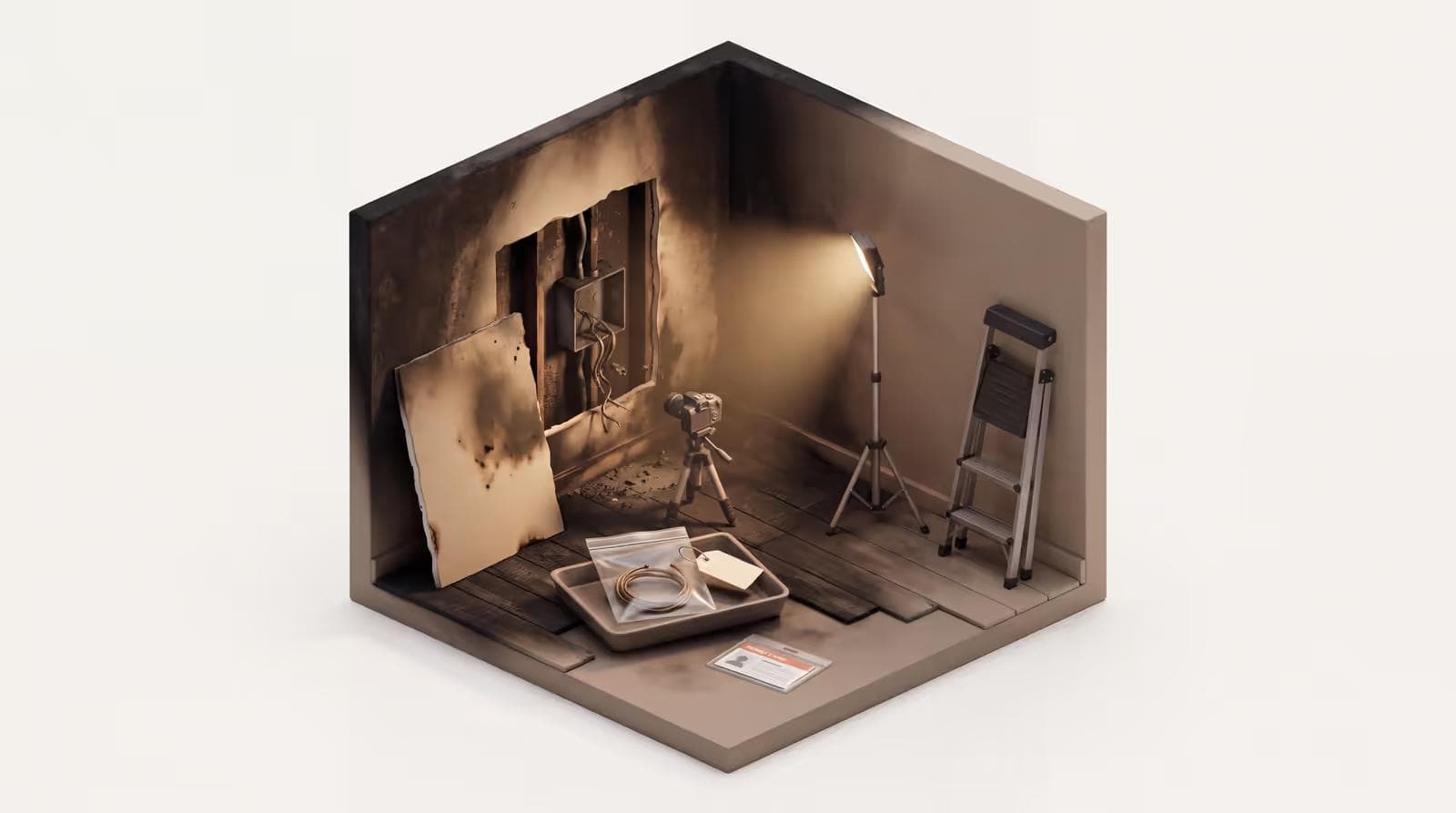
ExplainersAn electrician liability fire damage claim usually arrives as a subrogation demand months after the job. What happens next, and what you can challenge.
7 min read
August 6, 2026
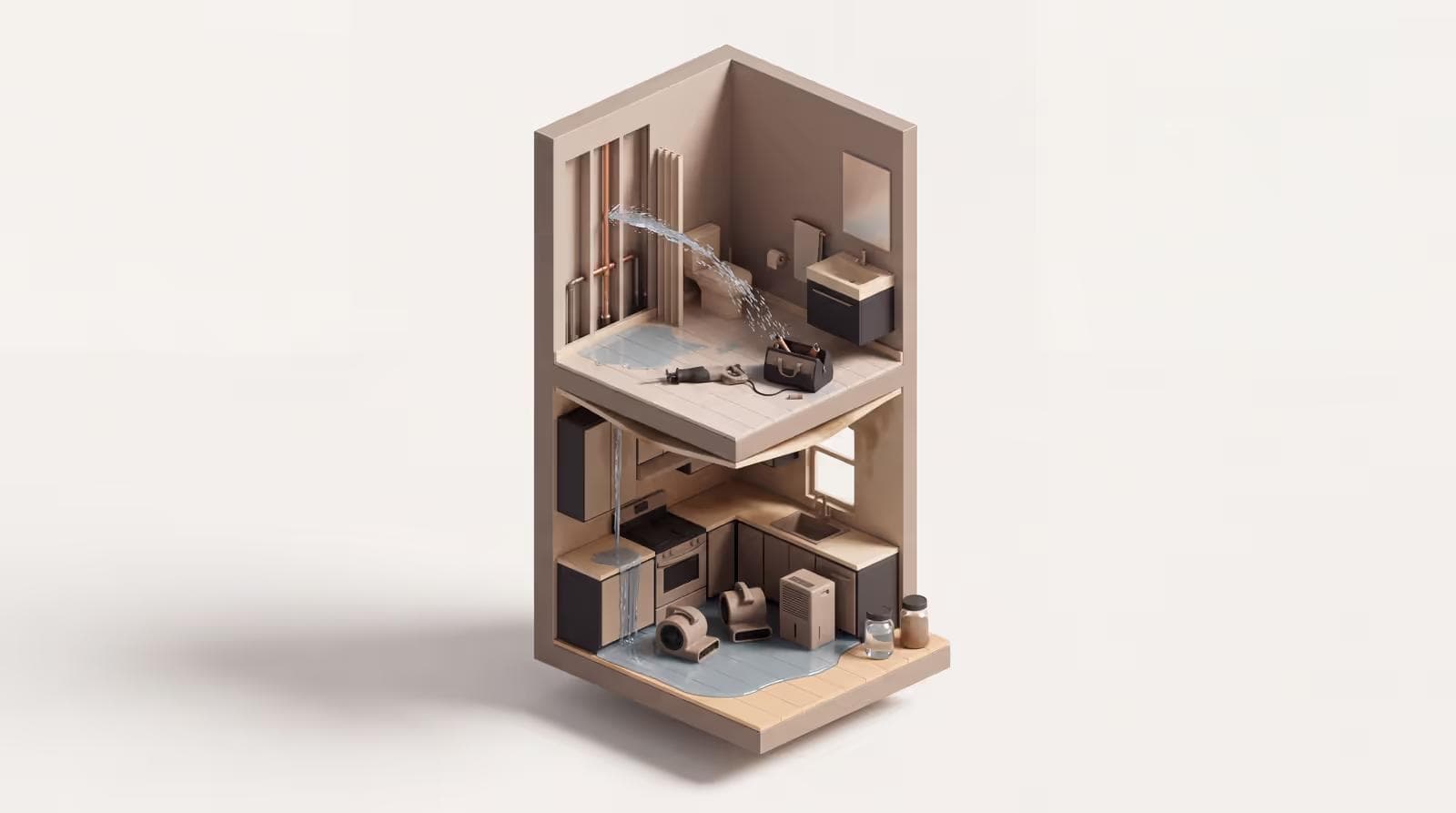
ExplainersA plumber's liability policy pays for what the water ruined, not for the joint that let go. The exclusions are narrower than most contractors think.
7 min read

August 1, 2026
ExplainersAdding plumbing, refrigeration, or electrical work resets your HVAC class codes and reprices general liability and workers comp. Here is what changes.
6 min read
Fill out the form and a Coverwatch advisor will get back to you within the next hour.
Your quote