

November 12, 2026
ChecklistsRestaurant Deliveries in Personal Cars: Who's Insured?
Review restaurant delivery insurance for employees using personal cars, including driver coverage, return trips, vehicle damage and safe dispatch.
5 min read

Manage your risk with Coverwatch
Get a free coverage review and find out where you are over or under insured.
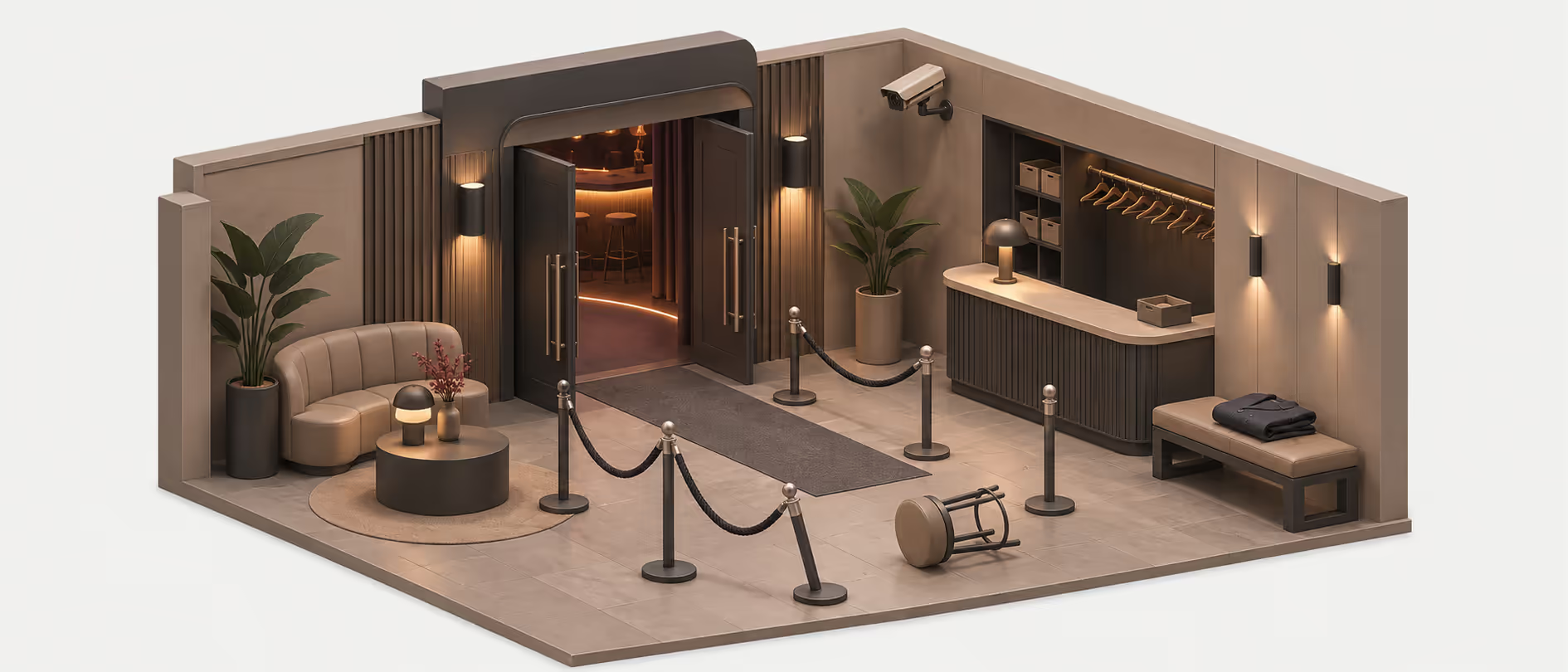
A nightclub assault and battery exclusion can reach a claim alleging negligent security, depending on its wording and applicable law. Calling the lawsuit negligence doesn't necessarily avoid the restriction. Read the exclusion, any smaller assault limit, and the defense-cost terms together before relying on the general liability limit.
The practical task is to find what happens to a claim arising from a fight. A policy can offer no relevant coverage, limited coverage, or broader protection subject to other conditions. Those are very different buying decisions.
An assault restriction can apply when a lawsuit alleges that the nightclub failed to prevent violence. Some wording reaches claims arising from an assault, including negligent hiring or security allegations. The legal label on the complaint is only one part of the analysis; the policy and jurisdiction matter.
In the 2009 unpublished decision Century Surety v. Seductions, the Eleventh Circuit applied Florida law to a nightclub policy. It upheld a $25,000 assault-related limit despite negligence allegations and higher general limits. That historical decision illustrates its own wording; it isn't a rule deciding every nightclub claim.
For your general liability policy, search beyond the main exclusion page. Endorsements may change the original form, and the relevant wording may refer to prevention, supervision, hiring, or failure to provide security.
Have the broker explain the actual restriction before binding coverage. If a claim already exists, send the full papers to the insurer and seek legal advice as appropriate. Don't try to resolve a disputed claim from a certificate or blog summary.
An exclusion removes specified coverage, while a sublimit caps a particular kind of covered loss at a smaller amount. A policy may combine exclusions with a limited coverage endorsement. Read both so you understand whether assault protection exists and how much could be available for the covered claim.
| Wording found | Question to resolve |
|---|---|
| Assault or battery excluded | Which claims and insured parties does the restriction reach? |
| Limited assault coverage added | What was restored, and what remains excluded? |
| Separate per-event cap | How does the policy define a single event or occurrence? |
| Annual assault aggregate | Do several covered incidents share this amount? |
| Special defense wording | Are legal costs inside or outside the applicable limit? |
Don't add the assault sublimit to the main limit unless the contract expressly supports that calculation. A lower cap may sit within the total, rather than provide extra money above it.
Also ask whether the restriction appears in liquor liability coverage. A lawsuit can allege both alcohol service and inadequate security. Two policy names on a certificate don't establish two unrestricted sources of payment.
Defense costs may reduce the amount left for damages when the applicable wording puts those costs inside the limit. Other arrangements treat defense differently. Ask which provision applies specifically to assault claims, whether a retention must be paid first, and when the insurer's defense obligation ends.
The 2022 opinion in James River v. Rich Bon recounts a nightclub policy with separate assault limits. It describes a settlement using the available cap less claim expenses. The appellate ruling concerned how the federal case should proceed, so it should not be presented as a nationwide coverage holding.
For buying purposes, ask the broker to show the money flow in a simple example. Identify the amount paid by the business, the amount potentially available for defense, and what remains for a covered settlement.
Repeat that exercise for the umbrella policy. Don't assume a defense-cost shortfall or exhausted assault sublimit makes the umbrella start paying. Its attachment terms and exclusions require their own review.
In a hypothetical nightclub claim, a guest alleges injury during an ejection and sues over staff supervision. The venue has a $1 million general liability limit but a $50,000 assault sublimit. Whether the smaller amount applies depends on the wording and facts, not merely the amount shown first.
Suppose, solely for illustration, the relevant coverage includes defense costs within that $50,000 cap. If $20,000 of covered expenses uses the limit, $30,000 remains before considering other terms. The calculation explains why defense treatment belongs in the quote comparison.
Now change the allegation: the complaint says an outside security firm and the nightclub's employees acted together. A separate contracted-security exclusion could become relevant. Improving the assault limit would not necessarily remove that other restriction.
The operator should therefore compare scenarios, not just limits: a patron-on-patron fight, an employee ejection, and an incident involving hired security. Ask which clauses affect each scenario and identify the assumptions behind the answer. No example can promise the outcome of a future claim.
Describe who provides security, where staff work, and how events operate before asking whether assault coverage is adequate. Check restrictions involving outside guards, weapons, specific activities, or areas beyond the main room. The policy review should follow the venue's real operation rather than a generic nightclub description.
A 2023 federal trial-court opinion, Clear Blue v. TFS NY, shows how separate restrictions interact. The court enforced contracted-security wording against the allegations before it despite an assault-coverage endorsement. The decision depended on that contract and complaint.
The court also allowed the venue to reopen the question of paying damages if the state case established that the outside security company was uninvolved.
These questions don't imply every policy contains the same exclusions. They give the broker a focused way to explain the forms you are actually considering.
Report an incident or demand according to the applicable policies and preserve relevant records. Don't wait for a lawsuit to use the word assault before contacting the insurer. At renewal, review how the reported incident affects available terms, while keeping the current claim and future buying decision separate.
Retain the incident report, relevant video, staffing records, and vendor agreements under appropriate retention and privacy procedures. Coordinate with counsel on litigation-related preservation. Follow policy conditions concerning cooperation, expenses, and settlements rather than assuming the business can make its own reimbursement arrangements.
For the renewal comparison, ask each broker to identify the assault wording, applicable cap, defense treatment, and related restrictions. A cheaper proposal may be reasonable for a particular business, but the operator should know the protection being removed or reduced.
Coverwatch can review those differences during a nightclub coverage review. Bring the complete forms and a description of security arrangements. The decision should be based on the coverage available for the venue's actual activities.
Not necessarily. Some restrictions reach claims arising from assault regardless of the negligence theory. The exact language and applicable law control.
No universal rule applies. A policy may exclude it, provide limited coverage, or offer broader protection with conditions. Read the forms and endorsements.
No. Check its assault and other exclusions. Alcohol involvement alone does not establish coverage under a liquor policy.
No. They illustrate particular policies and disputes. The 2009 decision is unpublished, and the 2022 opinion discussed here concerned procedure.
Follow the policy’s reporting requirements. Ask the broker or insurer what notice is required and when; do not assume notice can wait until a lawsuit arrives.
November 12, 2026
ChecklistsReview restaurant delivery insurance for employees using personal cars, including driver coverage, return trips, vehicle damage and safe dispatch.
5 min read
November 11, 2026
ExplainersReview hotel pool liability insurance, hot tub risks, federal drain rules, contractor responsibilities, and the records to keep after an incident.
5 min read
November 10, 2026
ChecklistsReview bar live music insurance before adding DJs, dancing, or later hours. Check disclosures, policy restrictions, and New York's 2026 rule change.
6 min read
November 9, 2026
How-ToPlan restaurant business interruption after a kitchen fire: reopening approvals, lost income, payroll, temporary kitchens and claim records.
5 min read
Fill out the form and a Coverwatch advisor will get back to you within the next hour.
Your quote