

November 12, 2026
ChecklistsRestaurant Deliveries in Personal Cars: Who's Insured?
Review restaurant delivery insurance for employees using personal cars, including driver coverage, return trips, vehicle damage and safe dispatch.
5 min read

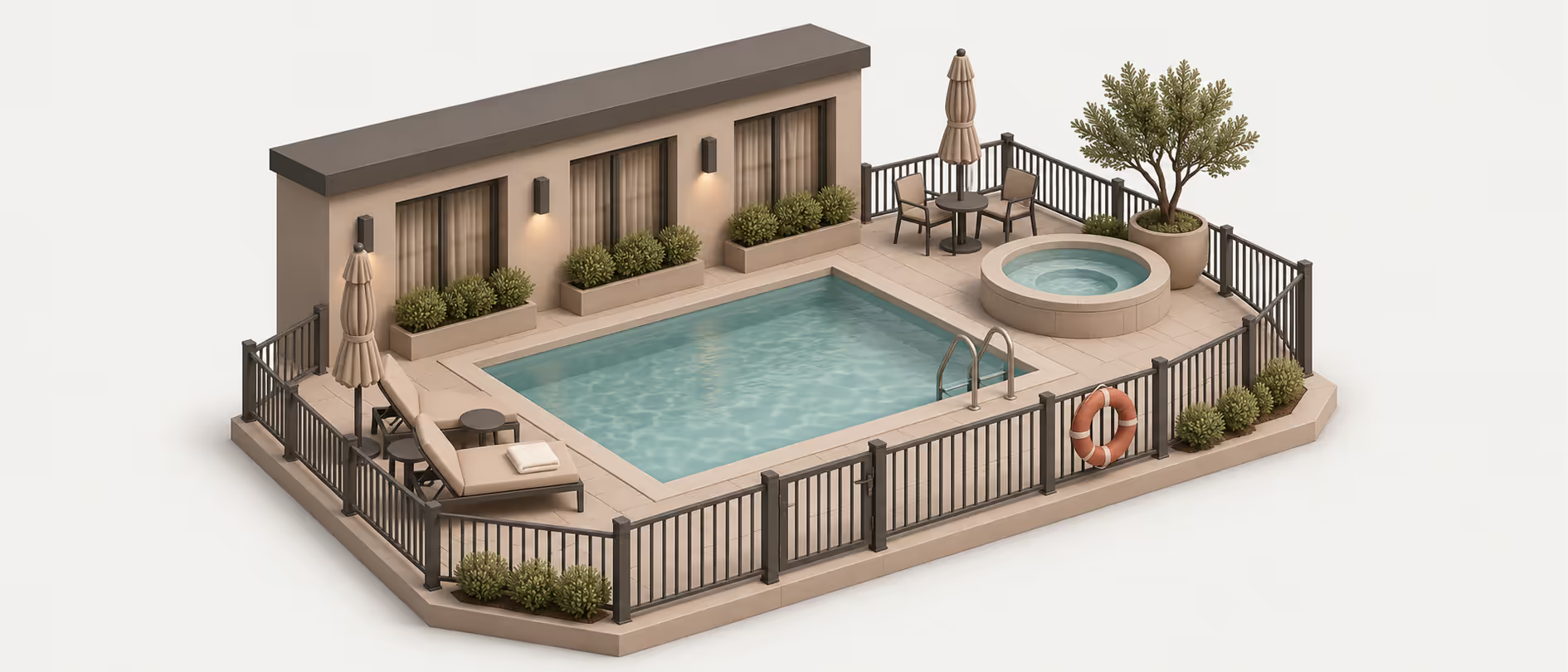
Manage your risk with Coverwatch
Get a free coverage review and find out where you are over or under insured.
A new hot tub needs its own maintenance plan. Hotel pool liability insurance should reflect the actual facilities, guest access, supervision, and maintenance. Review guest injuries and waterborne illness allegations separately, because their coverage can turn on different exclusions and conditions.
For a single property, assemble the pool's operating and maintenance records before renewal. Describe the indoor pool, seasonal outdoor pool, and rooftop hot tub individually. The insurer needs each facility's operating details.
Begin with the hotel's general liability policy and ask how it treats alleged bodily injury connected with the pool. Review the insured entity, location, covered operations, exclusions, defense provisions, and limits. The National Association of Insurance Commissioners (NAIC)'s small business insurance guidance distinguishes liability coverage from property, auto, and employee-related insurance and recommends reviewing coverage as operations change.
Describe actual features rather than relying on "standard hotel pool." Include slides, diving areas, hot tubs, poolside food or alcohol service, after-hours access, and whether non-guests can buy admission. Ask the insurer to identify any restrictions relevant to those features. The hotel also needs its insurer's answer.
Keep employee injuries in a separate discussion about workers' compensation. A housekeeper injured while cleaning the pool deck and a guest injured on the same deck require different insurance analysis. Similarly, damage to the pump or pool enclosure is a property question, not automatically a guest liability claim.
Yes, hotel patrons are expressly included in the federal public-pool definition used by the Virginia Graeme Baker Pool and Spa Safety Act. The definition in 15 U.S.C. § 8003 means "guests only" does not remove a hotel pool or spa from that statute's scope. Other state and local requirements need their own review.
The Consumer Product Safety Commission's drain-cover guidance explains compliant anti-entrapment covers and additional protection for certain drain configurations. Have a qualified pool professional determine which requirements apply to the installation. A visual glance at an intact cover cannot establish that the cover, flow rating, installation, and system configuration satisfy the relevant requirements.
Build a small equipment file with the drain-cover identification, installation and replacement records, manufacturer instructions, and the professional's findings. Assign replacement tracking and authority to close the pool. Give property managers access to that file even when corporate facilities staff arrange the work.
Compliance documentation and insurance serve different purposes. Keep the safety program current because it governs operation of the facility. Then separately ask the broker how policy conditions and exclusions affect a claim. Neither a certificate from a contractor nor an insurer's acceptance of the location replaces the hotel's operational duties.
A hot tub adds water-management questions beyond a wet pool deck. The Centers for Disease Control and Prevention (CDC)'s hotel guidance on preventing Legionnaires' disease identifies hot tubs and other hotel water systems as relevant to a water management program. Its recommendations concern prevention and system management, not whether an insurance policy will pay a claim.
Ask the broker to locate any fungi, bacteria, pollution, or communicable-disease provisions that could affect a waterborne illness allegation. Request the relevant forms and a written explanation. A bodily injury heading can still be narrowed by an exclusion, so compare both provisions before drawing a coverage conclusion.
In a hypothetical example, a hotel temporarily closes its hot tub after a maintenance concern. A guest later reports an illness and alleges exposure during a recent stay. Handle the maintenance response separately from the guest's allegation and the insurance notice, and retain the records relevant to each.
The hotel should retain the service history and guest communications, follow qualified public-health guidance, and notify its insurer under the applicable terms. An allegation alone does not establish causation, negligence, or coverage.
Use a responsibility sheet that makes the gap between service visits visible. A weekly vendor visit does not tell a night manager who checks the water today or who responds when a guest reports a damaged fitting.
| Task | Record to keep | Owner to name |
|---|---|---|
| Routine operating checks | Dated log using the property's required procedures | Trained hotel employee or contracted operator |
| Drain and equipment inspection | Findings, equipment details, corrective work | Qualified pool professional |
| Urgent defect or water concern | Report time, closure decision, response | Manager authorized to restrict access |
| Insurance and contract review | Contract, policies or endorsements requested by the broker | Hotel management and broker |
| Reopening after an issue | Basis for reopening and any required approvals | Designated responsible manager |
Ask the broker and legal adviser to review the vendor's insurance and contractual responsibilities together. Identify whether the agreement addresses inspections, routine treatment, emergency response, and record retention. If one company supplies chemicals and another maintains equipment, describe the split rather than assuming each has accepted the other's responsibilities.
For multiple properties, standardize the records but preserve local detail. Each pool should have its own equipment history, operating procedures, and incident contacts. A corporate checklist is useful only if someone at the property can follow it during an actual problem.
Ask how the liability limits apply to one incident, multiple claimants, and the policy period. If the hotel carries an umbrella policy, request confirmation of the underlying coverage and exclusions that matter to pool operations. A larger displayed limit is not enough information to evaluate a specific exposure.
Prepare a simple incident packet: date and time, location, staff observations, witness contacts, relevant maintenance entries, and available photographs or video. Preserve facts without making a medical diagnosis or deciding fault. Give staff an insurer-notification contact and a process for protecting records from routine deletion.
Revisit the insurance description before adding public memberships, changing supervision, opening a new hot tub, or introducing poolside events. Update the operating description before making the change. Keep the insurer's response with the operating file.
For a Coverwatch coverage review, bring the pool inventory, contractor agreement, current liability policies, and a description of guest access. That allows the discussion to focus on the property's actual features and responsibilities.
For the federal Virginia Graeme Baker Pool and Spa Safety Act, yes: the statutory definition expressly includes hotel patrons. State and local requirements must also be checked.
No. Review the hotel policy, contractor coverage, and service agreement together. The agreement should identify responsibilities between visits and during urgent problems.
No. The alleged injury and policy terms both matter. Ask the broker to review potentially relevant bacteria, pollution, and communicable-disease provisions rather than assuming coverage.
Preserve factual incident notes, relevant operating and maintenance logs, witness contacts, and available images. Follow the policy’s notice requirements and protect records from routine deletion.
November 12, 2026
ChecklistsReview restaurant delivery insurance for employees using personal cars, including driver coverage, return trips, vehicle damage and safe dispatch.
5 min read
November 10, 2026
ChecklistsReview bar live music insurance before adding DJs, dancing, or later hours. Check disclosures, policy restrictions, and New York's 2026 rule change.
6 min read
November 9, 2026
How-ToPlan restaurant business interruption after a kitchen fire: reopening approvals, lost income, payroll, temporary kitchens and claim records.
5 min read
November 8, 2026
ChecklistsReview motel extended stay insurance as weekly and monthly bookings grow, with occupancy disclosures, state-law examples, and a practical checklist.
5 min read
Fill out the form and a Coverwatch advisor will get back to you within the next hour.
Your quote