

November 12, 2026
ChecklistsRestaurant Deliveries in Personal Cars: Who's Insured?
Review restaurant delivery insurance for employees using personal cars, including driver coverage, return trips, vehicle damage and safe dispatch.
5 min read

Manage your risk with Coverwatch
Get a free coverage review and find out where you are over or under insured.
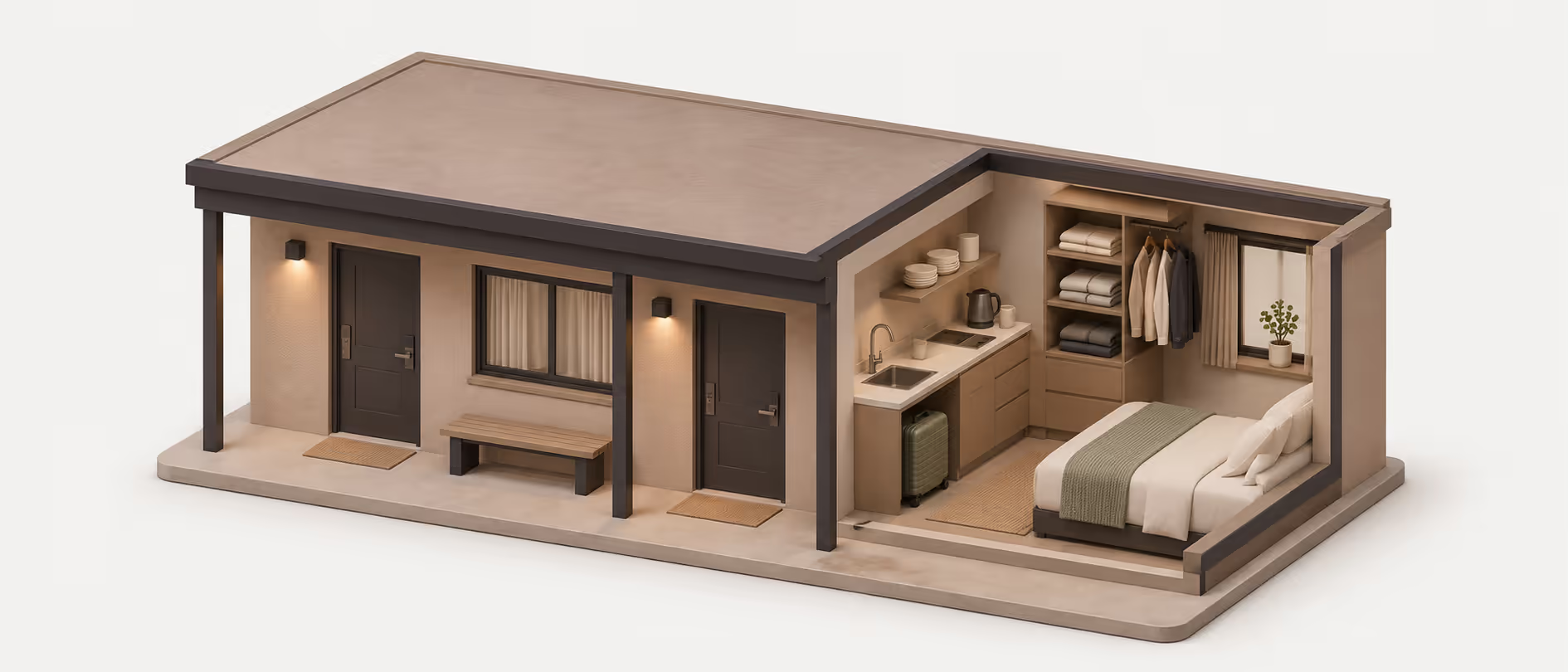
When a motel accepts month-long stays, its operation changes even if the rooms don't. Review motel extended stay insurance before changing the stay mix. Tell the broker about actual occupancy and services so the insurer can evaluate the operation behind the business name.
Insurance classification, guest rights, licensing and tax treatment need separate reviews before the motel adopts a new occupancy arrangement. An answer in one area does not settle the others. A practical review starts with a factual picture of stays, services, and room use.
Start before making a material change to the operating model. That might mean introducing monthly rates, signing a company housing agreement, adding cooking facilities, or dedicating a wing to longer stays. The Federal Deposit Insurance Corporation and Small Business Administration's small business insurance guide recommends revisiting insurance when a business expands or changes its services and locations.
Compare the current and proposed operation. Break down typical stay lengths and the share of rooms involved. Include housekeeping arrangements and physical changes so the insurer can assess more than an extended-stay label. Provide the information you have and identify estimates as estimates.
The broker can identify missing underwriting information. Keep the submission and the insurer's written response with the policy. If a new form, endorsement, or different placement is proposed, compare the coverage before making the operational change. The purpose is to resolve uncertainty while there is still time to act.
There is no single national day count that answers every motel occupancy question. State rules and the actual arrangement matter. The California Department of Real Estate's tenant guide discusses hotel and motel occupancy, including longer stays and several exceptions. Its discussion should not be reduced to "every guest becomes a tenant on day 30."
Minnesota's definition of transient occupancy considers whether the parties intend a temporary stay. It also uses presumptions, which evidence can rebut, based on whether the accommodation is the occupant's sole residence. Those occupancy definitions do not classify an insurance policy.
Ask a local legal adviser how the proposed stays affect the hotel's agreements and procedures. Separately ask the relevant licensing or tax authority about its rules. Then provide the insurer with an accurate operating description, including any legal status the adviser identifies as relevant. Do not use an insurer's willingness to quote as confirmation that the occupancy arrangement complies with local law.
For a group operating in several states, create a property-by-property review. One corporate extended-stay policy may be convenient for staff, but it should not be treated as proof that each jurisdiction handles guests identically.
Give the insurer concrete operating facts, using aggregate information where individual guest details are unnecessary. The following worksheet can support the conversation without turning it into a collection of personal guest information.
| Operating detail | What to describe |
|---|---|
| Length and mix of stays | Typical stay ranges, room allocation, and expected changes |
| Guest arrangements | Direct bookings, company housing contracts, and other organized placements |
| Room features | Cooking appliances, kitchenettes, and proposed alterations |
| Services and access | Housekeeping, maintenance access, front-desk coverage, and visitor practices |
| Property changes | Buildings or wings involved, renovation plans, and temporarily unused rooms |
| Documents | Current guest agreement, relevant contracts, and legal or licensing review findings |
Explain differences between advertised and actual operations. A motel may still accept overnight travelers while most occupied rooms are used for longer stays. Conversely, a handful of repeat guests may not represent a wholesale change in the business. Describe the mix accurately.
Date the worksheet and name the person responsible for updating it. For multiple properties, use the same categories but separate answers. A single portfolio average can hide a substantial change at one motel.
Use the disclosure to review the current program, not to assume a particular coverage must be replaced. The National Association of Insurance Commissioners (NAIC)'s small business guidance recommends evaluating insurance against business operations and distinguishes different coverage types. Ask for answers tied to the motel's actual policies.
For commercial property coverage, ask whether the described occupancy, cooking arrangements, values, and any renovations fit the insurer's terms. For general liability, review the covered operation and exclusions relevant to the changed guest arrangement. Identify ongoing reporting duties and required safeguards.
For business interruption coverage, explain how income is earned under weekly rates, monthly arrangements, or company contracts. Ask which financial records support a covered interruption. Document any contractual payments the motel must continue during a closure. Do not assume an old projection based on nightly leisure bookings still describes the business.
Also identify what the guest owns and what the motel supplies, especially when new room furnishings or equipment are added. That inventory helps keep the coverage discussion factual without promising protection for every item a guest brings.
In a hypothetical example, a 40-room motel plans to offer 15 rooms to a local employer for three-month worker stays. The owner prepares the proposed agreement, room allocation, housekeeping schedule, and any appliance changes. A local adviser reviews the occupancy arrangement, while the broker submits the operating changes to the insurer. Neither review is treated as a substitute for the other.
The owner keeps a short decision record: what was submitted, which questions were answered, what policy changes were issued, and what remains outstanding. If the employer later asks for the entire property or a longer contract, the motel updates the review rather than relying on the earlier description.
Coverwatch can help organize an insurance review around that occupancy packet. Bring the existing policies and proposed operating arrangement so the discussion addresses the motel you intend to run.
No universal national rule establishes that result. State law, local rules, and the actual occupancy arrangement matter. Obtain advice for the property’s jurisdiction.
Disclose a proposed material change in the stay mix and operating model. Include typical stays, room allocation, services, contracts, and physical changes so the insurer can evaluate it.
Do not infer the required policy from a label. Ask the insurer to evaluate the actual operation and explain its classification, eligibility, and proposed terms.
Prepare a separate occupancy and operations summary for each property, using consistent categories. Include jurisdiction-specific findings and changes that a portfolio average might hide.
November 12, 2026
ChecklistsReview restaurant delivery insurance for employees using personal cars, including driver coverage, return trips, vehicle damage and safe dispatch.
5 min read

November 11, 2026
ExplainersReview hotel pool liability insurance, hot tub risks, federal drain rules, contractor responsibilities, and the records to keep after an incident.
5 min read
November 10, 2026
ChecklistsReview bar live music insurance before adding DJs, dancing, or later hours. Check disclosures, policy restrictions, and New York's 2026 rule change.
6 min read
November 9, 2026
How-ToPlan restaurant business interruption after a kitchen fire: reopening approvals, lost income, payroll, temporary kitchens and claim records.
5 min read
Fill out the form and a Coverwatch advisor will get back to you within the next hour.
Your quote