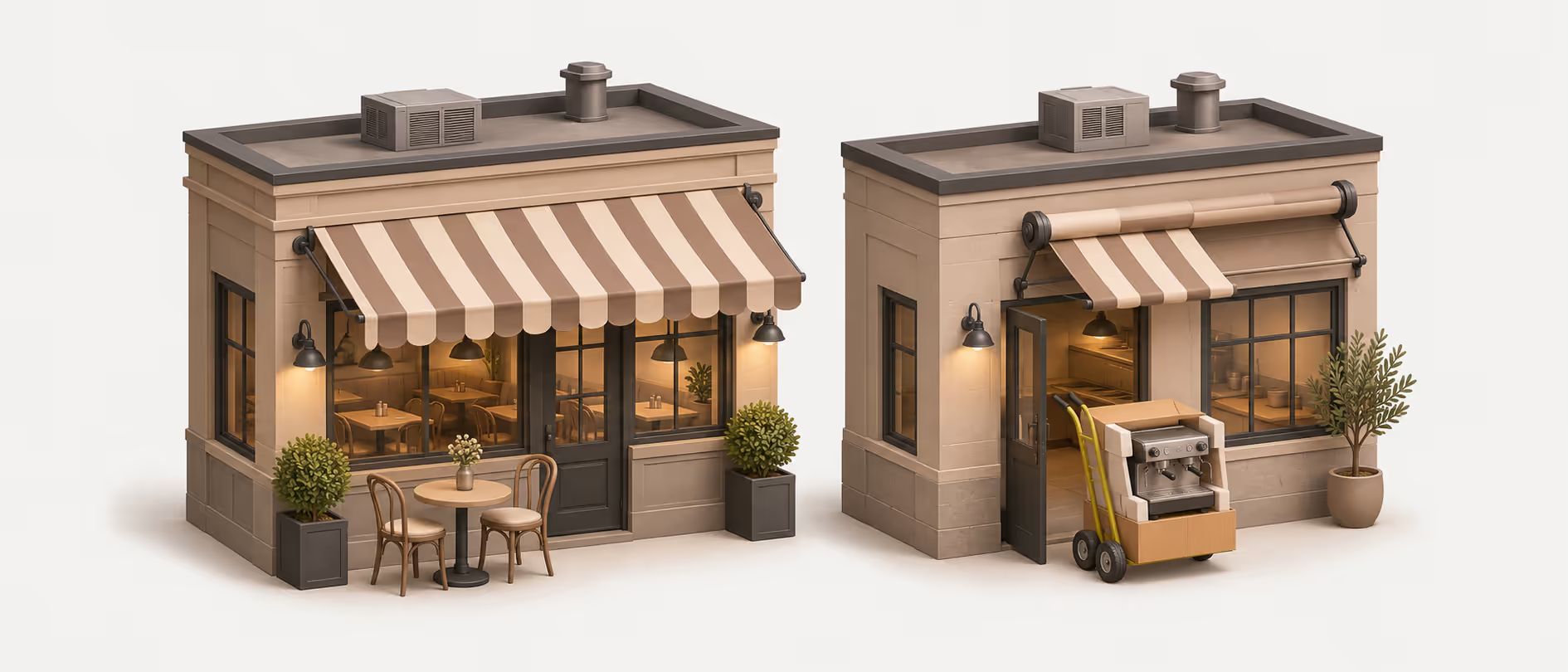
Second restaurant location insurance needs a review of the new address, operating company, property values and shared limits. Adding a second location to a certificate doesn't establish all that coverage. Check the policy changes before staff, equipment or customers arrive.
The useful starting point is a two-column worksheet: what exists at the first restaurant and what will exist at the second. It turns an expansion announcement into information an insurer can evaluate, including the differences between two restaurants carrying the same brand.
Start second restaurant location insurance early
Second restaurant location insurance should follow the expansion's actual milestones. The lease may start before construction, equipment deliveries, employee training and opening night. Ask when each exposure begins and whether it needs a new policy or an endorsement that changes existing coverage.
A restaurant's planned opening date is a poor substitute for that timeline. Refrigerators might arrive weeks earlier, while a landlord requires insurance before handing over the keys. Renovation work can need a separate discussion from the finished restaurant operation.
For an existing restaurant insurance program, send the broker the address, lease, expected sales, payroll, menu and operating hours. Flag delivery, catering, alcohol service, outdoor dining or other activities that differ from the first unit. Don't assume the insurer views two formats as interchangeable.
Ask for written confirmation of the effective date and the coverage added. Temporary coverage for newly acquired property, if present, can have conditions and limits. Treat it as wording to verify rather than permission to postpone reporting a new location.
Match legal entities to both locations
The company operating the second restaurant must fit the policy's insured definitions and schedules. Map the entity signing the lease, employing staff and owning equipment. A shared trading name does not establish that every related company has the coverage it needs.
| Item | First restaurant | Second restaurant |
|---|
| Operating legal entity | Confirm exact name | Confirm exact name |
| Leaseholder | Match signed lease | Match new lease |
| Equipment owner | List owned and leased items | Identify transfers and new purchases |
| Employer | Identify payroll entity | Identify payroll entity |
| Coverage start | Existing policy dates | Dates for work, deliveries and trading |
Give this map to the broker and the advisers handling the expansion. They can identify where named-insured changes, property interests or other arrangements need attention. Keep legal structuring decisions separate from assumptions about what an insurance certificate proves.
A restaurant group program can coordinate several units, but the schedules still need accurate names and operations. Update the map again if the landlord, lender or ownership arrangement changes during negotiations.
Check how property limits apply by address
Property coverage for a second restaurant can use separate limits by address or a blanket limit across eligible property. Ask which arrangement applies and whether smaller limits restrict recovery. The declarations list the limits, but endorsements can restrict how those amounts apply to a loss at either restaurant.
International Risk Management Institute (IRMI) defines a blanket limit as one amount applying across multiple locations, property categories or both. A scheduled arrangement assigns separate amounts. Either structure needs accurate values for equipment, stock and tenant-funded improvements.
A margin clause can cap a location's recovery at a percentage of its reported value. In a hypothetical example, a location reported at $400,000 with a 125% margin has a calculated ceiling of $500,000 under that clause. Other terms still apply.
If the actual replacement value has grown to $650,000, that creates a potential $150,000 difference before other conditions. Review restaurant property values using current replacement estimates, especially after equipment moves or a larger buildout.
Test the shared liability limits
Two restaurants on one liability policy may share a policy-period aggregate, the total available for a category of covered claims. Adding an address doesn't necessarily create another full limit. Check whether any per-location aggregate provision applies, and which claims fall within it.
IRMI's explanation of general liability limits distinguishes the general aggregate from the products-completed operations aggregate for qualifying claims arising from products or finished work. A per-location change should be read carefully; it does not mean every coverage category receives a separate pot of money.
In a hypothetical example, a policy has a $2 million shared general aggregate. A covered payment of $750,000 that applies to that aggregate leaves $1.25 million for other applicable claims during the period. The second address doesn't reset that calculation.
Review the umbrella policy independently. IRMI's umbrella analysis explains that an umbrella can retain a single annual aggregate despite per-location treatment underneath. Ask the broker to show the limits across the complete program.
Account for work that crosses locations
A second restaurant creates connections between locations that belong in the insurance submission. Identify employees, vehicles, food and equipment moving between units. Also examine whether one kitchen, supplier or storage area supports both sites and could interrupt both if it stops operating.
The two-column worksheet should therefore include a third space for shared activities. Record prep performed at the first restaurant for the second, deliveries by employees and equipment stored off site. Ask which addresses and activities the property, auto and income coverages recognize.
Discuss payroll and duties with the broker handling workers compensation. Employees who train at one unit and then transfer can complicate recordkeeping. Describe the real arrangement rather than splitting estimates evenly because it makes the spreadsheet easier.
For business income, keep a separate forecast for each unit and explain any dependence between them. A new restaurant may have limited financial history. Document the assumptions behind projected sales so the coverage discussion reflects the opening plan rather than the mature first location's results.
Build the second-location opening packet
A second-location insurance packet should make the approved changes easy to verify before opening. Assign one owner to resolve missing details and circulate the final documents. The checklist should follow the actual opening milestones instead of waiting for the next annual renewal.
- Entities and addresses: the signed lease and confirmed insured names.
- Property values: equipment, inventory and buildout costs by location.
- Operations: hours, menu, alcohol, delivery and shared services.
- Coverage evidence: endorsements, limits and effective dates.
- Claims arrangements: contacts and instructions accessible to both managers.
Coverwatch can compare the proposed additions with the existing restaurant program and identify limits that remain shared. Bring both location worksheets to the review. Finish with written confirmation that each exposure has an owner, a start date and a documented insurance decision.