
August 20, 2026
ExplainersDoes HOA Insurance Cover Water Damage? Who Pays by Source (2026)
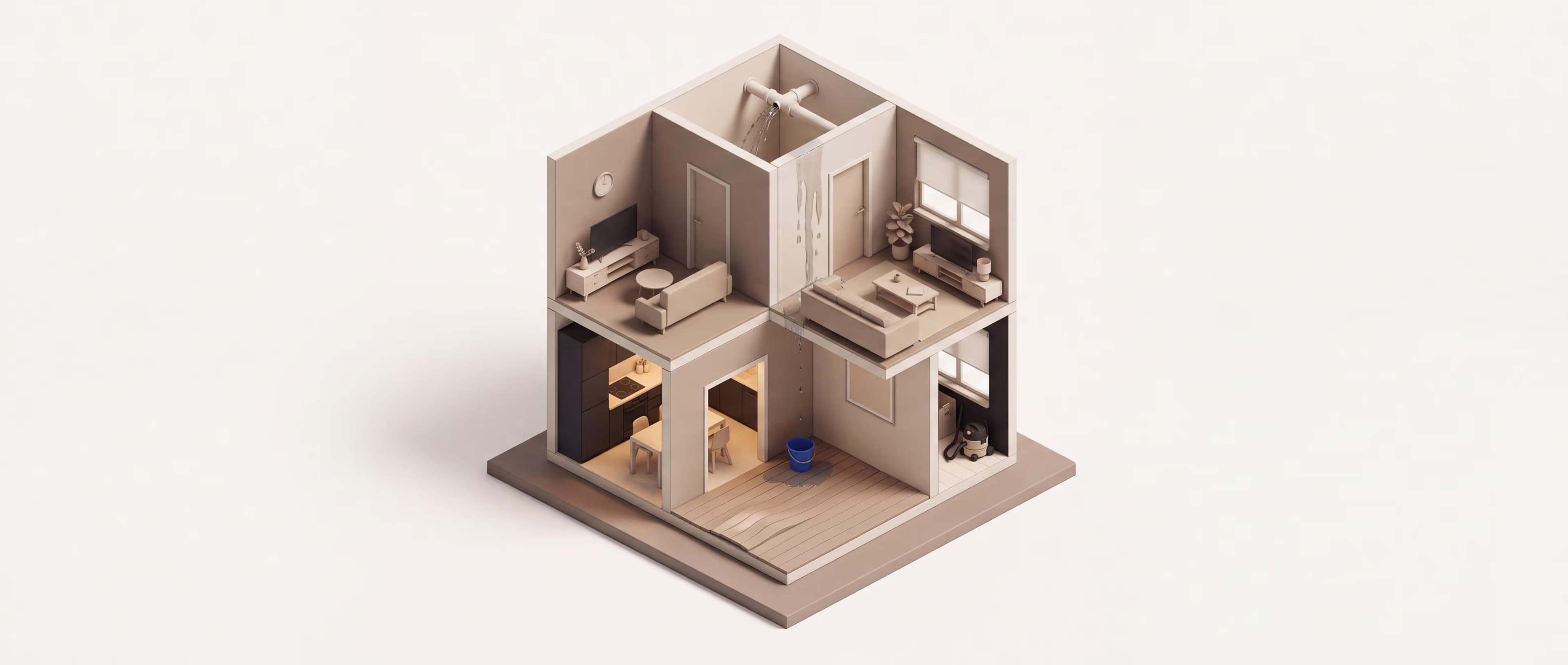
Whether HOA insurance covers water damage depends on the source and what it damaged. Who pays by source: the master policy, your HO-6, or you.
7 min read

Manage your risk with Coverwatch
Get a free coverage review and find out where you are over or under insured.
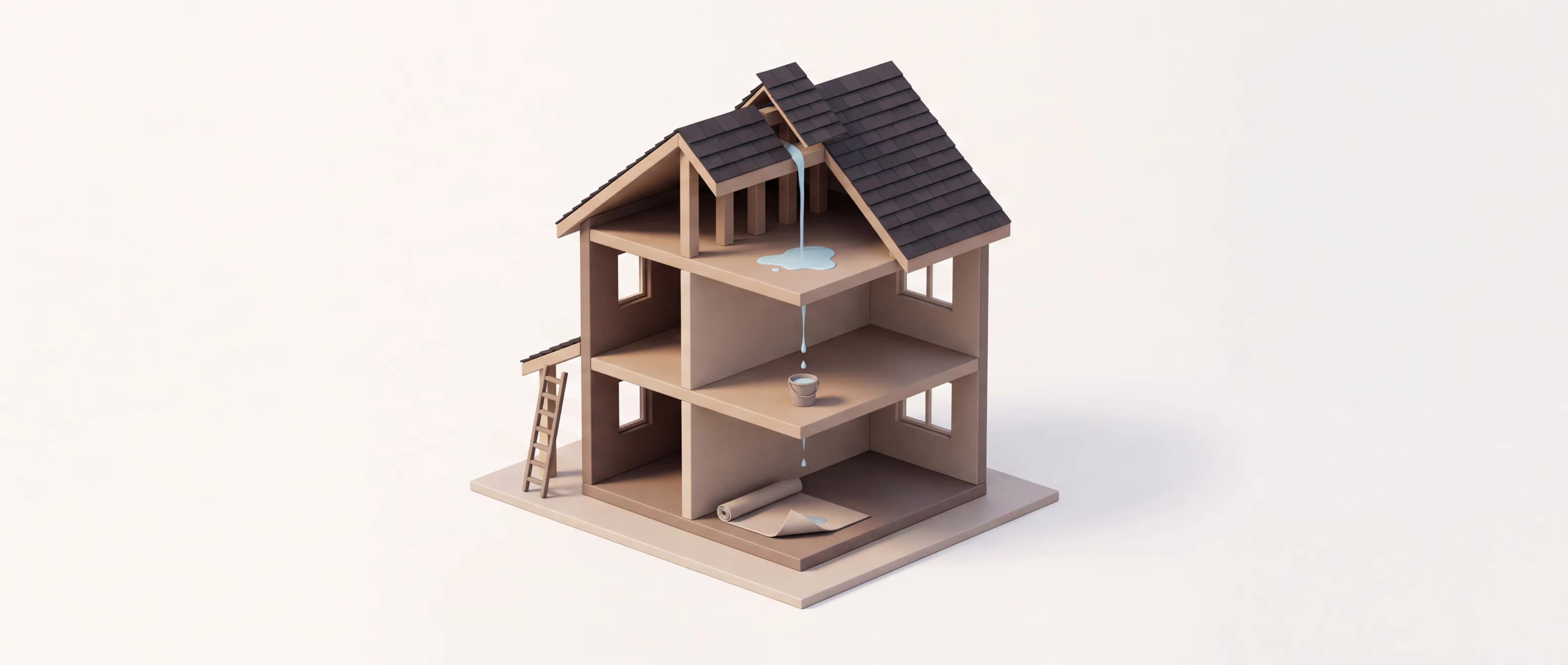
In an HOA roof leak who pays for the interior damage? It depends on the master policy type, and the answer catches many board members off guard. The HOA's master policy typically covers the roof structure and common elements, while the unit owner's HO-6 (condo insurance) policy covers interior finishes like drywall, flooring, cabinets, and personal property. Which policy pays comes down to three things: the master policy type, whether the damage was sudden or gradual, and what your CC&Rs (covenants, conditions, and restrictions) say about the dividing line.
For a condo roof leak who is responsible depends on two documents: the CC&Rs and the master insurance policy. The HOA maintains the roof because it's a common element (a legal concept defined in condominium law) under virtually every set of governing documents. Interior damage from that leak, however, typically falls on the unit owner's HO-6 policy. The exact split hinges on the association's master policy type and how the CC&Rs define the boundary between common elements and individual units.
In most condo and townhome associations, the roof, exterior walls, and structural framing are common elements maintained and insured by the association. Everything inside the unit, from drywall inward, belongs to the owner. The roof leak HOA vs homeowner question looks different for single-family-home HOAs. The homeowner usually owns and maintains the entire structure, including the roof, and the HOA's general liability coverage doesn't extend to individual homes.
The CC&Rs are the first place to check. They spell out where the association's maintenance obligation ends and the owner's begins. Common dividing lines: "studs in" means the owner gets everything from the wall studs inward. "Joists up" means the ceiling joists upward. "As-built" starts owner responsibility at original finishes. If you aren't sure which applies, your HOA insurance broker or association manager can walk you through the language.
HOA roof leak interior damage splits between two policies, and the master policy type determines where the line falls. A bare-walls master policy covers only the building shell, stopping at the unfinished interior surface. An all-in (inclusive) master policy extends coverage to original fixtures and finishes installed at construction. Your HO-6 fills the gap for everything the master policy leaves out, plus personal property and loss of use if the unit becomes uninhabitable.
Here's what "bare-walls" actually means in practice. If a roof leak soaks through to your ceiling, the master policy pays to fix the roof and the raw drywall surface. You pay for the paint, flooring, cabinets, and everything else inside. The HOA commercial property insurance (master policy) covers only what's listed below.
| Component | Bare-Walls Master | All-In (Inclusive) Master | Single-Entity Master |
|---|---|---|---|
| Roof structure | Covered | Covered | Covered |
| Exterior walls | Covered | Covered | Covered |
| Drywall (unfinished surface) | Covered | Covered | Covered |
| Paint and wall finishes | Not covered | Covered (original only) | Covered (original only) |
| Flooring (original) | Not covered | Covered | Covered |
| Cabinets and fixtures (original) | Not covered | Covered | Covered |
| Owner upgrades and improvements | Not covered | Not covered | Not covered |
| Personal property | Not covered | Not covered | Not covered |
Under an all-in policy, the master covers original finishes too, so the owner's HO-6 only picks up upgrades, improvements, and personal belongings. Does HOA cover roof leak damage completely? Not under any master policy type. Personal property and owner upgrades always fall to the HO-6. Under any HOA master policy roof damage to the building structure is covered, and depending on the type, some or all original interior finishes are too.
Most HOA boards don't check their master policy type until a claim hits. Verifying the type at renewal prevents the surprise of learning it at claim time, and it's the single most useful step a board can take.
No. Insurance policies cover sudden and accidental damage, not gradual deterioration. If the HOA neglected roof maintenance and a slow leak developed over months or years, neither the master policy nor the unit owner's HO-6 will cover the resulting interior damage. Insurers treat gradual damage as a maintenance issue, not an insurable event.
The distinction matters. A storm rips off shingles and rain pours through the gap into the unit below. That's sudden and accidental, and both the master policy (for the roof) and the HO-6 (for the interior) respond. Flashing that's been deteriorating for three years finally fails during a routine rain? That's gradual, and the adjuster will deny both claims. The Insurance Information Institute (III) notes that standard property policies exclude damage from lack of maintenance regardless of who was supposed to maintain the component.
Board members who defer maintenance also face personal risk. An HOA water damage coverage guide explains the broader framework. In short, unit owners can pursue the board for breach of fiduciary duty if negligent maintenance caused the damage and insurance denied the claim.
Filing a roof leak claim involves two parallel processes. One goes through the HOA's master policy for the roof structure, and the other through the unit owner's HO-6 for interior damage. The master-policy adjuster's report establishes the cause of loss, which the HO-6 carrier needs before it'll process the interior claim.
Photograph the leak source, water stains, damaged flooring, and any affected personal property, and note the date and time you first saw the damage. These written records with timestamps are the foundation of both claims. Without them, you're giving adjusters room to dispute the timeline.
Email the board or property manager with photos and a description. This triggers their obligation to file a master-policy claim for the roof repair. Save a copy of everything you send and any responses you get back.
Contact your personal condo insurance carrier and report the interior damage with the photos and HOA notification attached. The HO-6 carrier will typically wait for the master-policy adjuster's report confirming the cause before finalizing your claim.
Many CC&Rs allow the association to assess the master-policy deductible (the amount you pay out of pocket before insurance kicks in) back to the affected unit owner if the damage originated in or primarily affected their unit. Your governing documents spell out whether the HOA absorbs the full deductible or passes it to you, so don't assume either way without checking.
Don't wait for the HOA to act before documenting your own damage. Interior water damage worsens quickly, and delays can give your HO-6 carrier grounds to reduce the payout. A broker who has reviewed both your master policy and HO-6 can map the coverage boundaries before a claim forces you to figure it out under pressure.
It depends on the master policy type. A <strong>bare-walls</strong> master policy doesn't cover interior finishes. An <strong>all-in</strong> or <strong>single-entity</strong> policy covers original fixtures and finishes but not owner upgrades. In all cases, personal property and improvements require the unit owner's HO-6 policy.
It varies by CC&Rs. Many associations assess the master-policy deductible to the unit owner whose unit was damaged or where the damage originated. Some associations spread the deductible across all owners through a special assessment. Check your governing documents for the specific allocation rule.
Yes, if the HOA failed to maintain the roof and that negligence caused the damage. Courts treat this as a potential breach of fiduciary duty. However, insurance claims should be filed first, and most CC&Rs require mediation or arbitration before litigation.
No. Standard flood policies, including <strong>NFIP</strong> and <strong>RCBAP</strong> (Residential Condominium Building Association Policy), cover rising water from external sources like overflowing rivers or storm surge. A roof leak isn't a flood event and falls under property insurance, not flood insurance.
August 20, 2026
ExplainersWhether HOA insurance covers water damage depends on the source and what it damaged. Who pays by source: the master policy, your HO-6, or you.
7 min read

September 11, 2026
ExplainersHOA tree fell on my car who pays? Your auto comprehensive coverage handles the repair. The HOA is liable only if negligence is proven. Full payer breakdown.
7 min read

September 10, 2026
ExplainersHOA dog bite liability depends on whether the board had notice and failed to act. See which policy pays and how to limit your association's exposure.
7 min read
September 11, 2026
ExplainersIf your association employs even one W-2 worker, D&O alone leaves employment claims uncovered. Learn when EPLI is needed and how it fills the gap.
7 min read
Fill out the form and a Coverwatch advisor will get back to you within the next hour.
Your quote