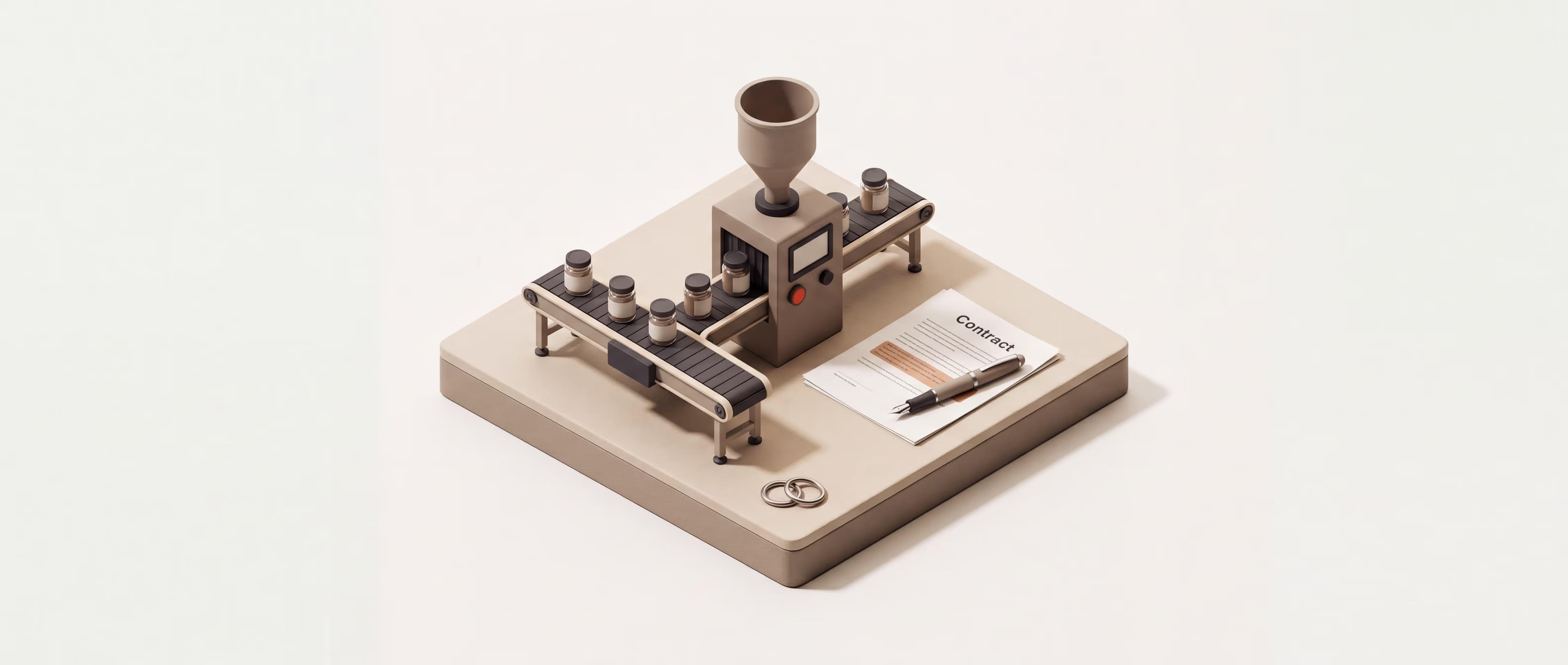
A food co-packer's insurance clause makes you, the brand, carry commercial general liability including product liability and name the co-packer as an additional insured on that policy. The same co-packer additional insured requirements add primary and non-contributory wording plus a waiver of subrogation, and the co-packer usually wants the same protection in reverse. This guide decodes each line of the clause before you sign.
Most founders sign the co-manufacturing agreement, forward the insurance page to their broker, and assume a certificate settles it. A certificate only reports that coverage exists. The endorsement on your policy is what actually creates it. Get the two-way wording wrong and a finished shipment can sit at the co-packer's dock until compliance clears.
Key Takeaways
Co-packer additional insured requirements run both ways: the brand names the co-packer on its product liability policy, and the brand should require the co-packer to return the favor.
The additional insured endorsement must include products-completed operations, so a food brand needs the ISO CG 20 15 vendors form, not the ongoing-operations-only CG 20 10.
A certificate of insurance confers no coverage rights; only the endorsement on the policy adds the co-packer, per the standard ACORD 25 disclaimer.
In Coverwatch reviews of co-packing files, the most common gap is a certificate listing the co-packer as additional insured with no matching endorsement on the policy.
What does a co-packer's insurance clause require?
A co-packing agreement's insurance clause sets the coverage you must carry, the limits, and the wording that names the co-packer on your policy. A typical clause asks for commercial general liability including product liability, names the co-packer as an additional insured, and adds primary and non-contributory coverage with a waiver of subrogation, all evidenced by a certificate.
It usually lands as one dense paragraph in the co-manufacturing agreement, and it reads a lot like what a big retailer demands. The clause typically lists the lines you carry and the minimum limits. It then adds additional insured status including products-completed operations, a waiver of subrogation, primary and non-contributory wording, and a 30-day notice-of-cancellation ask. Many co-packers mirror the terms a grocery buyer uses, so the mechanics overlap with retail additional-insured endorsements.
Who names whom as additional insured?
In a co-packing deal, the co-packer requires the brand to name the co-packer as an additional insured, and the brand should require the co-packer to name the brand in return. Each side is protecting against a claim the other side can cause. An additional insured, per IRMI, is a party added to a policy at the request of the named insured.
The brand owns the finished product, so if a customer sues over it, the co-packer tenders that claim to the brand's product liability policy. The co-packer runs the plant. A contamination or mislabeling error on their line is a claim the brand wants to push back to the co-packer's coverage. Under the FDA's FSMA preventive controls rule, a co-manufacturer is a receiving facility with its own supplier-verification duties, so responsibility for a hazard sits on both sides.
Skipping the return demand is the mistake most brands make. If you only name the co-packer and never require them to name you, a recall traced to their process leaves you leaning on an indemnity promise instead of their insurer's dollars. A brand fighting a co-packer-traced contamination recall wants real coverage rights on the co-packer's policy, not a paragraph in a contract. Supplement brands hit the same two-way setup, covered in contract-manufacturer liability for supplement brands.
CG 20 15 or CG 20 10: which endorsement does a co-packer need?
For a food brand naming a co-packer, the right endorsement is usually the ISO CG 20 15 vendors form, because it extends your product liability coverage to the co-packer for claims arising out of your products. A contractor-style CG 20 10 covers only ongoing operations. That leaves the after-the-sale product injury uncovered, which is the wrong form for a product brand.
The claim a co-packer worries about happens after your food ships, once a customer has the finished jar or bar and it makes someone sick. That window is products-completed operations, which IRMI defines as liability arising out of your products once they are away from your premises. The CG 20 15 vendors endorsement reaches exactly that. A CG 20 10 does not, because it ends when active operations end, so an injury weeks later falls outside the policy.
A co-packing agreement can name the exact ISO form by number, or it can just say "additional insured including products-completed operations" and leave the form to you. Read the clause first, since the wording tells you which form satisfies it. The two forms compare like this for a food brand adding a co-packer.
Form
What it covers
Right for a food brand naming a co-packer?
CG 20 15
The co-packer, for claims arising out of your products (reaches products-completed operations)
Yes. The standard vendors form for a product brand.
CG 20 10
Your ongoing operations only; coverage ends when those operations end
No. Leaves the finished-product injury tail uncovered.
What do primary, noncontributory, and waiver of subrogation mean?
Primary and non-contributory sets the order in which two policies respond. A waiver of subrogation stops your insurer from chasing the co-packer after a payout. Co-packing agreements almost always ask for both, bundled into the same paragraph as the additional insured demand, and each rides on its own endorsement.
Primary and non-contributory, as IRMI describes it, means your policy pays first and your insurer won't ask the co-packer's insurer to split the bill. It has nothing to do with dividing blame, only with which coverage answers first. A waiver of subrogation means your insurer gives up its right to recover from the co-packer after paying a claim. So your carrier can't turn around and sue the co-packer for a loss the contract already assigned to you.
Both matter to the co-packer. It wants your coverage in front of its own, and no surprise contribution fight afterward. (Brands routinely satisfy the additional insured line and forget these two, then fail compliance on a technicality.) Confirm each rides on its own endorsement, not just the certificate.
What limits does a co-packer require from a food brand?
Most co-packers require at least $1 million per occurrence and $2 million aggregate in general liability including product liability. Many also want a matching $2 million products-completed operations aggregate. Larger co-manufacturers, especially for retail-exclusive runs, frequently add a $5 million umbrella on top. The co-packer sets the number, and it can vary widely by plant.
That structure looks a lot like what a grocery buyer asks for, since your co-packer often produces the very product that buyer has to approve. Take a shelf-stable sauce brand. One co-packer might accept a $1M/$2M primary, while a larger co-packer for the brand's retail-exclusive line demands a $5M umbrella on top for the identical product. Copy the required limits from the agreement rather than assuming your current policy clears the bar.
Co-packer profile
Typical required limits
Smaller or regional co-packer
$1M per occurrence / $2M aggregate, including product liability
Large co-manufacturer or retail-exclusive line
$5M or more, usually a $5M umbrella over a $1M-$2M primary
What to check before you sign a co-packing agreement
Before you sign, read the insurance clause line by line and confirm your policy can satisfy each requirement, both the wording and the limits. The clause names the exact coverage, form, limits, and extras you have to furnish, and a certificate can't paper over an endorsement you never bought. Work straight from the contract language itself.
Here is the checklist that keeps a co-packer's compliance team from holding your production run:
Confirm your general liability policy already includes product liability (products-completed operations), the coverage that responds after your food ships.
Match the required limits exactly, copying the numbers from the agreement instead of guessing your current limits are enough.
Ask your broker for the CG 20 15 vendors endorsement naming the co-packer's exact legal entity, since automated portals reject names that do not match character for character.
Add primary and non-contributory wording and a waiver of subrogation, confirming each is a separate endorsement on the policy.
Require the co-packer to name your brand as additional insured in return, so a plant-side error tenders to their coverage.
Get the certificate (the ACORD 25 form) showing the co-packer as certificate holder and the endorsements in place, then re-confirm at every renewal.
The certificate itself is the step brands lean on too hard. The standard ACORD 25 certificate says in its own disclaimer that it confers no rights on the holder and that additional insured status requires a policy endorsement. A clean-looking certificate with no matching endorsement leaves you in breach, and the co-packer can refuse to release your goods. The same logic runs through your fulfillment side, in the insurance clauses in a fulfillment contract and the broader manufacturer and supplier insurance checklist.
How to get the co-packer insurance clause right
Getting co-packer additional insured requirements right is a reading job before it is a buying job. Someone has to actually read the co-manufacturing agreement's insurance clause. Match each line to an endorsement, confirm the wording sits on the policy and not just the certificate, and set up the naming both ways. A flat-fee broker has no commission incentive to push limits you don't need, so the review stays honest.
Coverwatch reads the co-packing agreement's insurance clause, issues the matching CG 20 15 additional insured endorsement and waiver, confirms the limits, and coordinates the two-way naming. That is part of food and beverage insurance for scaling brands. If you are also negotiating what a grocery buyer wants on the shelf, the same file covers what Whole Foods requires from vendors. It all traces back to ecommerce insurance built around your actual contracts.
For a full comparison of coverage options, see our CPG insurance page.
Almost always, yes. A co-manufacturing agreement's insurance clause typically requires the brand to name the co-packer as an additional insured on its product liability policy, including products-completed operations. You should also require the co-packer to name your brand in return, so a manufacturing or contamination error on their line tenders to their coverage rather than yours.
For a food brand adding a co-packer, the CG 20 15 vendors endorsement is usually correct. It extends your product liability coverage to the co-packer for claims arising out of your products, reaching the products-completed operations tail. A CG 20 10 covers only ongoing operations and ends when those operations end, leaving after-the-sale injury uncovered. Always confirm the exact wording the contract names.
No. The standard ACORD 25 certificate states in its own disclaimer that it confers no rights on the holder and that additional insured status requires a policy endorsement. The certificate only reports that coverage exists. The endorsement on your general liability policy is what actually adds the co-packer, so confirm the endorsement is on the policy, not just typed onto the certificate.
Most co-packers require at least $1 million per occurrence and $2 million aggregate in general liability including product liability, often with a matching $2 million products-completed operations aggregate. Larger co-manufacturers, especially for retail-exclusive lines, frequently add a $5 million umbrella. Copy the exact limits from the agreement rather than assuming your current policy meets them.
Primary and non-contributory sets the order in which policies respond. Per IRMI, it means your policy pays first and your insurer will not seek contribution from the co-packer's insurer for the same loss, rather than dividing blame between them. It usually rides on a separate endorsement, bundled with the additional insured and waiver of subrogation demands in the same clause.