
November 24, 2026
How-ToRestaurant Workers' Comp Audits: Payroll, Tips and Overtime
Reconcile restaurant payroll, tips, overtime and outside labor before a workers comp audit, and check an unexpected bill against the records.
6 min read

Manage your risk with Coverwatch
Get a free coverage review and find out where you are over or under insured.
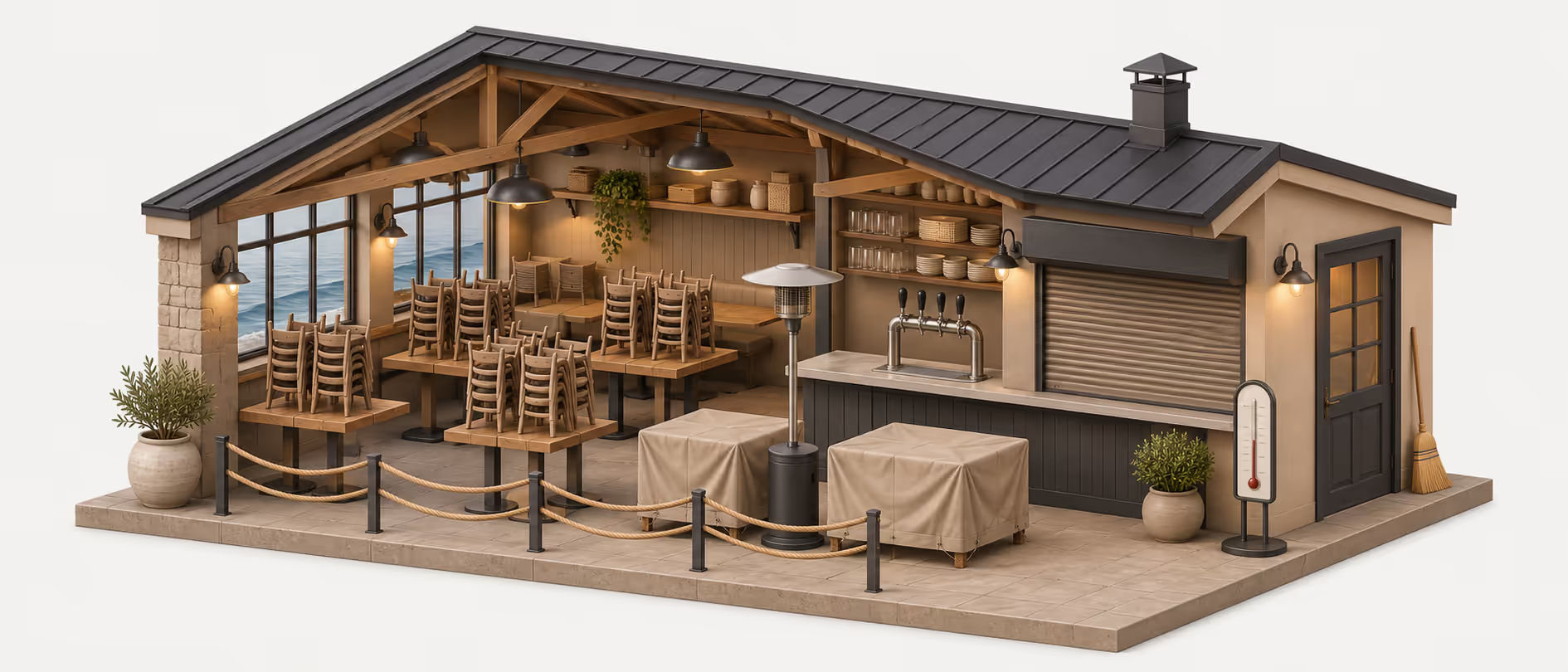
Restaurant seasonal closure insurance should be reviewed before the last service. Closing for winter can change property conditions, payroll and the work still happening on site. Equipment left in the kitchen does not automatically prevent a vacancy restriction, and a planned off-season is not itself an insured business-income loss.
Give your restaurant insurance broker three dates: the last trading day, the start of reduced occupancy and the first day of reopening work. Add what will stay in the building, which systems will remain running and who will visit during the break.
Restaurant seasonal closure insurance should reflect the property and activities that remain while service stops. Review the building or tenant contents, premises liability, continuing employees and any vehicles or equipment still in use. Reduced trading does not remove every exposure or contractual insurance obligation.
Start with the restaurant property policy. Confirm how the insurer expects the premises to be maintained and whether the seasonal operating pattern was disclosed. Read the lease, loan and equipment agreements before reducing coverage, since their requirements may continue through the off-season.
List the work that will continue: inventory checks, cleaning, repairs, deliveries and bookkeeping visits. Include outside contractors and the staff who open the building for them. A restaurant that hosts occasional private functions during its “closure” has a different plan from one with no customer visits.
Ask the broker to record the proposed arrangement in writing. Keep the insurer's response with the shutdown checklist and any policy changes.
A restaurant closure must be tested against the actual policy's vacancy wording. Some forms distinguish the tenant's rented space from the owner's entire building and examine whether customary operations can be conducted. Other forms may address unoccupancy differently. Leaving tables and ovens behind is not a universal exception.
IRMI's analysis of commercial-property vacancy explains why ordinary language can mislead. Its discussion of a sample ISO form shows that vacancy depends on defined conditions and can restrict coverage after a specified period. Your form, endorsements and facts govern.
Tell the broker what inventory, equipment and utilities will remain, and whether normal operations could resume without substantial preparation. Ask when any relevant period begins and which causes of loss would be restricted.
If changes are needed, confirm what an endorsement actually does. A permission to remain vacant may preserve only specified protection or dates. Save the issued wording; a casual assurance that the building is “still furnished” is not a coverage analysis.
A closed restaurant needs a named person responsible for building protection. Review heating, water, alarms, sprinklers and refrigeration with qualified service providers and the insurer. Follow policy conditions and equipment instructions; turning systems off to save money can create damage risks or affect coverage.
The Insurance Institute for Business & Home Safety's winter-weather bulletin discusses commercial-building exposures including freezing pipes, roof loads and related maintenance. Use site-specific advice rather than assuming a single winterization step fits every restaurant.
| System or area | Shutdown question | Record to retain |
|---|---|---|
| Heat and water | What protection does the building require during cold weather? | Service instructions and inspection log |
| Alarm and monitoring | Who receives an alert and can enter the premises? | Current contacts and test record |
| Fire protection | What maintenance and notification conditions continue? | Contractor reports and insurer instructions |
| Refrigeration and stock | What remains powered and who checks it? | Inventory, temperatures and response plan |
Arrange a backup contact. An alarm routed only to an owner traveling overseas can leave a practical gap even when the monitoring subscription remains paid.
Business-income insurance generally needs a covered event and a supported financial loss. A restaurant choosing to close for the season has no automatic claim for the sales it planned not to make. Damage during the break may raise separate property and delayed-reopening questions under the policy.
The NAIC explains the usual physical-damage trigger for traditional business-interruption coverage. The covered cause, restoration period, limits and restaurant's actual trading pattern all need examination.
Hypothetical example: a restaurant plans to reopen March 1. A covered fire in February prevents that opening. Keep the original reopening plan, bookings, staffing arrangements and prior trading records so the insurer can evaluate any eligible loss after the planned start.
The restaurant kitchen-fire guide explains the repair and income issues in more depth. Don't replace the original schedule with a new one that makes the closed months appear to have been planned trading months.
Seasonal closure staffing should be described accurately to the workers compensation insurer. Some employees may still clean, inspect, repair or prepare for reopening. Payroll estimates can change, but reducing a forecast is different from assuming no work remains or canceling coverage without reviewing the consequences.
Record who will visit, their duties and the entity employing them. Include owners and temporary crews in the discussion so the broker can check the applicable rules and any elections already in place.
Contractor work also deserves a review. A planned floor replacement or kitchen alteration can create obligations under the lease and the construction contract. Check the contractor's insurance and your own protection before work begins; a seasonal pause doesn't automatically insure renovation activity.
Keep payroll and contractor records after closing. If the insurer later audits payroll to calculate the final premium, the accountant should be able to distinguish ordinary seasonal payroll reductions from payments for shutdown and restart work.
Restaurant reopening needs another coverage check when equipment, staffing or service plans have changed. Confirm the date any restricted or reduced protection ends and the full operating arrangements resume. Do this before deliveries, staff training and test service, since those activities can precede the public opening.
The restaurant spoilage guide is useful when restocking cold storage. A successful equipment test does not answer the insurance question for a later breakdown or utility failure.
Coverwatch can compare the shutdown and reopening plans with the existing policy conditions. Bring the three dates and the actual maintenance arrangements. Assign someone to verify those arrangements before the last key is handed over for the season.
Review the property, remaining work and contractual requirements before making that decision. A closed business can still have premises, equipment and employee exposures, and later claims may raise continuity questions under particular policies.
That depends on the actual policy definition and circumstances. Retaining fixtures does not always prevent a vacancy restriction. Tell the broker what inventory, equipment and operations remain and request a policy-specific answer.
A planned seasonal closure alone is not an insured loss. A covered event that affects an intended reopening needs a separate analysis of the trigger, restoration period and documented financial impact.
No universal inspection frequency applies to every policy or building. Ask what the policy, insurer and service providers require for this property, then document the agreed responsibilities and actual visits.
November 24, 2026
How-ToReconcile restaurant payroll, tips, overtime and outside labor before a workers comp audit, and check an unexpected bill against the records.
6 min read

November 26, 2026
ChecklistsReview nightclub bottle service insurance for VIP tables, server handoffs and liquor liability before adding a new package to your menu.
6 min read
November 25, 2026
ChecklistsReview property manager snow and ice liability, contractor duties, insurance endorsements and incident records before winter slip-and-fall claims.
6 min read
November 23, 2026
ExplainersReview hotel cyber insurance for reservation outages, ransomware, accidental failures, vendor dependencies, and the records needed for lost income.
5 min read
Fill out the form and a Coverwatch advisor will get back to you within the next hour.
Your quote