Coverwatch
Resilient Communities
  • Ecommerce
  • Home Owner's Associations
  • Property Management
  • Restaurant
  • Grocery Store
  • Contractor
  • Technology
  • Retail Store
  • Alcoholic Beverage
  • Beauty & Cosmetics
  • Clothing Store
  • CPG
  • Food & Beverage
  • Pet Business
  • Supplement
See all industries
  • Builder’s Risk
  • Business Interruption
  • Business Owners Policy
  • Cargo & Transit
  • Commercial Auto
  • Commercial Property
  • Commercial Umbrella
  • Crime & Fidelity
  • Cyber Liability
  • Directors & Officers
  • Earthquake
  • Employment Practices Liability
  • Equipment Breakdown
  • General Liability
  • Hired & Non-Owned Auto
  • Inland Marine
  • Liquor Liability
  • Pollution Liability
  • Product Liability
  • Product Recall
  • Professional Liability
  • Surety Bonds
  • Workers Compensation
See all coverages
(415) 738-7727Log inGet a Quote
Get Quote
NewsWe raised $4.5MWe raised $4.5M to rebuild commercial insurance brokerageRead the announcement
Blog/Property Management/Snow and Ice Claims: An Insurance Checklist for Property Managers

Snow and Ice Claims: An Insurance Checklist for Property Managers

Coverwatch Team
Coverwatch Team•Published November 25, 2026•6 min read
Snow and Ice Claims: An Insurance Checklist for Property Managers

Table of Contents

Property manager snow and ice liability begins with assigned dutiesMatch the winter service contract to the site mapCheck the contractor’s policy beyond its certificatePreserve evidence when someone fallsFollow refreezing and indoor water after the plow leavesTest the winter plan against your insurance renewal

Get started

Receive your free coverage analysis in minutes from our team

Talk to our team

Author

Coverwatch Team

Coverwatch Team

Share

Manage your risk with Coverwatch

Get a free coverage review and find out where you are over or under insured.

Get a free coverage review

Property manager snow and ice liability can continue after a snow contractor has finished plowing. A fall may raise questions about untreated sidewalks, refreezing, lighting or who was supposed to inspect the entrance. Review those duties alongside the manager's and contractor's insurance before winter service begins.

A contract saying “snow removal included” leaves plenty unanswered. Put the site map, service instructions and insurance documents on the same desk. The spaces between those documents are often where an operational problem becomes a coverage dispute.

Key Takeaways

  • Property manager snow and ice liability can involve inspection, refreezing and entrance duties after the contractor finishes plowing.
  • A winter service contract should assign sidewalks, treatment, return visits and after-hours authority to specific responsible parties.
  • Contractor certificates do not establish every coverage term; review operations, exclusions and required additional-insured endorsements.
  • Preserve incident photographs, treatment logs, weather observations and communications while conditions are still changing.

Property manager snow and ice liability begins with assigned duties

Property manager snow and ice liability depends on the facts, contracts and applicable law. Identify who controls each walking area and what the manager agreed to do. Review general liability insurance for potential bodily injury claims, without assuming that a fall automatically establishes liability or coverage.

Travelers identifies slips and falls as examples of incidents that can lead to a general liability claim. The actual response depends on the policy and allegations. An owner, manager and contractor may all be named in the same demand, with different duties attributed to each.

Separate tenant and visitor injuries from injuries to employees doing winter work. Also check how the management agreement divides inspection, contractor supervision and emergency authority. State and local rules may impose obligations beyond the contract. Have counsel confirm those obligations for the property rather than copying a snow policy from another city.

Match the winter service contract to the site map

A winter service agreement should identify the areas covered and the events that require a return visit. A plowed driving lane does not tell you whether the sidewalk, accessible route or rear stair was treated. Use a marked plan that both the manager and contractor understand.

Site detailResponsibility to resolve
Parking lot and sidewalksWhich areas are plowed, shoveled and treated, and by whom?
Meltwater and refreezingWho monitors conditions and authorizes another visit?
Building entrancesWho handles mats, tracked-in water and blocked doors?
Overnight or weekend conditionsWho receives reports and can approve urgent work?

Hanover's winter guidance recommends clear contract responsibilities and attention to refreezing, drainage and entrances. Agree on workable service triggers for the property. Avoid describing one snow-depth threshold as a universal legal standard. A busy apartment entrance may need attention before the parking lot meets a contractual plowing trigger.

Check the contractor’s policy beyond its certificate

The contractor's certificate summarizes insurance; it does not resolve every snow-and-ice claim question. Ask for the evidence needed to verify the contracted operations, policy dates and any required additional-insured status. That status means protection under another party's policy, but only within the actual endorsement's terms.

Check whether snow and ice operations are included and whether exclusions or limitations conflict with the contract. Confirm the entity doing the work matches the insured business. If the contractor subcontracts sidewalk treatment, ask who is responsible for that crew and what insurance evidence is available.

The vendor insurance-certificate checklist explains the general document review. For winter service, add the route map and scope. Separately review the manager's position under the owner's policy using the landlord additional-insured guide.

An indemnity clause, which assigns responsibility for certain claims, also needs legal review. Its existence does not guarantee the contractor's insurer will fund every obligation it creates.

Preserve evidence when someone falls

A snow-and-ice incident file should show the conditions at the reported location and the work performed before the fall. Provide appropriate help first, address ongoing hazards safely and notify the relevant parties. Preserve original records while the weather and site conditions are still changing.

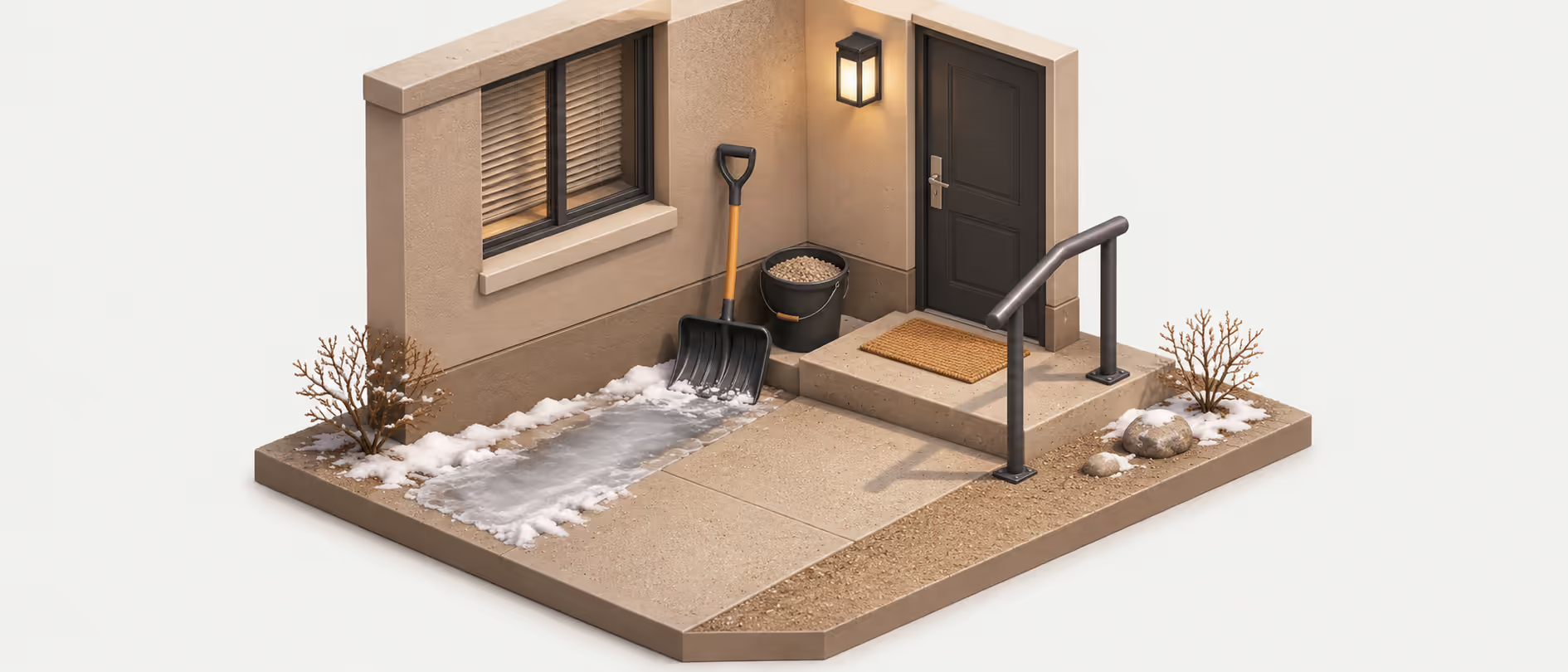
Consider a hypothetical morning fall beside an apartment entrance. The contractor plowed overnight, but daytime meltwater crossed the walkway and later refroze. The overnight invoice alone cannot explain the later inspection or treatment. Record the actual sequence without deciding responsibility in the incident report.

  • Record the exact location, time and reported circumstances.
  • Preserve available photographs, video and witness details.
  • Keep treatment logs, dispatch records and contractor messages.
  • Record relevant weather information and observed surface conditions.
  • Save the contract and all subsequent demands or legal papers.

Travelers' prevention guidance emphasizes written plans and incident documentation. Submit the facts promptly through the insurer's reporting process. A contractor's assurance that it will handle the matter does not replace notice under your own policy.

Follow refreezing and indoor water after the plow leaves

A winter inspection plan should continue after the first clearing visit. Assign checks for recurring ice, drainage problems, worn entry mats and water tracked indoors. Keep the plan realistic for how the property operates, including early departures, evening arrivals and periods when office staff are absent.

Review where snow is piled and where meltwater travels. Include emergency exits and routes used by delivery workers, residents and visitors. If the contractor's scope ends at the curb, someone still needs responsibility for the entrance steps. Mark that boundary on the site plan and confirm the handoff in writing.

Use logs that record actual observations and action taken. A recurring calendar reminder is not proof that an inspection happened. Avoid filling gaps from memory as if the record were made at the time.

Note late entries clearly, and address repeated problems in the service plan. If a downspout keeps creating ice, repeated salting may leave the underlying repair issue unresolved.

Test the winter plan against your insurance renewal

A winter insurance review works best with the service agreement, current property list and a sample inspection record. Ask the broker to compare those duties with the management company's operations and exclusions. Include any buildings added since the last renewal and changes to in-house maintenance responsibilities.

Review claim limits and defense terms using a realistic scenario, including the possibility that the owner and manager need separate representation. Ask how an umbrella policy follows the underlying liability coverage. Keep unanswered questions on a short action list with a person responsible for resolving each one.

Coverwatch can compare winter-related exposures within your property management insurance program. Before the first forecast that requires action, walk the site with the service plan in hand. Make sure every entrance, stair and return inspection has a named responsible party and a usable contact number.


Frequently asked questions

No automatic transfer follows from hiring a contractor. Responsibility depends on the facts, contract, control of the area and applicable law. The manager may still face allegations about inspections, supervision or unresolved hazards. Review the assigned duties and insurance together rather than relying on the service invoice.

That depends on the agreed service scope and applicable obligations. A contractual plowing threshold should not be presented as a universal legal standard. Resolve sidewalks, ice treatment, refreezing and emergency calls separately, and have counsel confirm the property’s local requirements when drafting the winter plan.

The certificate is a starting point. Verify the insured entity, policy dates, snow-and-ice operations and any required additional-insured endorsement. Ask about relevant exclusions and subcontracted work. Keep the actual service scope with the insurance evidence so the review reflects what the contractor is hired to do.

Record the location, time, reported circumstances and observed conditions. Preserve available photos, video, witness details, treatment logs, contractor messages and the contract. Provide appropriate help and address continuing hazards safely. Follow the relevant policies’ reporting requirements without waiting for a lawsuit or a contractor’s coverage decision.

More blogs

Tenant-Caused Damage Insurance: A Property Manager’s Guide

November 19, 2026

Explainers

Tenant-Caused Damage Insurance: A Property Manager’s Guide

Check tenant-caused damage insurance across the owner’s property policy, renters liability and the manager’s coverage, with a practical loss worksheet.

6 min read

Property Management Portfolio Acquisition Insurance: E&O Checks

November 18, 2026

Explainers

Property Management Portfolio Acquisition Insurance: E&O Checks

Review property management portfolio acquisition insurance for prior acts, claims reporting, seller tail coverage and services after closing.

6 min read

Solo Property Manager Insurance: What Changes With No Employees?

November 17, 2026

Checklists

Solo Property Manager Insurance: What Changes With No Employees?

Build a solo property manager insurance checklist around your contracts, home office, client money and driving, even when you have no employees.

6 min read

A Fake Owner Email Diverted Rent: Property Manager Wire Fraud Insurance

November 16, 2026

Explainers

A Fake Owner Email Diverted Rent: Property Manager Wire Fraud Insurance

Review property manager wire fraud insurance for fake owner emails, changed bank details and stolen client funds, with an immediate response checklist.

6 min read

Ready for better coverage?

Fill out the form and a Coverwatch advisor will get back to you within the next hour.

(415) 738-7727Or book a call instead

Your quote

Get your free quote

Email or phone is required, so add at least one and we can send your quote.

We'll tailor the coverage options and questions below to your industry.

A licensed advisor reviews every request, usually a reply within the next hour.

This site is protected by reCAPTCHA.

Coverwatch

Commercial insurance, built for modern businesses.

Company

  • Blog
  • Press
  • Partnerships
  • Careers

Contact

  • Get a Quote
  • (415) 738-7727
  • ops@coverwatch.com

Industries

See all industries
  • Contractor Insurance
  • Ecommerce Insurance
  • Grocery Store Insurance
  • HOA Insurance
  • Property Management Insurance
  • Restaurant Insurance
  • Retail Store Insurance
  • Technology Insurance

Coverage

See all coverages
  • Builder’s Risk
  • Business Interruption
  • Business Owners Policy
  • Cargo & Transit
  • Commercial Auto
  • Commercial Property
  • Commercial Umbrella
  • Crime & Fidelity
  • Cyber Liability
  • Directors & Officers
  • Earthquake
  • Employment Practices Liability
  • Equipment Breakdown
  • General Liability
  • Hired & Non-Owned Auto
  • Inland Marine
  • Liquor Liability
  • Pollution Liability
  • Product Liability
  • Product Recall
  • Professional Liability
  • Surety Bonds
  • Workers Compensation

Coverwatch is an insurance brokerage and risk management platform. We are not a law firm and do not provide legal services. Coverwatch Insurance Services LLC (NPN# 22166415) is licensed to sell insurance products. See our licenses for a full list.

All insurance products are subject to the terms, conditions, limitations, and exclusions set forth in the applicable insurance policy. Coverage is not bound or guaranteed until confirmed in writing by the insurer. Please refer to the policy documents for full details.

Privacy PolicyTerms of ServiceLicenses