There are three condo master policy types: bare walls, single entity, and all-in. They differ by one thing, how far the association's coverage reaches into your finished unit, and that reach decides what your own HO-6 has to cover. Your community's type is written in the association's recorded declaration, not on the insurance certificate.
This guide defines each of the three structures, shows the HO-6 gap each one leaves behind, and walks through how to confirm which one your community carries. The distinction that trips up the most owners is between single entity and all-in, so that gets its own section. For how a lapse or rebind of the master policy plays out, our breakdown of an HOA master-policy lapse covers that separately.
Key Takeaways
Condo master policies come in three types: bare walls, single entity, and all-in. Each draws a different line for what your HO-6 has to cover.
Bare walls stops at the unfinished structure, so the unit owner insures every interior finish, fixture, and improvement, per insurance reference IRMI.
Your community's master policy type is set by the recorded declaration, not the insurance certificate. Read the declaration or ask the manager to confirm.
Coverwatch master-policy reviews find the most common HO-6 gap is owners assuming an all-in master policy when the declaration actually specifies single entity.
What's the difference between bare walls, single entity, and all-in?
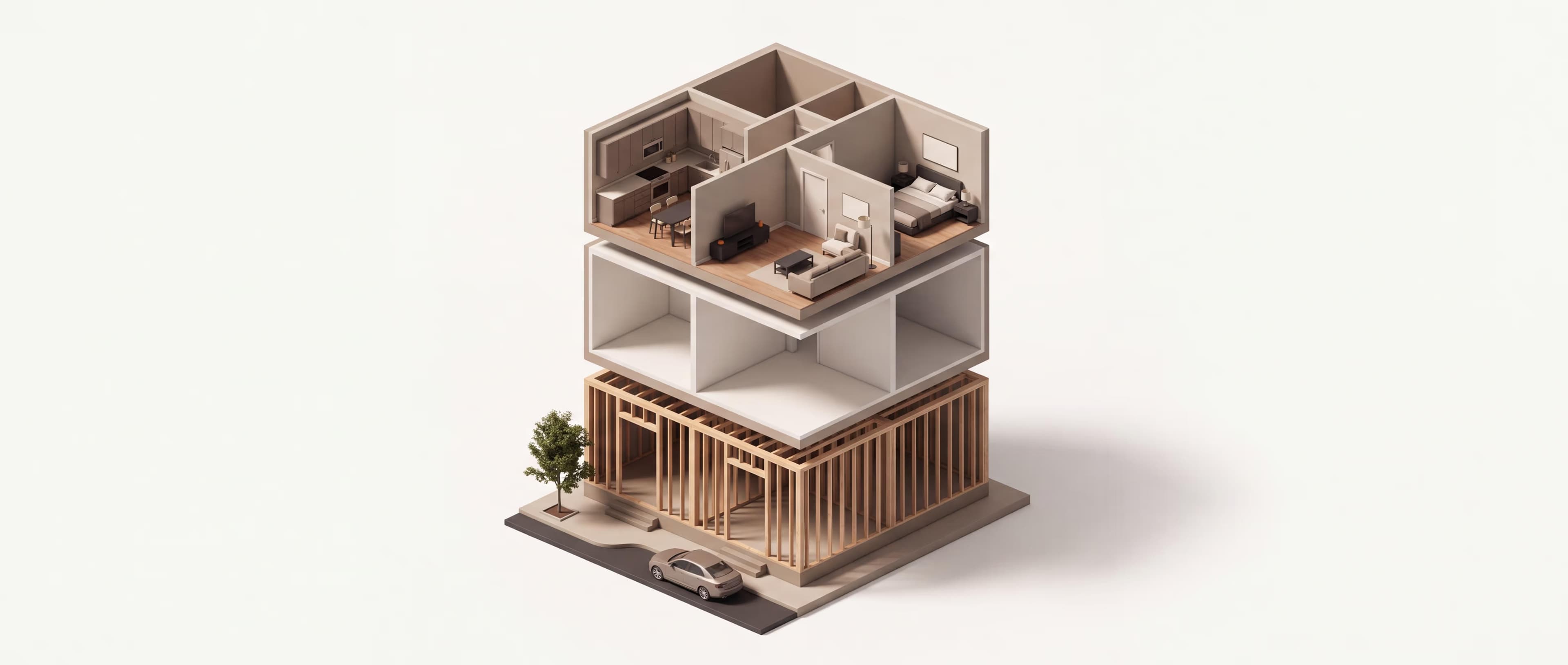
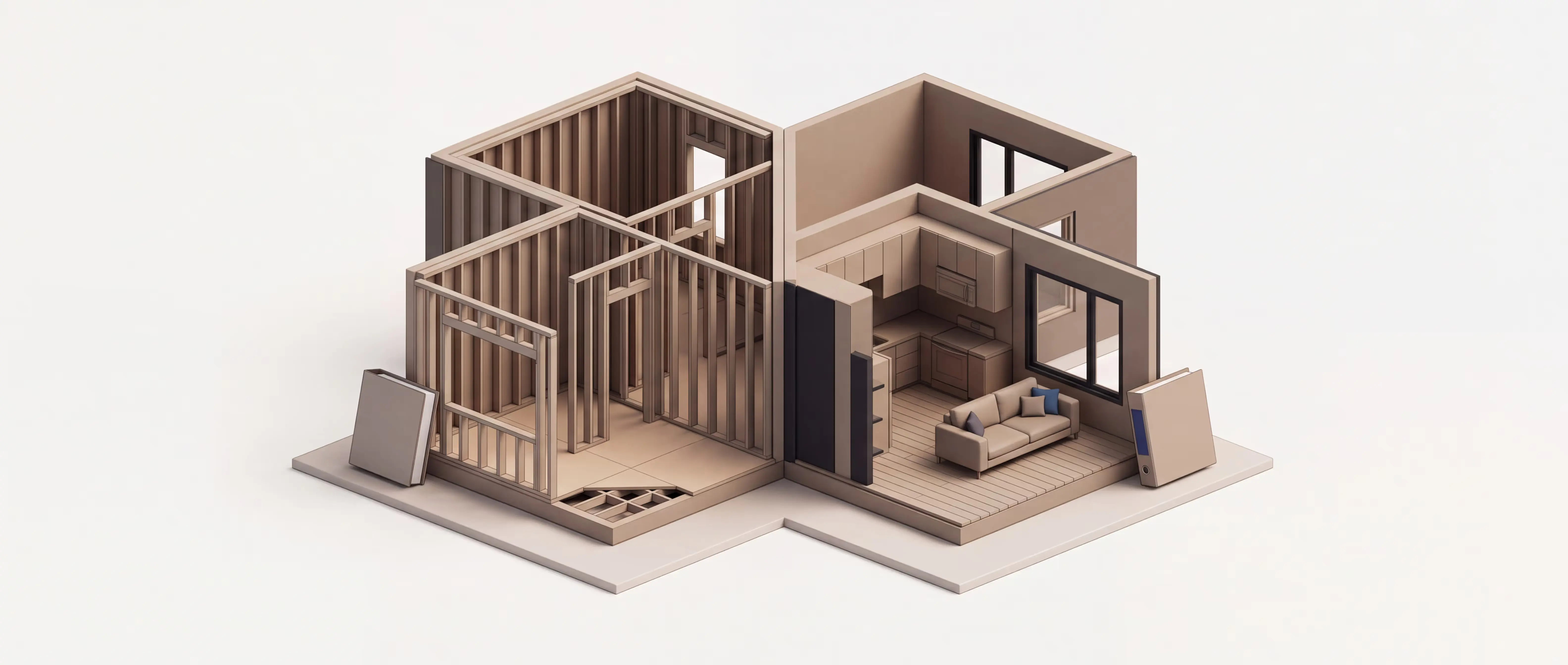
The three condo master policy types are bare walls, single entity, and all-in, and they line up on a spectrum of how deep into the unit the association insures. Bare walls stops at the unfinished structure. Single entity reaches to the unit as originally built. All-in reaches everything installed, including owner upgrades.
The HOA master policy the association buys sits at one of those three points, and where it stops is where your HO-6 has to begin.
The table below shows what each type covers, what it leaves to the unit owner, and roughly how much building coverage (Coverage A) an HO-6 needs to fill the gap.
Master policy type
What the master policy covers
What's left to the unit owner (HO-6 gap)
HO-6 dwelling (Coverage A) need
Bare walls (studs-in)
Building shell, roof, exterior, common elements, and association property. Stops at the unfinished interior surfaces.
All interior finishes: drywall, paint, flooring, cabinets, appliances, built-in fixtures, plus any improvements and betterments.
High
Single entity (walls-in, original specifications)
Everything bare walls covers, plus the unit's original as-built fixtures and finishes (builder-grade cabinets, flooring, and appliances).
Owner-added upgrades and improvements and betterments, plus personal property.
Moderate
All-in (all-inclusive)
Building plus all fixtures and finishes inside the unit, including improvements and upgrades the owner has made.
Personal property, liability, loss assessment, and the master-policy deductible gap.
Low
Two labels cause most of the confusion. "Walls-in" and "single entity" describe the same middle structure. "Studs-in" is another name for bare walls, because the association's responsibility ends at the studs and the owner picks up the drywall inward.
How do I find out which master policy type my condo has?
To find out whether your condo master policy is bare walls, single entity, or all-in, start with the association's recorded declaration, because that document, not the insurance certificate, controls who insures what. The certificate names the carrier and the limits. The declaration names the coverage line inside the units. When the two disagree, the declaration and your state condo act govern.
Work through it in order:
Read the insurance article of the association's declaration (often titled "Insurance" or "Casualty Insurance"). Look for language about whether the association insures the units "as originally constructed," "including improvements and betterments," or only the "common elements."
Pull the master policy's evidence of insurance and check the form. An ISO condominium association coverage form (CP 00 17) has options that track these three structures.
Ask the association manager or the placing broker to state the type in writing, and to confirm the per-unit deductible, which the HO-6 also has to account for.
If the declaration is silent or ambiguous, that ambiguity is itself the finding, and it needs resolving before a claim rather than during one. Many state condo acts set a default the declaration can modify, so a lawyer or broker read is worth the hour.
Bare walls: your HO-6 covers everything from the studs in
Under a bare walls master policy, the association insures the building shell and common elements and stops at the unfinished interior surfaces, so the unit owner's HO-6 covers everything from the studs in. That includes drywall, paint, flooring, cabinets, built-in appliances, and light fixtures, plus any improvements and betterments, per insurance reference IRMI. Bare walls puts the most building coverage on the owner of the three types.
Consider a unit owner in a bare-walls building whose upstairs neighbor's supply line fails and soaks the ceiling and kitchen. The master policy handles the structural framing and the common-area damage. The owner's HO-6 handles the drywall, the cabinets, and the flooring inside the unit, which is exactly the property the master policy never touched. If that HO-6 carried a token dwelling limit, the owner absorbs the difference.
The practical move under bare walls is to size the HO-6 dwelling coverage to the real cost of rebuilding the unit's interior, not to a round number that felt safe. That figure is higher than most owners guess, because it includes the cabinets and finishes people forget are their responsibility.
As a directional benchmark, gutting and refinishing a mid-size unit's interior commonly lands in the tens of thousands. Bare-walls owners often carry HO-6 dwelling (Coverage A) limits in the range of $40,000 to $100,000, depending on unit size and finish level. A single-entity owner needs less, because the master policy already covers the original build, and an all-in owner needs the least of all. The number is set by the interior you would have to replace, not by the type label.
Single entity vs all-in: where the improvements-and-betterments line falls
Single entity and all-in look almost identical until an owner has upgraded something, and then they split on one line: improvements and betterments. A single entity master policy covers the unit as originally built, including builder-grade fixtures and finishes. An all-in master policy covers those plus any upgrades the owner installed later. That difference is the single most misread item in condo insurance.
Picture two neighbors with the same water loss. Both units had the original builder-grade kitchen replaced with custom cabinets and quartz counters.
In the all-in building, the master policy restores the upgraded kitchen. In the single entity building, the master policy pays only to the original builder-grade standard, and the owner's HO-6 has to fund the gap between builder-grade and the remodel. The same loss across the same units produces two very different repair checks depending on which master policy type the association bought.
What every HO-6 covers regardless of master policy type
No matter which master policy type your community carries, an HO-6 still covers four things the master policy never does: your personal property, your personal liability, loss assessment, and the master-policy deductible gap. Even an all-in master policy stops at the building. Everything you own inside the unit and every dollar of the master deductible that flows to owners lands on the HO-6.
The deductible gap is the piece owners underestimate. When a covered loss hits the master policy, the association's per-unit deductible is commonly assessed back to owners, and an HO-6 loss assessment endorsement is what responds to it. That endorsement usually carries a small sublimit for the master deductible, which is why who pays the HOA master policy deductible and how loss assessment coverage stacks against that deductible are worth reading before you set the limit.
Liability and personal property carry across all three types unchanged. What moves with the master policy type is only the building portion, the Coverage A figure, which shrinks as the master policy reaches further into the unit. For the broader split of who insures the structure across condos, townhomes, PUDs, and co-ops, see who insures the structure by ownership form.
Does the master policy type change how much HO-6 coverage I need?
Yes. The master policy type sets the HO-6 dwelling limit you need, because the HO-6 has to cover whatever the master policy leaves inside the unit. Bare walls demands the highest HO-6 building limit, single entity a moderate one plus improvements-and-betterments coverage, and all-in the lowest. Lenders care about this too, which is where the mismatch gets caught.
Fannie Mae requires a unit owner policy when any portion of the unit's interior or its improvements are not covered by the master policy. The HO-6 limit must be at least the greater of the amount to restore the unit to its pre-loss condition or the master policy's per-unit deductible, under the Fannie Mae Selling Guide B7-3-04. On the master side, Fannie requires coverage of at least 100% of replacement cost, settled on a replacement-cost basis, per B7-3-03. A single-entity building financed with a conventional loan is exactly where an underquoted HO-6 gets flagged, because the improvements-and-betterments gap has to be insured somewhere. For the full lender picture, our guide to Fannie Mae condo insurance requirements lays it out.
How to confirm your coverage lines up
The whole exercise comes down to one alignment: the master policy type on file, the HO-6 dwelling limit an owner carries, and the per-unit deductible have to agree. Read the declaration to fix the type, then size the HO-6 to the gap that type leaves, and set the loss assessment limit against the master deductible. An owner who compares the master policy against a personal policy will find the split cleaner after reading how HOA insurance differs from homeowners insurance. A board reshaping the master form should check where ordinance or law coverage sits, since older buildings hit that gap on rebuilds.
Coverwatch runs HOA and condo master-policy reviews across our condominium association insurance book, reading the declaration and the master form together so the coverage type, the owner HO-6 limits, and the deductible all line up before a claim tests them. If your board is unsure which of the three types your community carries, or an owner has renovated under a single-entity policy, that is the review worth doing now rather than after the water stops.
Frequently asked questions
Check the association's recorded declaration, not the insurance certificate. The declaration's insurance article states whether the association insures the units as originally built, including improvements and betterments, or only the common elements. If it is silent or ambiguous, ask the manager or placing broker to confirm the type and the per-unit deductible in writing.
Both cover the building and the unit's fixtures. The line between them is owner improvements and betterments. Single entity covers the unit to its original builder-grade condition and excludes owner upgrades. All-in covers those upgrades too. If you have remodeled, single entity leaves the upgrade cost to your HO-6 and all-in does not.
Walls-in is another name for single entity coverage. The master policy insures the building and the unit as originally constructed, including builder-grade fixtures and finishes, but not the owner's personal property or later upgrades. It reaches further into the unit than bare walls but stops short of all-in.
Yes. Even an all-in master policy stops at the building. Your HO-6 still covers personal property, personal liability, loss assessment, and the master-policy deductible that gets assessed to owners after a covered loss. All-in only lowers the building portion of your HO-6, the Coverage A limit, not the rest of the policy.
Yes. Bare walls puts the most building coverage on the owner of the three types, because the master policy stops at the unfinished structure and the HO-6 covers everything from the studs in: drywall, flooring, cabinets, appliances, and fixtures. Size the HO-6 dwelling limit to the real cost of rebuilding the unit's interior.