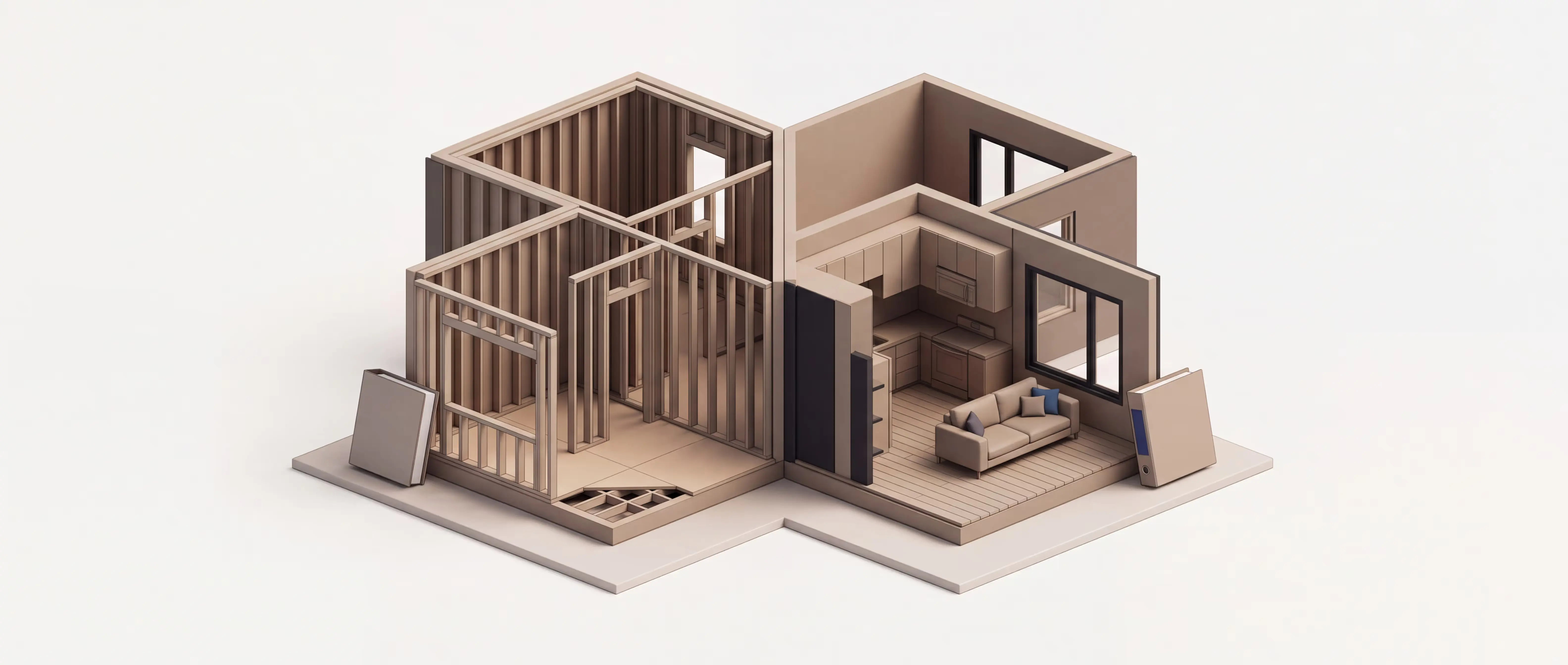
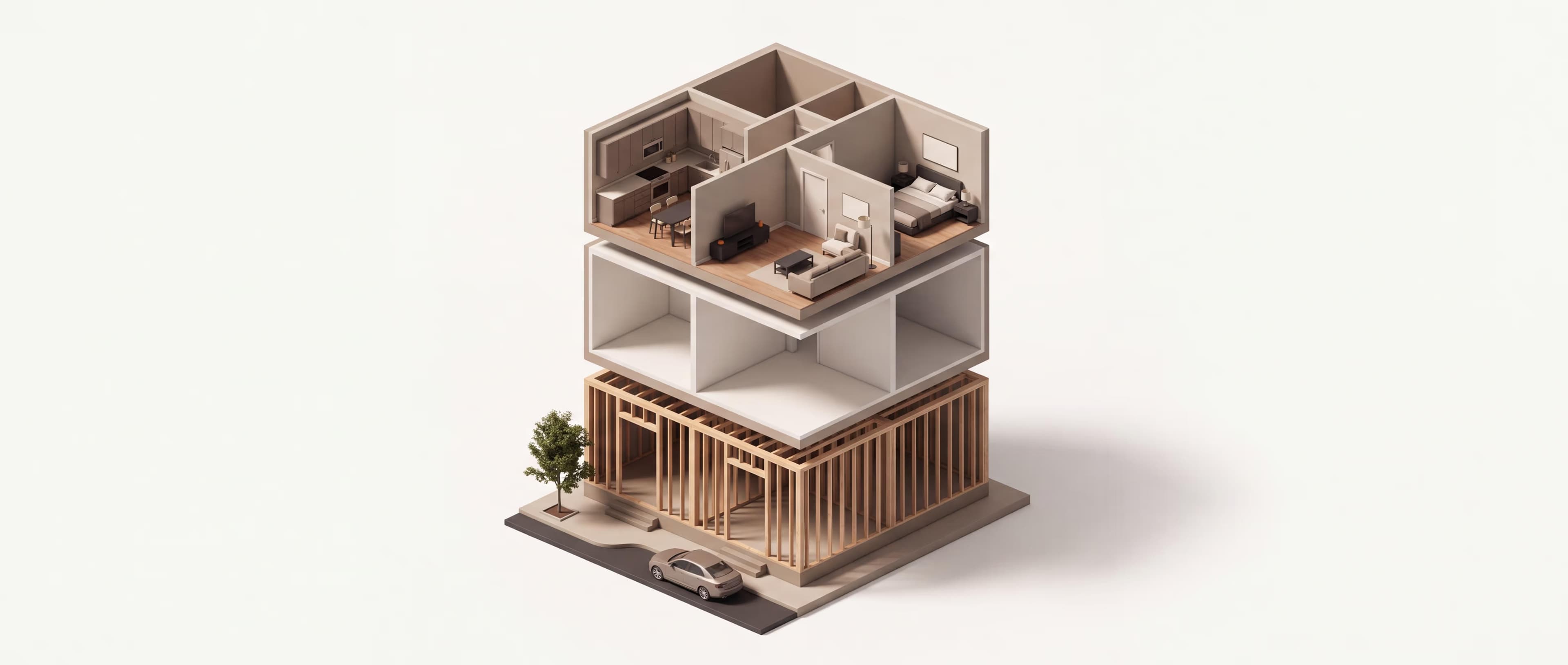
HOA insurance vs homeowners insurance comes down to one line: the unit boundary. The HOA master policy covers the building structure, common areas, and the association's liability. Your individual homeowners or HO-6 policy covers everything from that boundary inward, including interior finishes, personal property, personal liability, and additional living expenses.
Where the boundary sits depends on the master policy type and your structure. This guide breaks down what each policy handles, how coverage responsibility shifts by property type, and where the gap between the two catches owners off guard.
Key Takeaways
HOA insurance vs homeowners insurance splits at the unit boundary: the master policy covers common areas and structure, the owner's HO-6 covers walls-in and personal liability.
The master policy type, whether bare walls, single entity, or all-in, shifts where the coverage boundary sits and changes what the unit owner must insure.
HO-6 condo policies average roughly $500 per year nationally (NAIC data), compared to $1,800 to $2,500 for a standard HO-3.
Loss assessment coverage on the HO-6 fills the gap when a master-policy deductible or large claim exceeds the association's reserves.
What Does HOA Insurance Cover Under the Master Policy?
The HOA master policy covers the shared parts of the community. The association purchases it and funds it through member dues. It insures common-area structures, building exteriors, and the association's general liability (coverage for lawsuits from injuries or property damage in shared spaces). The exact boundary depends on the master policy type: bare walls, single entity, or all-in.
Common areas typically include:
Lobbies, hallways, and stairwells
Parking structures
Pools, fitness centers, and playgrounds
The master policy also covers building exteriors, including roofs, siding, exterior walls, and shared mechanical systems. If a visitor slips in the lobby or a storm damages the community pool, the master policy's general liability and property coverage respond.
The master policy doesn't cover anything inside individual units. It doesn't cover personal property, interior finishes you've installed, or your personal liability for incidents inside your home. The association may also carry a separate directors and officers (D&O) policy for the board. That policy protects the board from governance claims. It doesn't cover the building against physical damage.
What Does Walls-In Coverage Mean for Your Condo HO-6 Policy?
Walls-in coverage on an HO-6 protects everything inside the unit boundary. That includes interior walls, flooring, built-in cabinets, fixtures, and any upgrades above the original builder-grade condition. It picks up exactly where the master policy stops.
Beyond dwelling coverage for your unit's interior, HO-6 policy coverage includes:
Personal property protection for furniture, electronics, and clothing
Personal liability coverage if someone is injured inside your unit
Additional living expenses if your unit becomes uninhabitable after a covered loss
These are the same coverage categories as a standard HO-3 homeowners policy for a single-family home, just scoped to a condo or townhome unit's interior.
The cost difference is significant. An HO-6 policy averages roughly $500 per year nationally (NAIC data), though costs range from under $300 in low-risk states to over $1,000 in Florida. A standard HO-3 homeowners policy runs $1,800 to $2,500 per year. The HO-6 costs less because the master policy already covers the building structure and exterior. That's the most expensive piece to insure.
One critical add-on to consider is loss assessment coverage. This endorsement helps pay your share when the HOA levies a special assessment after a large claim exceeds the master policy's limits or deductible. Standard HO-6 policies include a small default amount, often just $1,000. You can increase the limit up to $50,000 for a modest premium increase.
HOA Insurance vs Homeowners Insurance: How Coverage Shifts by Structure Type
The condo insurance vs homeowners insurance question comes down to what you own. In a condo, the association typically insures the building structure and you insure walls-in. In a single-family HOA community, you insure the entire home and the association covers only shared amenities and common areas.
Structure Type
What the Association Insures
What You Insure
Typical Policy
Condo
Building structure, exterior, common areas
Walls-in: interior, personal property, liability
HO-6
Townhome
Varies by CC&Rs: may cover exterior walls and roof, or only common areas
Interior at minimum; may include exterior depending on CC&Rs
HO-6 or HO-3
PUD (Planned Unit Development)
Common areas, shared roads, amenities only
Entire unit, lot, and attached structures
HO-3
Single-Family HOA
Common areas, shared amenities, community infrastructure
Entire home, land, and all structures on the property
HO-3
Townhomes create the most confusion. Some townhome associations insure the exterior walls and roof under the master policy, closer to a condo setup. Others leave the entire structure to the owner, closer to a single-family arrangement. The CC&Rs (Covenants, Conditions & Restrictions) and the master policy's declarations page are the only reliable sources for which model your community follows.
A 150-unit condo complex we reviewed last year switched from a bare-walls to a single-entity master policy at renewal. Unit owners who'd sized their HO-6 for bare-walls coverage suddenly had more overlap than they needed. Owners who'd skipped an HO-6 entirely still had gaps in personal property and liability. The policy type changed. Nobody told the owners to adjust.
Where Is the Gap Between the Master Policy and Your HO-6?
The most common coverage gap sits at the master-policy deductible. When the association carries a $10,000 or $25,000 per-occurrence deductible and a claim starts inside a unit, the owner may owe that deductible out of pocket. Many associations pass the deductible to the unit where the loss started, per the CC&Rs.
Here's what that looks like in practice. A pipe bursts in a shared wall and floods a second-floor unit. Under a bare-walls master policy, the association's coverage pays to repair the shared pipe and the structural frame. The unit owner's HO-6 pays for interior drywall, flooring, cabinets, and personal property.
Under an all-in master policy, the association's coverage extends to the original interior finishes. The owner's HO-6 covers only upgrades above builder-grade and personal property. Either way, the master-policy deductible (often $10,000 to $25,000) may land on the unit owner if the CC&Rs assign it to the originating unit.
Loss assessment coverage on the HO-6 is the single most under-bought endorsement for condo owners. If the deductible exceeds your out-of-pocket budget, or if the association levies a special assessment after a building-wide loss, this coverage responds. Most first-time condo buyers skip it or leave it at the default $1,000. They don't discover the gap until a water-damage claim hits the building and the board levies a $5,000 to $10,000 special assessment per unit.
Improvements and betterments create a second gap. Renovated your kitchen, upgraded the flooring, or installed custom cabinets? Those upgrades aren't covered by the master policy. Even an all-in policy only covers original builder-grade finishes.
Your HO-6 dwelling coverage needs to reflect the replacement cost of those improvements, or you absorb the loss. For a deeper look at who pays the HOA master policy deductible, see our breakdown of the common CC&R structures.
How Do You Check What the HOA Master Policy Covers?
Request a copy of the declarations page and the full master policy from your management company or board. The dec page answers three key questions:
The policy type: bare walls, single entity, or all-in
The per-occurrence deductible amount
Whether the policy includes ordinance-or-law coverage (Fannie Mae's Selling Guide requires this for condo lending)
Once you have the dec page, share it with your personal insurance agent or broker. They can match your HO-6 dwelling limit to the master policy's stopping point. They can right-size your loss assessment limit to the deductible amount. And they'll confirm your personal property coverage reflects current replacement costs.
If you sit on the board, make the dec page available to all owners at every renewal. When the master policy type or deductible changes, owners need to know so they can adjust their personal coverage. A one-page summary of the coverage boundary, deductible, and recommended HO-6 structure saves the board from fielding dozens of claims disputes after a loss.
Coverwatch reviews the dec page and builds the right HOA insurance program at a flat fee. No commission incentive to over-insure. If the review turns up gaps between the master policy and what owners carry, it flags them before the next claim does.
The review takes 15 minutes. The claims dispute it prevents can take months.
Frequently asked questions
<strong>Yes.</strong> The master policy covers common areas and building structure only. You need an HO-6 for personal property, interior finishes, personal liability, and additional living expenses. Skipping the HO-6 leaves everything inside your unit uninsured.
It depends on the master policy type and where the damage started. Under a bare-walls policy, the association covers the shared pipe but not your interior. Under an all-in policy, it may cover original interior finishes. Either way, personal property damage inside your unit is your HO-6's responsibility.
An HO-6 averages roughly <strong>$500 per year</strong> nationally (<a href="https://content.naic.org/cipr-topics/homeowners-insurance">NAIC data</a>), though costs vary widely by state. That is significantly less than a standard HO-3 homeowners policy ($1,800 to $2,500 per year) because the master policy already covers the building structure.
An endorsement that helps pay your share when the HOA levies a special assessment after a large claim exceeds the master policy's limits or deductible. Default limits are often just <strong>$1,000</strong>. Increasing to $25,000 or $50,000 is inexpensive and closes the most common gap for condo owners.