

November 26, 2026
ChecklistsAdding Bottle Service? Review Your Nightclub Insurance
Review nightclub bottle service insurance for VIP tables, server handoffs and liquor liability before adding a new package to your menu.
6 min read

Manage your risk with Coverwatch
Get a free coverage review and find out where you are over or under insured.
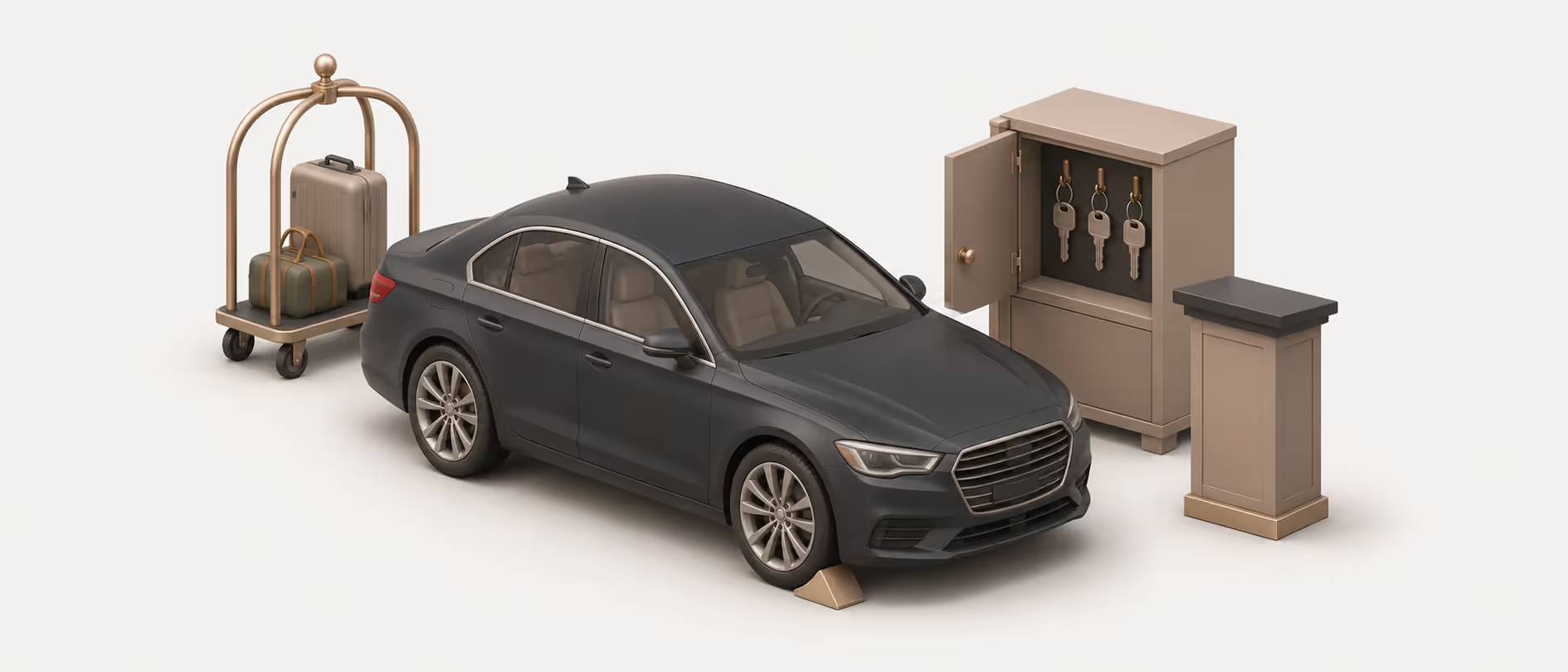
If a wedding sends the valet service to an overflow lot, the insurance review needs that route. Hotel valet insurance should follow the guest's vehicle from the curb to parking and back. Outsourcing adds contract and coverage questions. Check damage to the entrusted car separately from injury to someone else.
Before renewing a valet agreement, draw the actual route. Include the loading area, any public-road travel, the regular garage, overflow parking, and the place where keys are stored. Then ask the broker to check the contract and policies against that route. The review should describe the operation guests encounter, including busy evenings and special events.
A guest's damaged car and a pedestrian struck by a valet are different insurance questions. International Risk Management Institute (IRMI) describes garagekeepers coverage as protection addressing liability for damage to customers' vehicles in the insured's care. Check the covered vehicles, locations, and causes of loss.
Do not assume a standard general liability policy answers damage to the car being parked. International Risk Management Institute (IRMI)'s explanation of care, custody, or control describes an exclusion that commonly matters when property is entrusted to an insured. Name the guest vehicle when asking about coverage.
Ask a separate question about injury or property damage caused while moving a vehicle. The relevant auto liability coverage should be reviewed against the valet operation and route. A label on a certificate does not establish that every vehicle movement, driver arrangement, or off-site location is within the policy.
Document the hotel's remaining role. Identify who hires and supervises attendants, gives guests claim tickets, and selects the parking location. Does hotel staff ever move vehicles when the contractor is late or the curb is crowded? Share the answers with the broker and counsel before signing; hotel staff who occasionally move cars belong in that description too.
Ask counsel to examine responsibility for vehicle damage, bodily injury, claims handling, and subcontracting. Ask the broker to examine the insurance requirements and evidence supporting them. Review contractual responsibility and insurance coverage together. An obligation in a service agreement does not establish that a particular insurer will fund it.
In a hypothetical example, a hotel hires a valet company that normally parks in the adjacent garage. For a wedding, the company uses a rented overflow lot across two public streets. A vehicle is damaged during the transfer.
The review needs the driver's status, route, location, custody records, and policy terms. Knowing only that the contractor supplied a certificate leaves those questions unanswered.
Put changes through an agreed process. The operations manager should know whom to contact before approving an overflow lot, a new subcontractor, or a different transport arrangement. For a hotel group, avoid assuming that approval for one property's garage applies to every property with the same vendor.
The key distinction is whether coverage requires the insured to be legally liable for damage to the guest vehicle. IRMI explains direct garagekeepers coverage as extending protection beyond that legal-liability requirement. The selected form and coverage option still determine which losses and vehicles are insured.
Ask the broker to identify the actual option on the policy, not just describe the coverage as "full." Then ask what happens when a vehicle is damaged while in custody but the valet's fault has not been established. Record the policy's answer before discussing reimbursement with guests.
| Question | What the answer helps establish |
|---|---|
| Must the valet be legally liable? | Whether negligence or another basis of liability is necessary for the vehicle-damage coverage |
| Is a direct coverage option selected? | Whether the form can respond without that liability requirement |
| How does other insurance apply? | The interaction with any guest or other available policy under the selected wording |
| Which damage causes are included? | Whether the review addresses collision, theft, weather, and other relevant scenarios |
| Which vehicles and locations qualify? | Whether the real parking and transfer arrangements fit the insured operation |
Use several realistic scenarios in the discussion, including a collision, a missing vehicle, and storm damage to several parked cars. Record coverage questions and unresolved terms. Do not turn the examples into promises to guests about what an insurer will pay.
A certificate is evidence about insurance, not a replacement for the policy. The New York insurance regulator's certificate guidance explains that certificates should not amend, expand, or alter policy coverage. Use that distinction when deciding what documentation the broker needs to review.
If the hotel expects protection under an umbrella policy, ask which underlying policies and exposures it actually follows. Include exclusions and any required underlying limits in the review. An umbrella can still leave gaps in the underlying coverage.
Start with the number and value of vehicles that may be concentrated in one location. A quiet Tuesday and a sold-out event create different operating snapshots. Ask the broker how per-vehicle, per-loss, per-location, and aggregate terms apply, and how deductibles affect a loss involving several vehicles. Use the actual wording rather than assuming all policies organize limits the same way.
Agree on an incident process before the first complaint. Preserve the parking ticket, key handoff history, attendant details, location, time, photographs, and available video. Keep allegations and confirmed facts separate. Give staff a claims contact so the incident reaches the right parties promptly.
Review the process with the vendor after operational changes, not only at contract renewal. A new garage or staffing arrangement can change the facts on which the earlier insurance review depended.
For a Coverwatch coverage review, bring the valet agreement, route and parking map, current certificates, and relevant endorsements. Include arrangements for busy events and overflow parking.
No. A certificate summarizes evidence of coverage. Review the policy terms and any required additional insured endorsements against the contract and actual valet operation.
Garagekeepers addresses entrusted customer vehicles under its terms. Auto liability concerns liability arising from vehicle use. Ask the broker to map each policy to the hotel’s specific service.
Direct coverage can extend protection without requiring the insured’s legal liability. Covered causes, vehicles, locations, limits, deductibles, and other-insurance terms still apply.
Yes. Provide its address, capacity, route, and operating arrangement before using it. Ask the broker to confirm how the contractor’s and hotel’s coverage apply.
November 26, 2026
ChecklistsReview nightclub bottle service insurance for VIP tables, server handoffs and liquor liability before adding a new package to your menu.
6 min read
November 23, 2026
ExplainersReview hotel cyber insurance for reservation outages, ransomware, accidental failures, vendor dependencies, and the records needed for lost income.
5 min read

November 22, 2026
ExplainersCompare bar umbrella insurance for liquor claims and assault limits. Check underlying policies, exclusions, gaps, and the forms behind each quote.
6 min read

November 21, 2026
ChecklistsMatch restaurant lease insurance requirements to landlord endorsements, rented-premises limits, tenant improvements and the policy's actual wording.
6 min read
Fill out the form and a Coverwatch advisor will get back to you within the next hour.
Your quote