

August 7, 2026
ExplainersHandyman Insurance Vendor List Requirements in 2026
Handyman insurance vendor list requirements come from credentialing portals. What seven real vendor packets demand and why vendors get de-listed.
7 min read

Manage your risk with Coverwatch
Get a free coverage review and find out where you are over or under insured.
Builders risk insurance covers a structure under construction, plus the materials waiting to go into it. It guards against perils like fire, wind, theft, and vandalism, and typically runs 1 to 4 percent of a project's total completed value. The coverage lasts only until the job is finished, and that finish line hides the biggest gaps.
This guide walks through what builders risk covers, what it leaves out, and when the coverage runs out. It also covers who pays for it and what a typical project costs to insure. Most of it is standard on a construction insurance program, though the end date catches owners and subcontractors off guard more than any exclusion does.
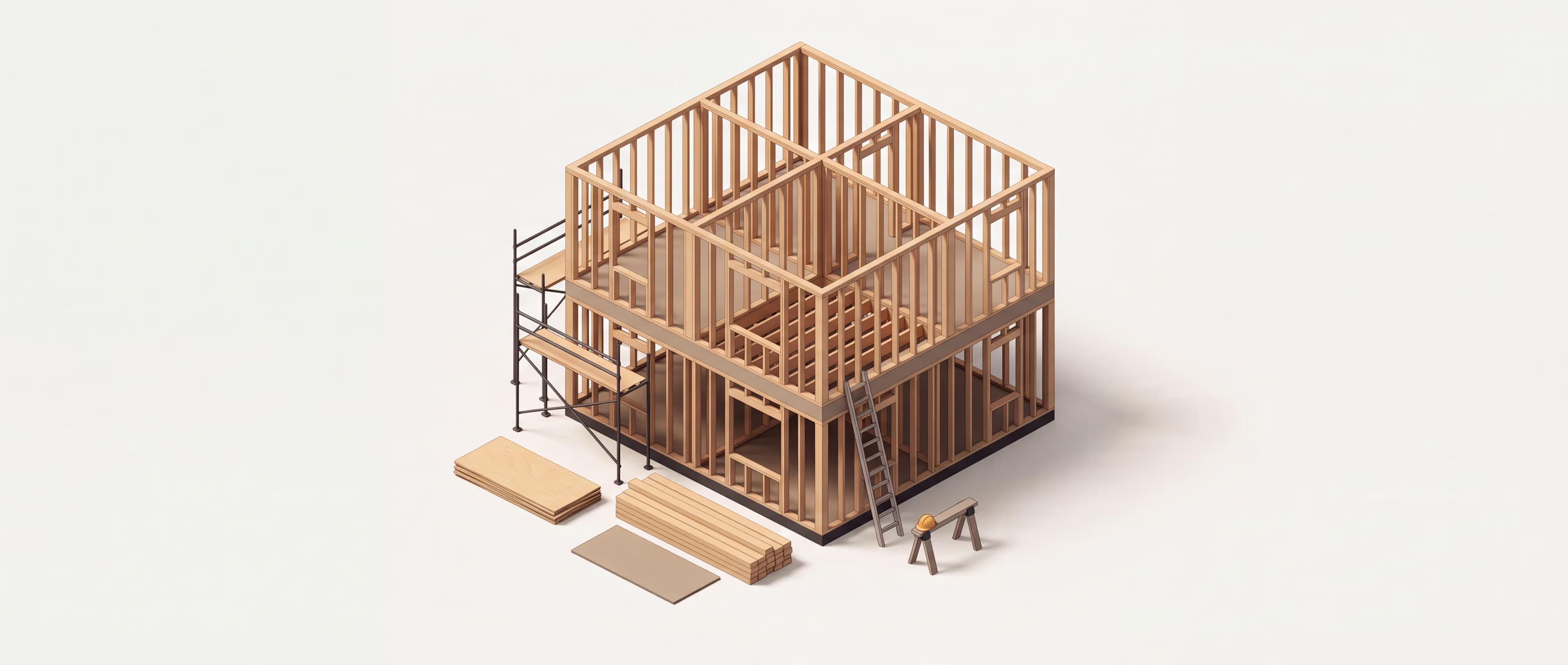
Builders risk insurance, also called course of construction insurance, covers the structure being built. It also covers the materials, fixtures, and equipment meant to be permanently installed in it. That protection applies whether those materials sit on the jobsite, move in transit, or wait in temporary storage. Standard perils include fire, lightning, wind, hail, theft, vandalism, vehicle impact, collapse, and explosion, and most policies also pay to remove debris after a covered loss.
That list is the short answer to what does builders risk insurance cover, though the exact perils depend on the form. A special-form policy covers any cause of loss it doesn't specifically exclude. A named-peril form covers only the risks it lists, so the special form is broader and usually worth the difference.
For a construction business, builders risk insurance for contractors works alongside general liability, since the two cover different risks. Carriers write it as inland marine coverage, which is why materials in transit and off-site storage are included by default.
Builders risk does not cover a contractor's own tools and equipment, which belong on an equipment or installation floater instead. It also does not pay to redo faulty workmanship or design errors, which standard forms either exclude or sub-limit. Flood and earthquake sit outside the base policy and get added only by endorsement.
The tools gap trips up subcontractors the most. Hand tools, power tools, mobile equipment, and the work truck fall under inland marine coverage instead. So a stolen compressor is the sub's own problem unless a separate floater covers it.
Faulty workmanship is the other common surprise. If a wall has to come down because it was framed wrong, the policy typically excludes or sub-limits the cost of fixing the defective work. It may still pay for resulting damage to the rest of the structure. (This is the part most construction disputes turn on.)
Builders risk also never covers bodily injury, third-party liability, or workers' compensation. It is a property policy, so it cannot stand in for the general liability and workers' comp a contractor carries.
Builders risk coverage starts when construction begins and ends at the earliest of several triggers, whichever comes first. The common ones are the owner occupying or accepting the building, a sale, abandonment, or policy expiration. Another is a set period after completion, often around 90 days. The exact count is form-dependent, and that cutoff is where projects get exposed.
The risk lives in the handoff between builders risk and permanent insurance. Once the owner occupies the building or the term runs out, the property policy has to be ready to take over that same day.
On the liability side, completed operations coverage picks up after handover for construction-defect claims that surface months later. Builders risk stops at the property itself. The cutoff can be as tight as 60 days after occupancy on some forms.
Under standard construction contracts, the owner usually buys builders risk, pays the premiums and deductibles, and adjusts any claims. Those contracts come from the American Institute of Architects (AIA), the forms most projects run on. Owners and contractors can agree instead that the contractor carries the policy and the owner reimburses the premium, common on cost-plus jobs.
Steven Coombs, an insurance and construction contract commentator, explains the owner's role in IRMI expert commentary. As he puts it, "the owner remains responsible for procuring the required property insurance, paying the premiums and deductibles, and adjusting claims with insurers." These AIA contracts set that default and expect the policy to name the owner, contractor, and subcontractors as insureds.
A subcontractor is covered only if the policy names them, either as a named insured or as an additional insured added by endorsement. A sub who assumes automatic protection can be wrong. The policy should also allow waivers of subrogation, which stop one party's insurer from suing another after a covered loss. That keeps a fire from becoming a lawsuit between the owner and the framer.
The bigger exposure is timing. Coverwatch times the builders risk end date to the day the permanent property policy takes effect. It also confirms the named insureds and waivers before the policy issues. That closes the handover gap the who-pays question tends to overshadow.
Builders risk insurance typically costs 1 to 4 percent of a project's total completed value. Land is excluded from that figure. A $500,000 project runs $5,000 to $20,000 for the term.
Small contractors pay about $105 a month on average. Large commercial jobs cost far more.
A few things move the builders risk insurance cost up or down:
Renovations cost more to insure than ground-up builds because the existing structure is already exposed to loss. One line item worth adding is a soft-costs endorsement. It covers the money that keeps bleeding after a loss even when no one is swinging a hammer: construction-loan interest, re-permitting fees, and revised architect and engineering fees. That coverage pays only after a waiting period, a set stretch of delay before it kicks in, per Amwins.
The developer with the punch-list fire felt that gap directly. While the rebuild waited, the construction-loan interest kept accruing and the permits had to be pulled again. Those are the exact costs a soft-costs endorsement absorbs and the base property policy ignores.
A broker who lines up the builders risk term, the soft-costs endorsement, and the permanent property policy before the first delivery keeps a handover loss on a policy. Left unaligned, that same loss falls into the gap. Getting the timing right is the quiet half of good contractor insurance.
Yes. Theft of covered materials, fixtures, and equipment is covered whether it happens on the jobsite, in transit, or in temporary storage. A contractor's own tools are the exception; hand tools, power tools, and mobile equipment fall under an inland marine equipment or installation floater, not the builders risk policy on the project.
Both. Renovation and remodel projects need builders risk just as ground-up builds do, and they usually cost more to insure because the existing structure is already exposed to loss while the work happens. The completed value the premium is based on includes that existing structure, not only the new work.
Only if the policy names them. A subcontractor has a claim on the builders risk policy when they are listed as a named or additional insured, which the prime contract should require. A sub who is not named has no coverage under the policy and would have to rely on their own insurance for a loss.
Yes. Lenders and subcontractors are commonly added as additional insureds, and construction loans usually require the lender to be named. Loss-payment checks are then issued jointly to the named and additional insureds plus the lender, each of whom has to endorse the check before funds are released.
August 7, 2026
ExplainersHandyman insurance vendor list requirements come from credentialing portals. What seven real vendor packets demand and why vendors get de-listed.
7 min read

August 6, 2026
ExplainersAn electrician liability fire damage claim usually arrives as a subrogation demand months after the job. What happens next, and what you can challenge.
7 min read

August 6, 2026
ExplainersA plumber's liability policy pays for what the water ruined, not for the joint that let go. The exclusions are narrower than most contractors think.
7 min read

August 1, 2026
ExplainersAdding plumbing, refrigeration, or electrical work resets your HVAC class codes and reprices general liability and workers comp. Here is what changes.
6 min read
Fill out the form and a Coverwatch advisor will get back to you within the next hour.
Your quote